One procedural question per guide.
The library stays narrow: no lender rankings, no debt-settlement lead forms, and no generic auto-loan filler. Each page starts from a concrete post-repossession task and points to the governing source set.
Not sure where to start? The after-repossession tool routes you to the right guide and the verified deadline for your state.
Understand the legal sequence.
13 focused guides in this section.
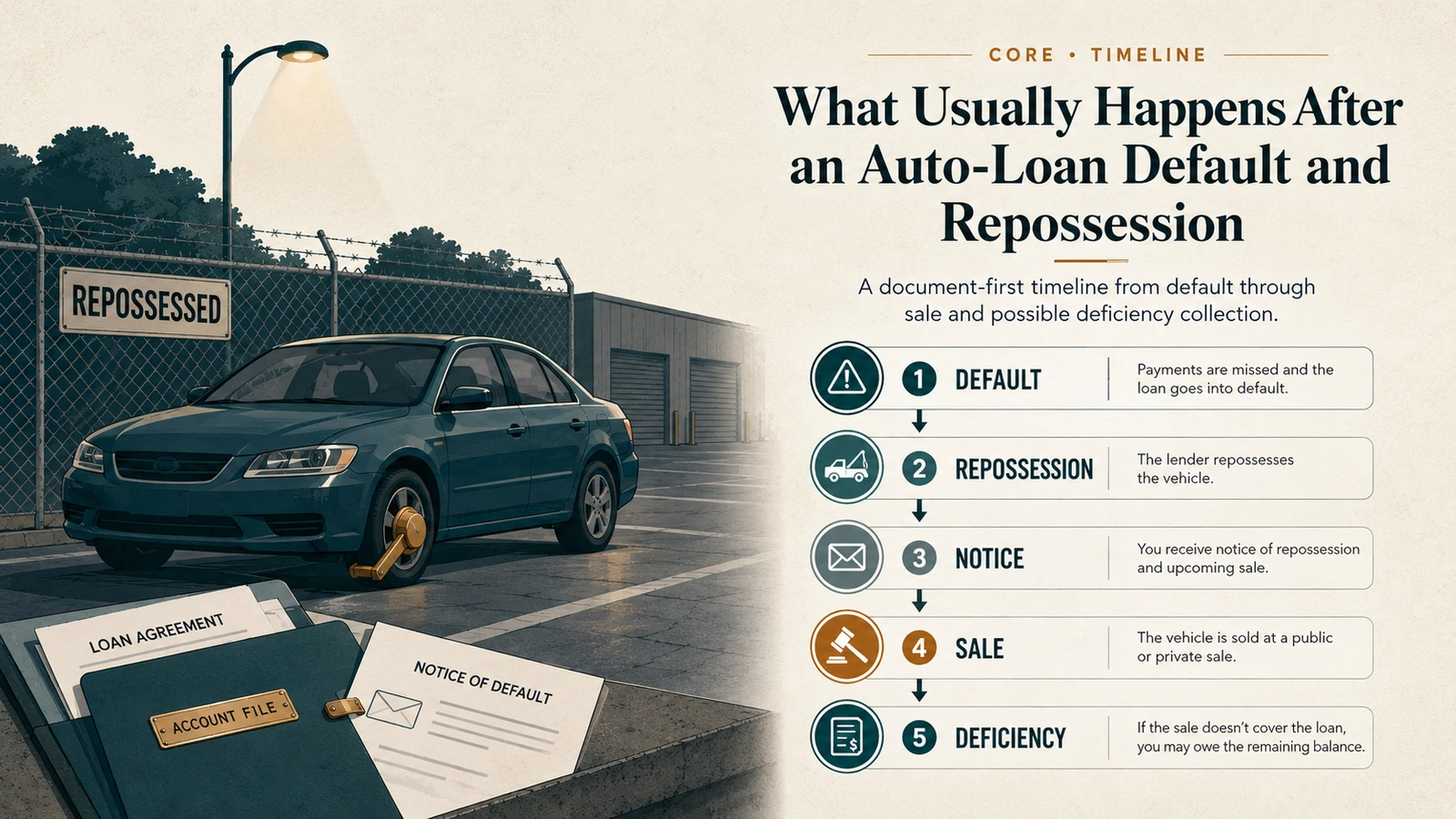
What usually happens after an auto-loan default and repossession
A document-first timeline from default through repossession, disposition, accounting, and possible deficiency collection.
Open guide →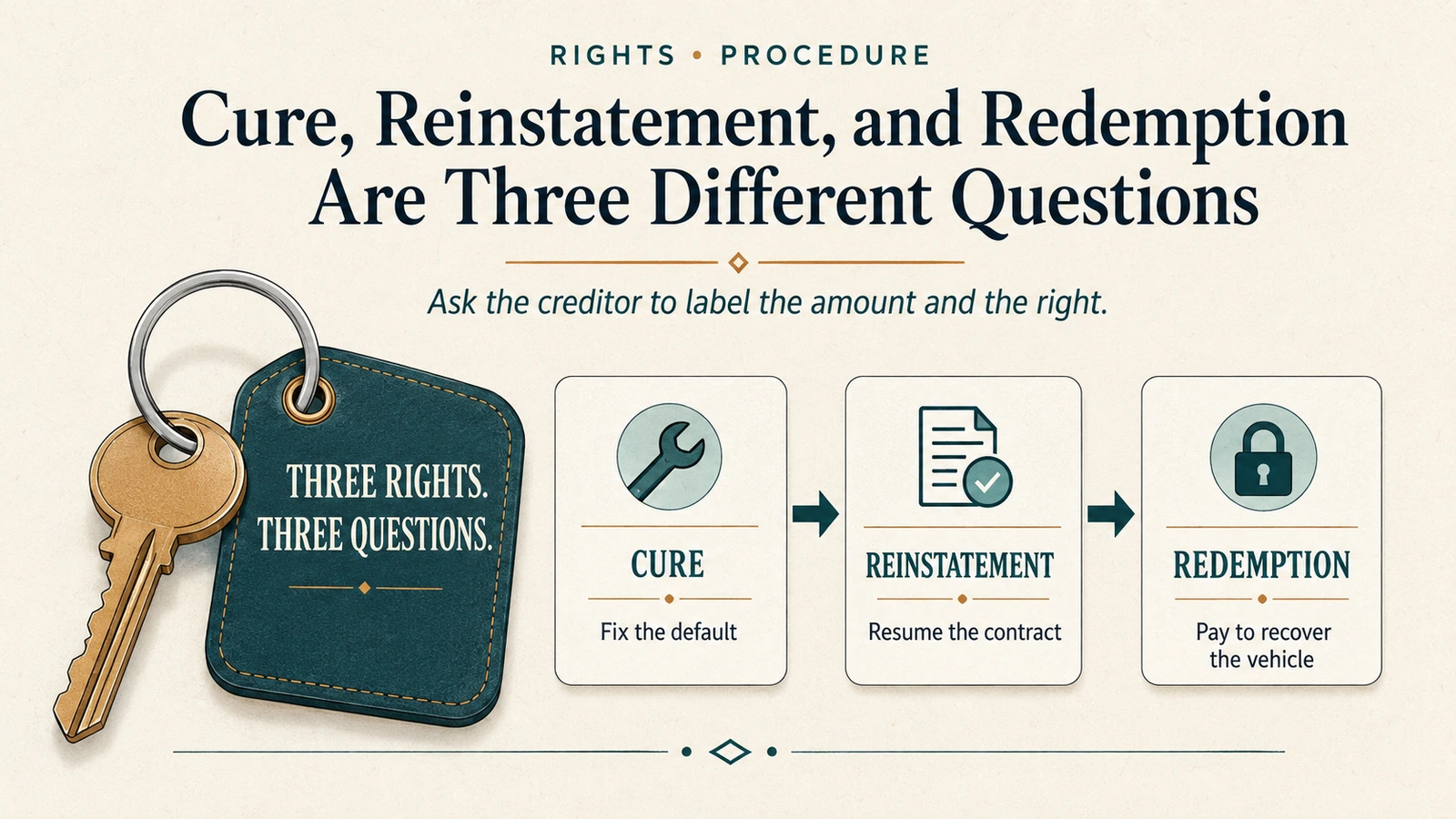
Cure, reinstatement, and redemption are three different questions
How cure or reinstatement differs from UCC redemption after an auto repossession, and what to request from the creditor.
Open guide →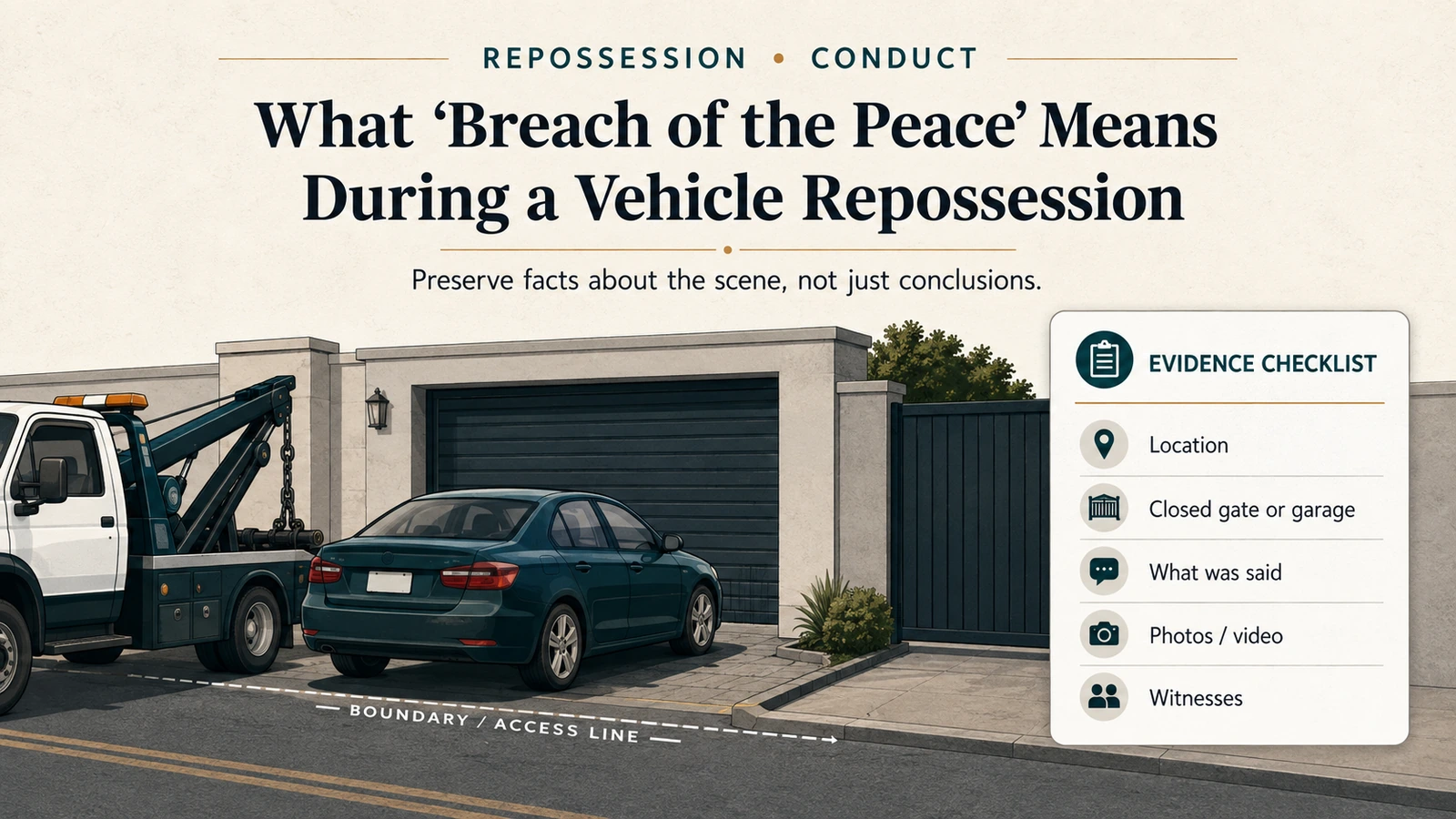
What “breach of the peace” means during a vehicle repossession
A practical evidence-focused guide to the Article 9 limit on self-help repossession without breach of the peace.
Open guide →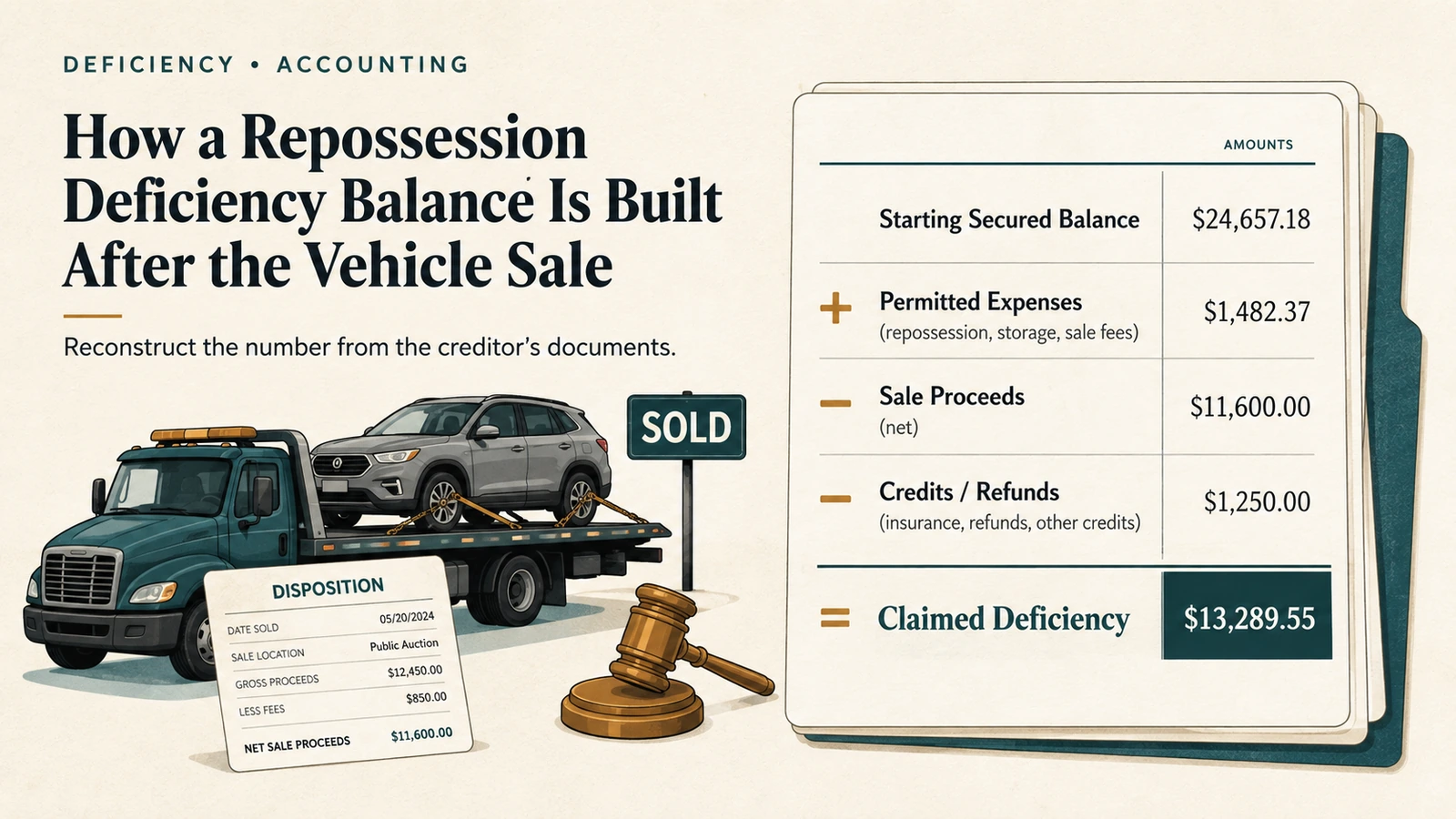
How a repossession deficiency balance is built after the vehicle sale
A line-by-line way to reconstruct the amount a creditor says remains after disposition.
Open guide →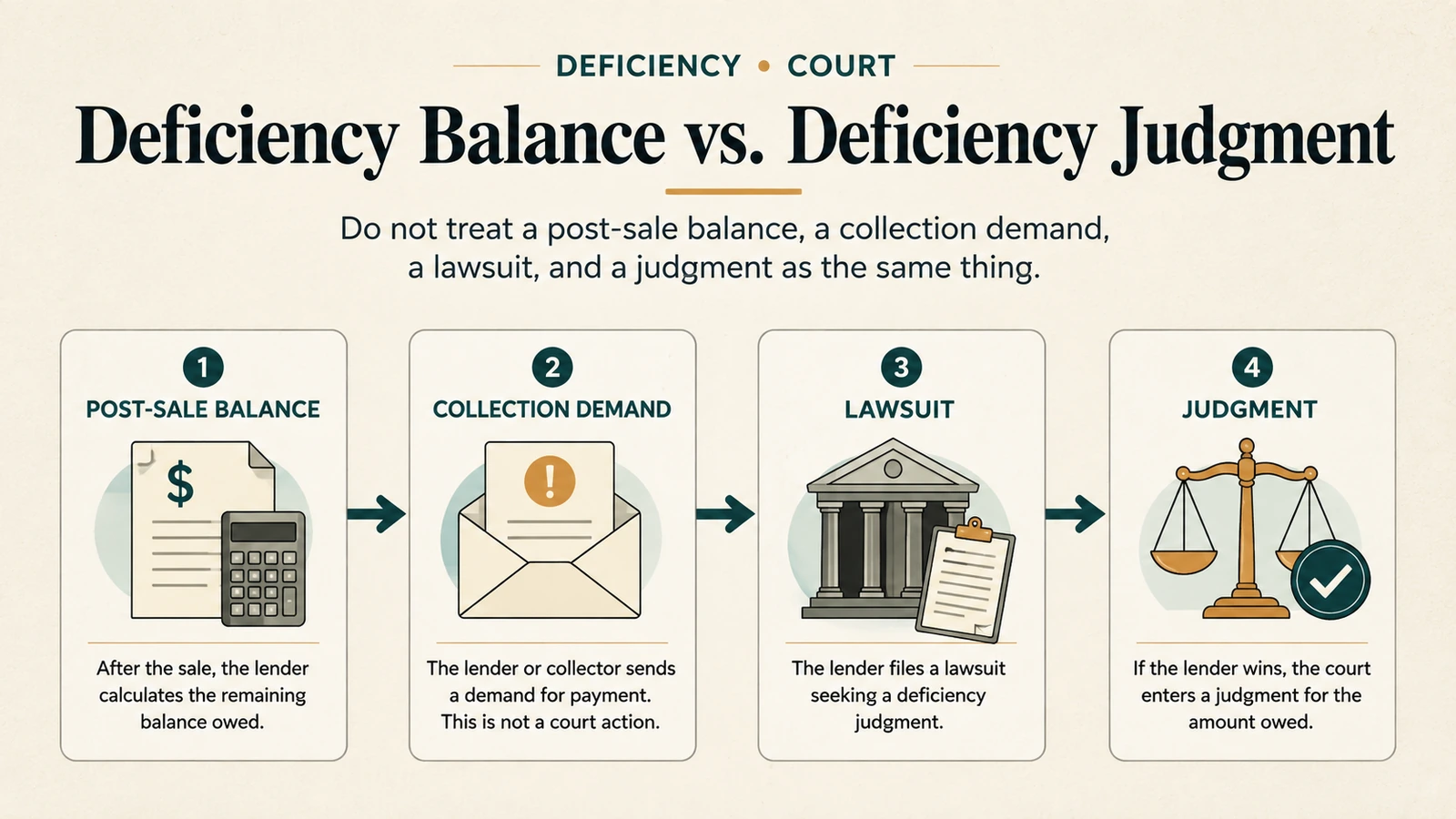
Deficiency balance vs. deficiency judgment: do not treat them as synonyms
Why a creditor’s post-sale balance, a collection demand, a lawsuit, and a court judgment are four separate stages.
Open guide →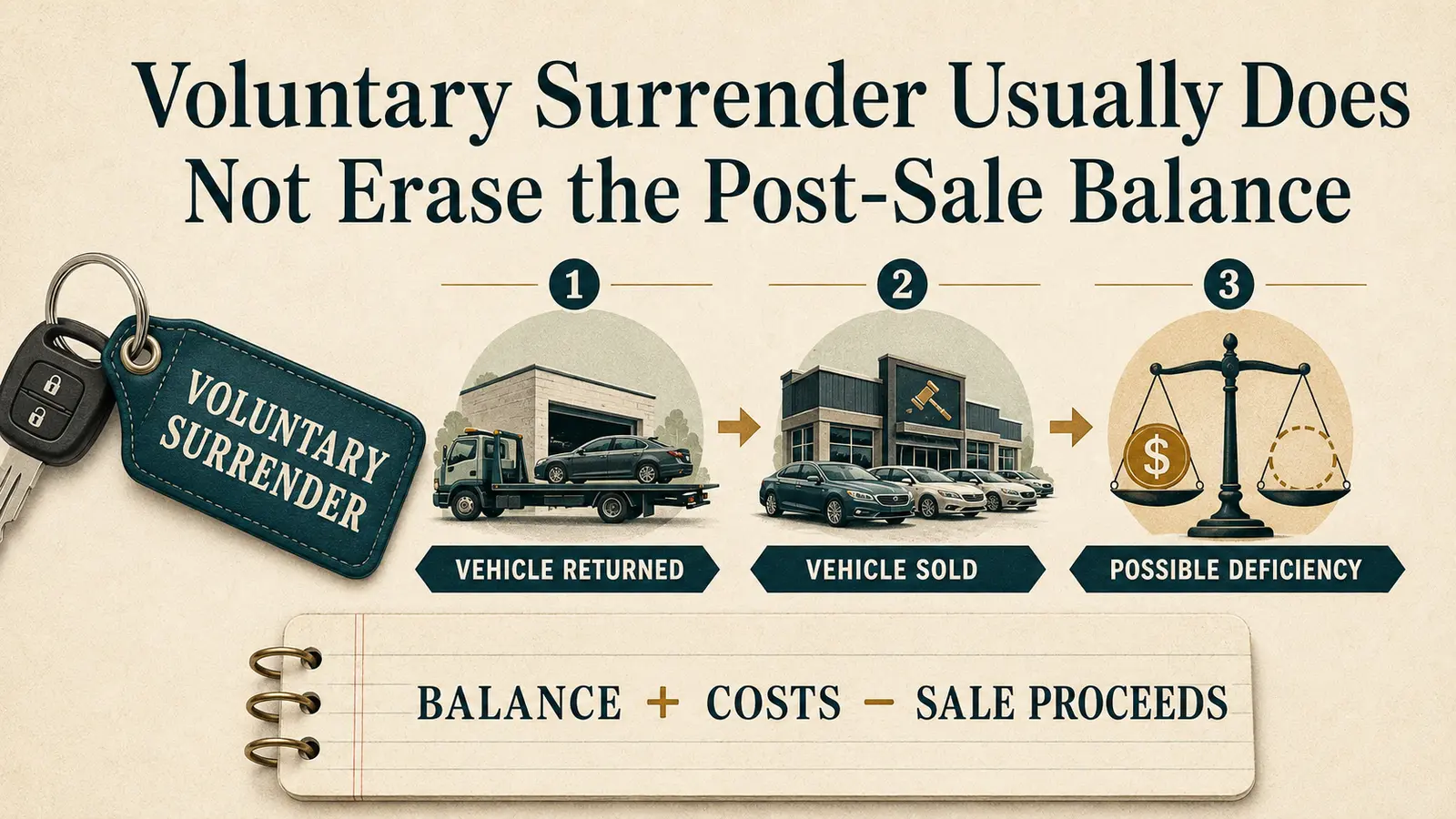
Voluntary surrender usually does not erase the post-sale balance
What changes—and what usually does not—when a borrower returns the vehicle instead of waiting for a repossession.
Open guide →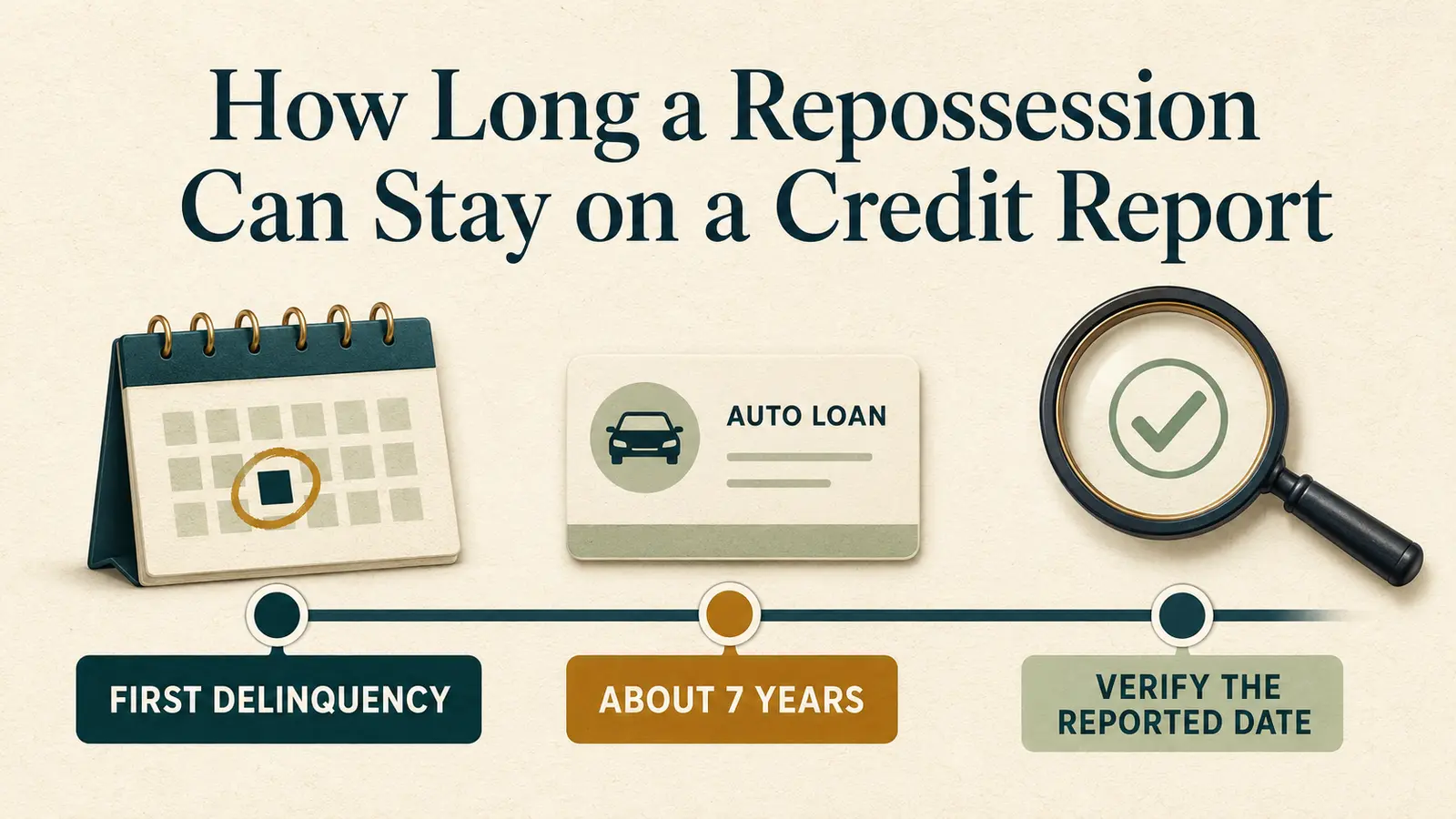
How long a repossession can stay on a credit report—and which date matters
A guide to the FCRA delinquency-date concept, error disputes, and the difference between accurate negative reporting and a reporting mistake.
Open guide →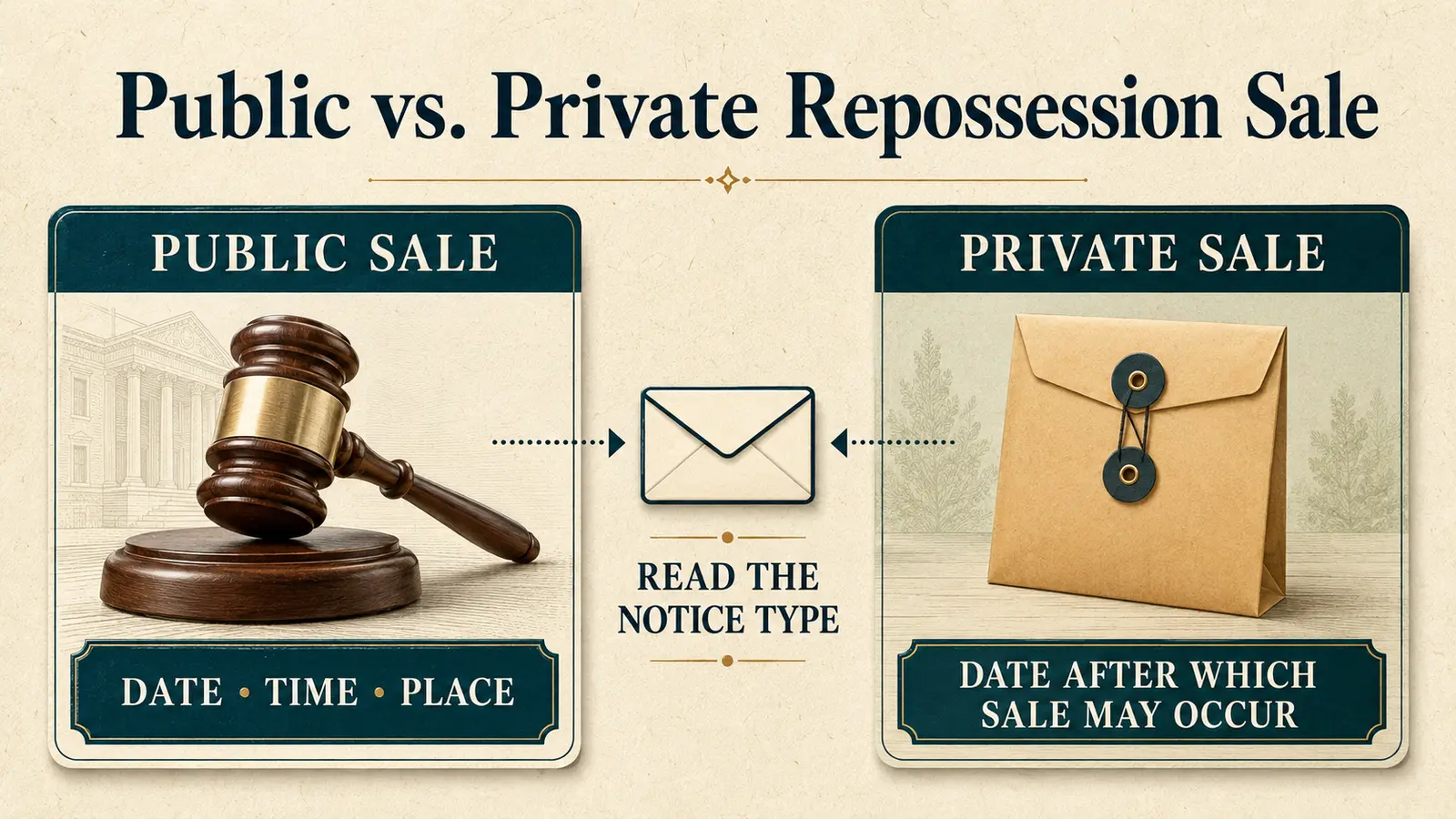
Buying the car at auction is not the same as redeeming it before sale
How a public-auction bid differs from exercising the Article 9 redemption right, including timing and paperwork.
Open guide →
How a repossession affects your credit — and for how long
What actually lands on the credit report after a repossession, why the score drop varies, and which date controls when it ages off.
Open guide →
Voluntary surrender vs. waiting for repossession: what actually differs
A side-by-side look at cost, credit reporting, timing, and legal exposure when you return the vehicle instead of waiting for the tow.
Open guide →
Title loan and registration loan repossession follows different rules than a car payment loan
Why a car title pawn or registration loan can be repossessed faster and with fewer post-sale rights than a standard installment auto loan, and how to tell which category your loan falls in.
Open guide →
How long a creditor has to sue you for a deficiency balance — and how to find your state’s deadline
The legal mechanism behind the statute of limitations on an auto-loan deficiency, verified examples from several states, and how to find the correct deadline for your own contract.
Open guide →
Starter interrupt and GPS devices: when disabling your car is itself a repossession problem
How remote starter-interrupt and GPS tracking devices are used in subprime auto lending, the disclosure and breach-of-peace issues they raise, and what to check in your own contract.
Open guide →Audit the disposition process.
15 focused guides in this section.
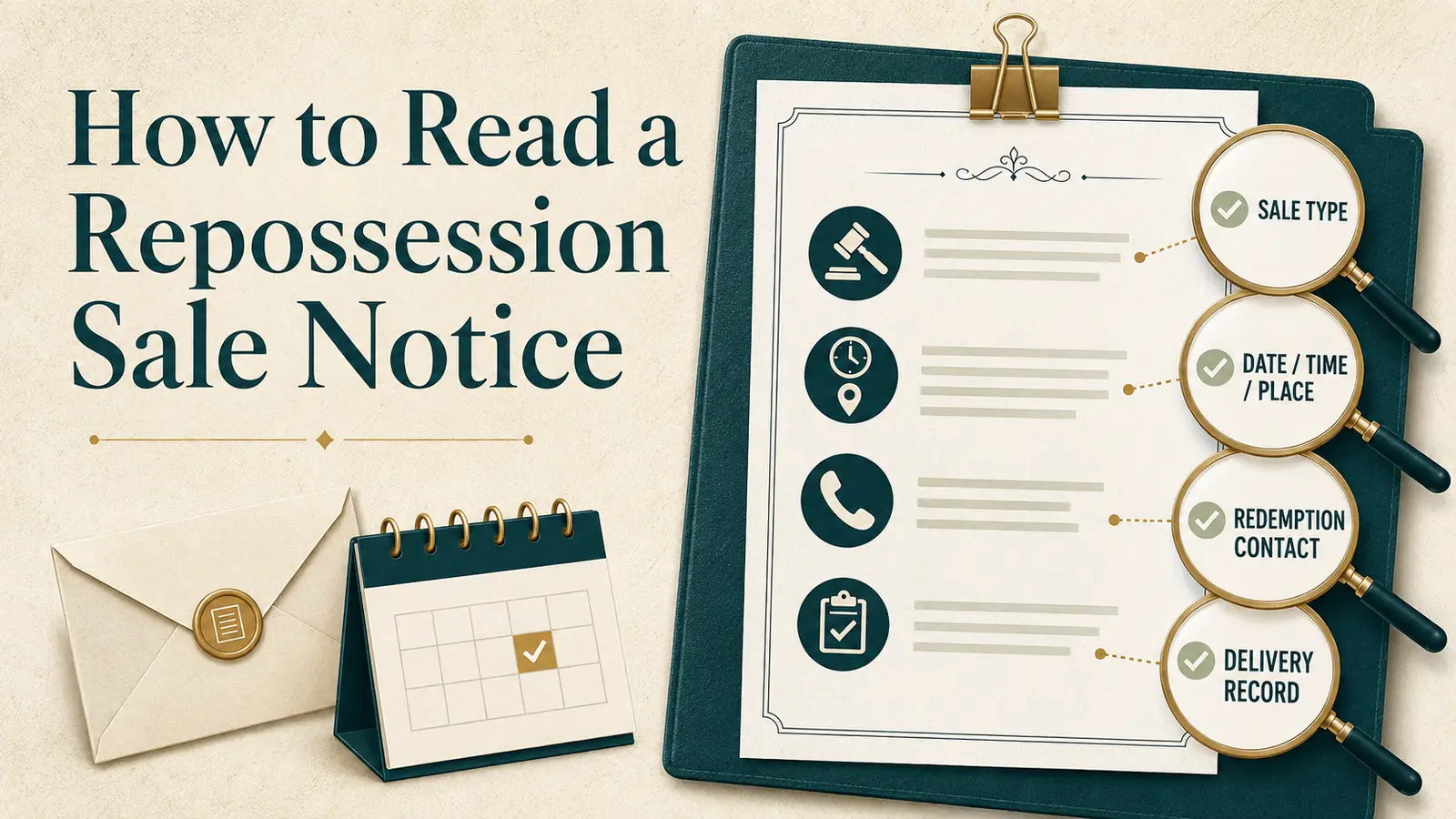
How to read a repossession sale notice before the vehicle is sold
A section-by-section audit of a consumer-goods disposition notice under UCC §§ 9-611, 9-613, and 9-614.
Open guide →
Public vs. private repossession sale: why the label changes the notice
How the chosen disposition method affects timing information, access, records, and the commercial-reasonableness review.
Open guide →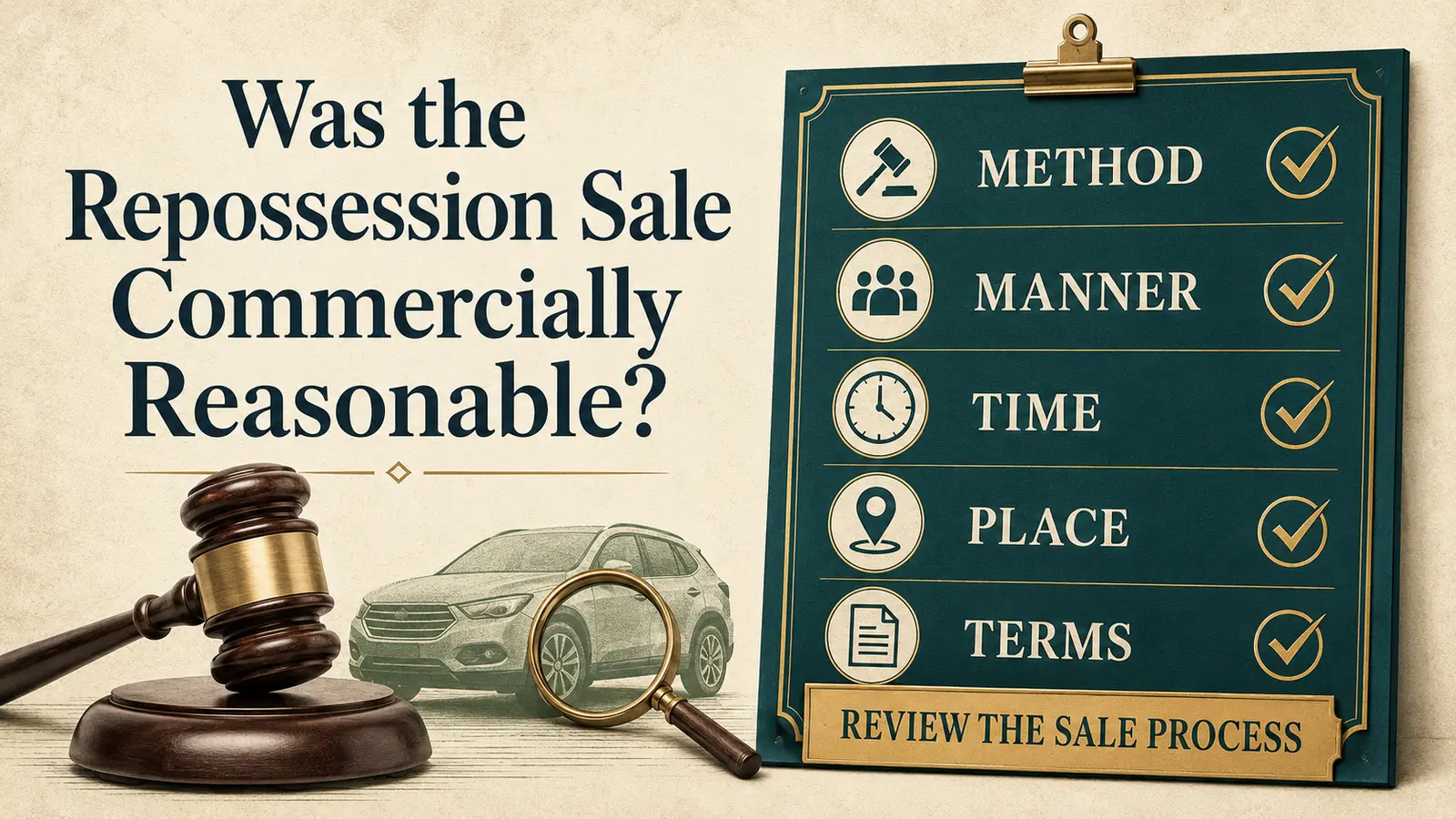
What “commercially reasonable” means after a repossession sale
A process-focused way to evaluate the method, marketing, timing, place, and terms of a collateral disposition.
Open guide →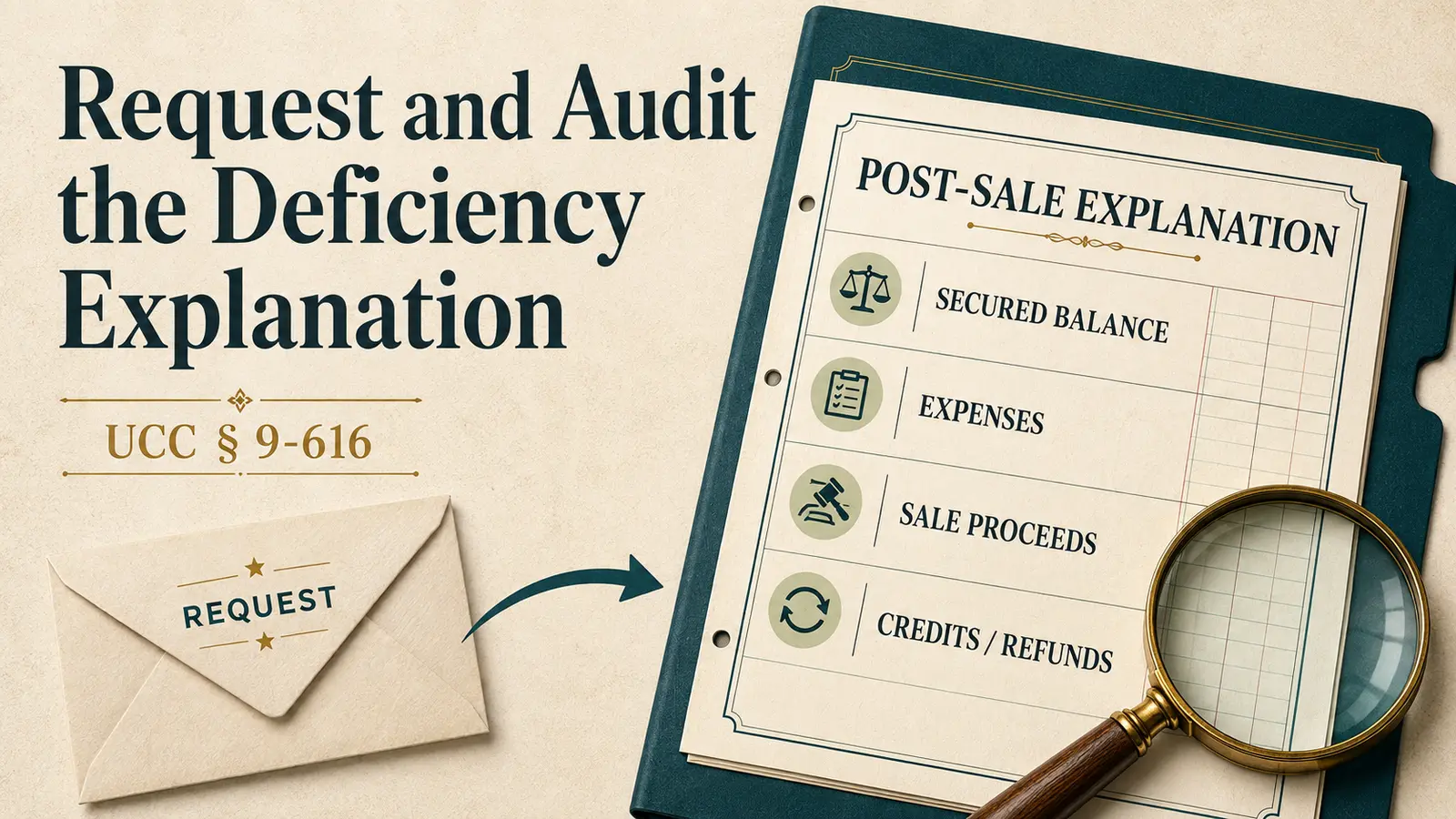
How to request and audit the post-sale deficiency explanation
What UCC § 9-616 is designed to show in a consumer-goods transaction, and how to turn the statement into a reconciliation worksheet.
Open guide →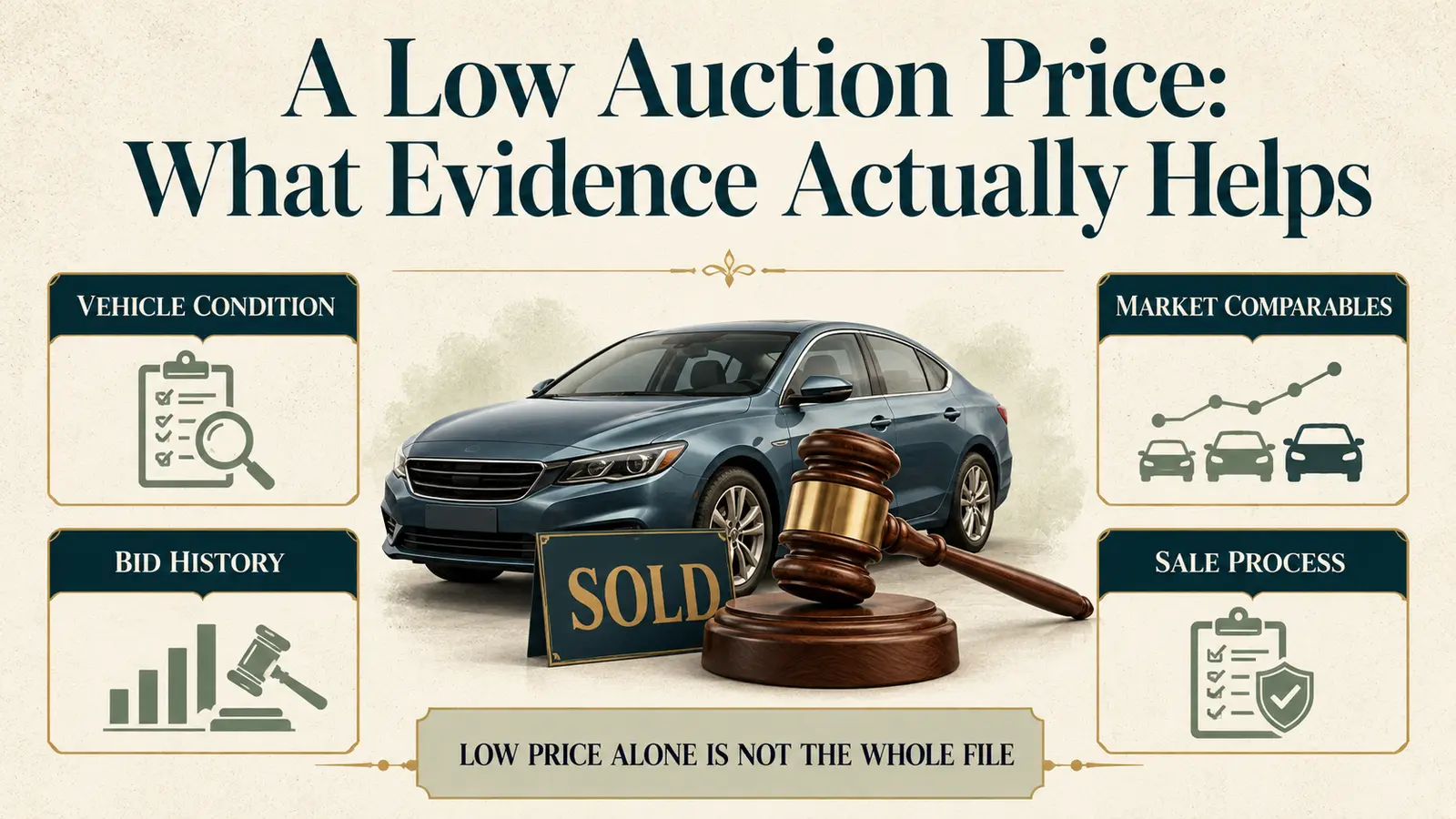
A low repossession auction price: what evidence actually helps
How to investigate whether a low sale price reflects wholesale reality, vehicle condition, or a defective disposition process.
Open guide →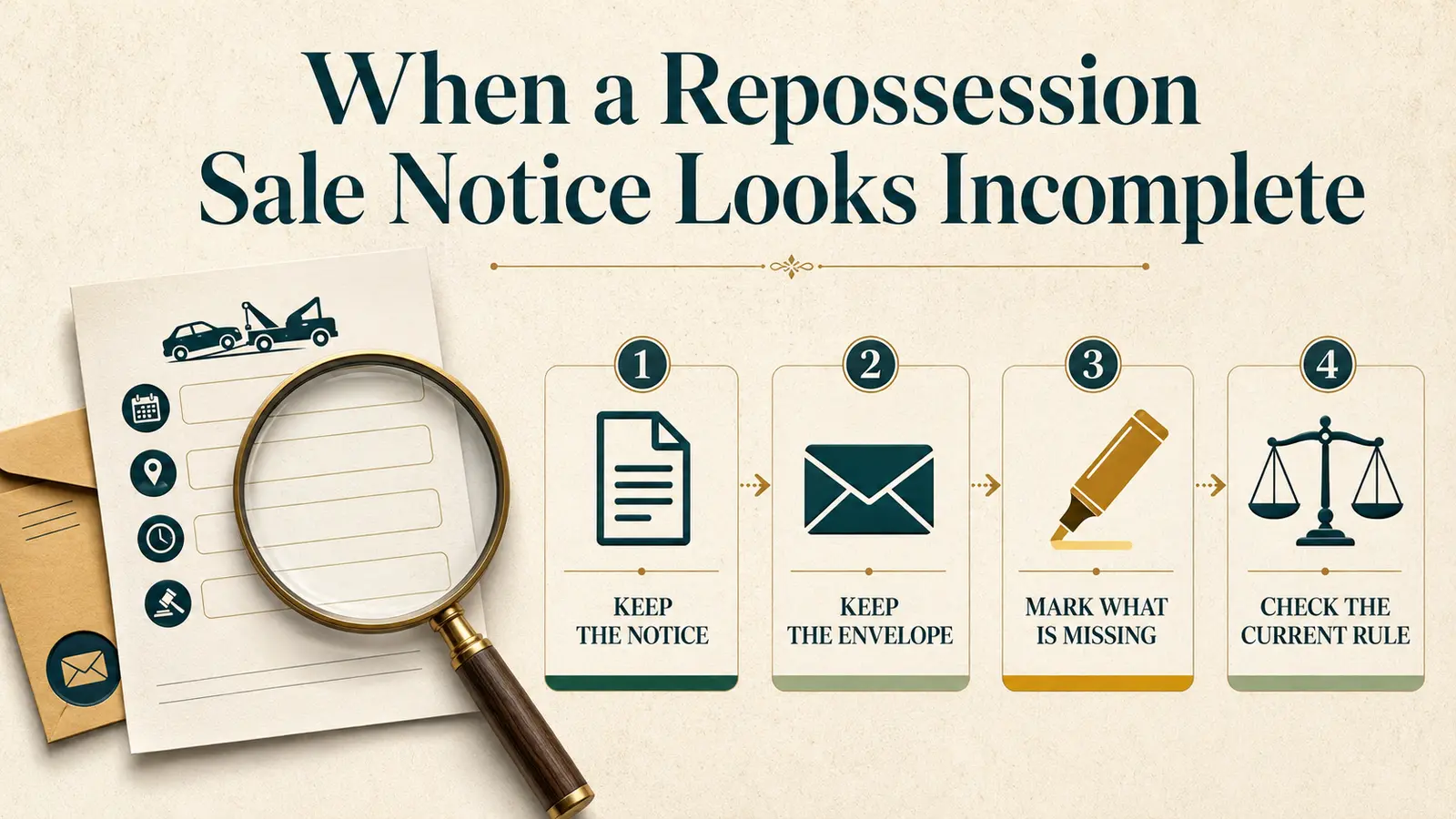
What to do when a repossession sale notice appears incomplete
How to compare a consumer-goods notice with the enacted statute without assuming that every formatting problem has the same legal consequence.
Open guide →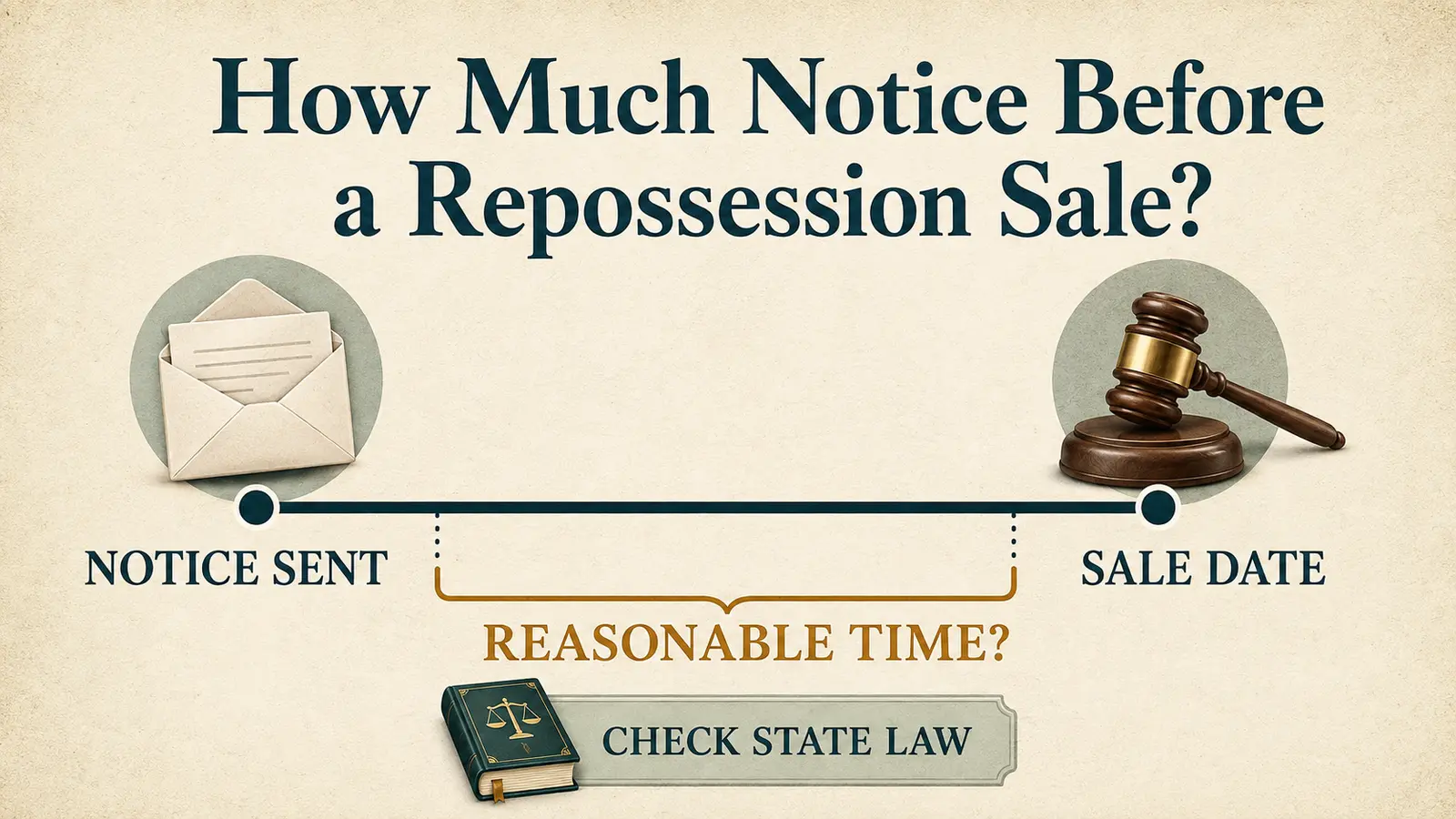
How much notice must a creditor give before selling a repossessed car?
Why Article 9’s “reasonable time” rule does not create one national consumer day count.
Open guide →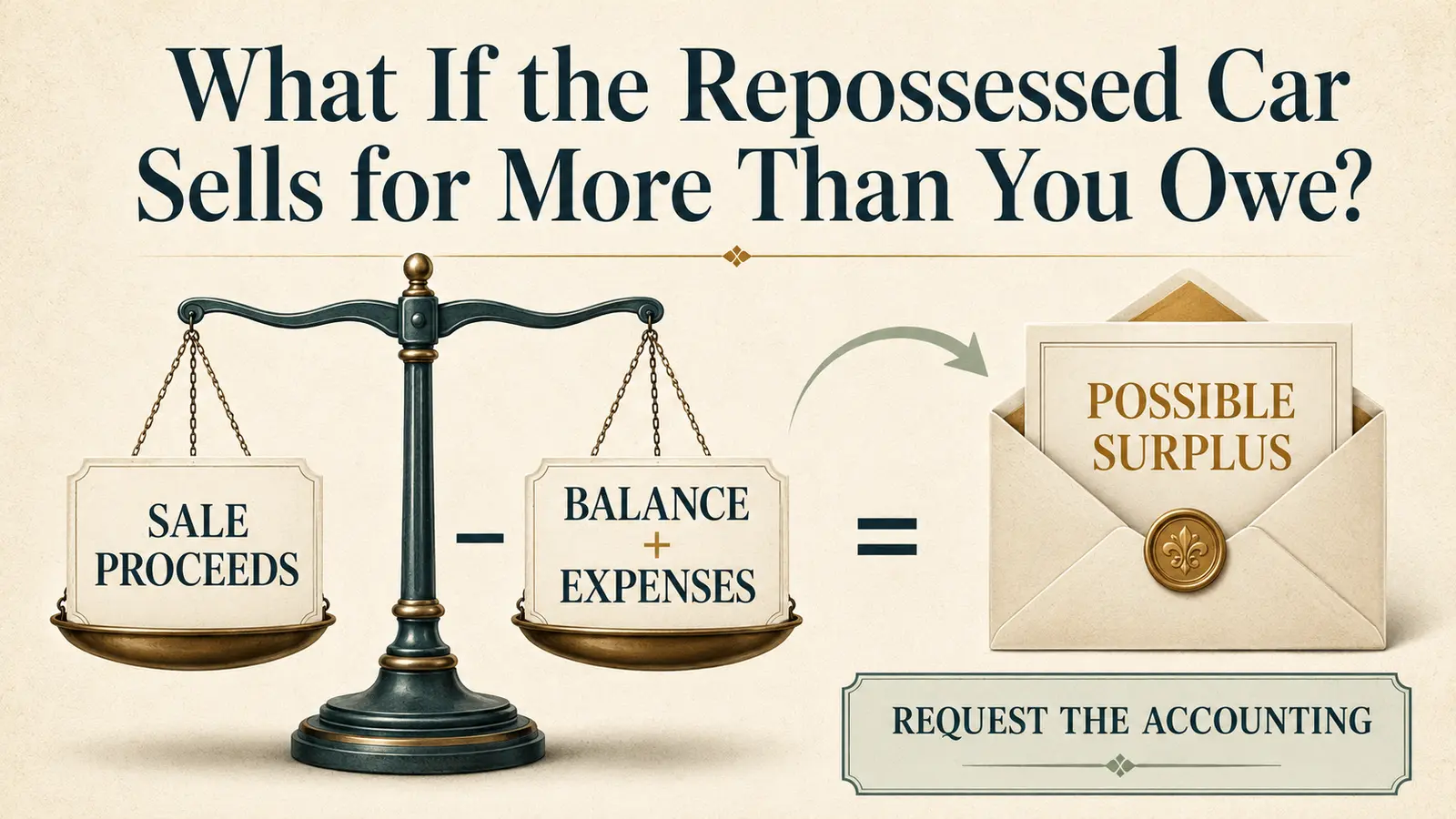
What if the repossessed car sells for more than the amount owed?
How Article 9 treats surplus proceeds and what records to request when the sale appears to exceed the secured balance and expenses.
Open guide →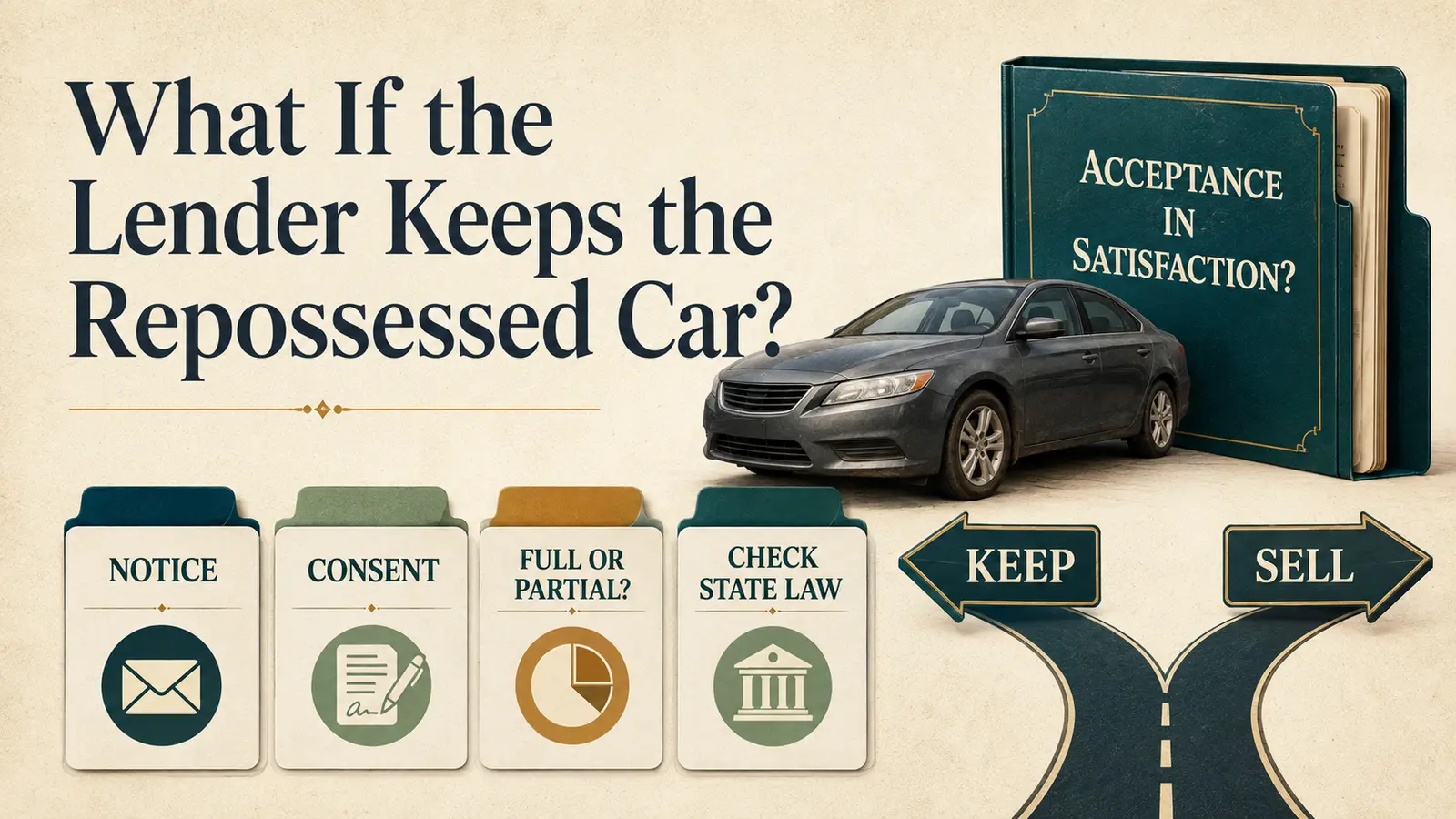
What if the lender keeps the repossessed car instead of selling it?
A plain-English guide to Article 9 acceptance of collateral in satisfaction, often called strict foreclosure.
Open guide →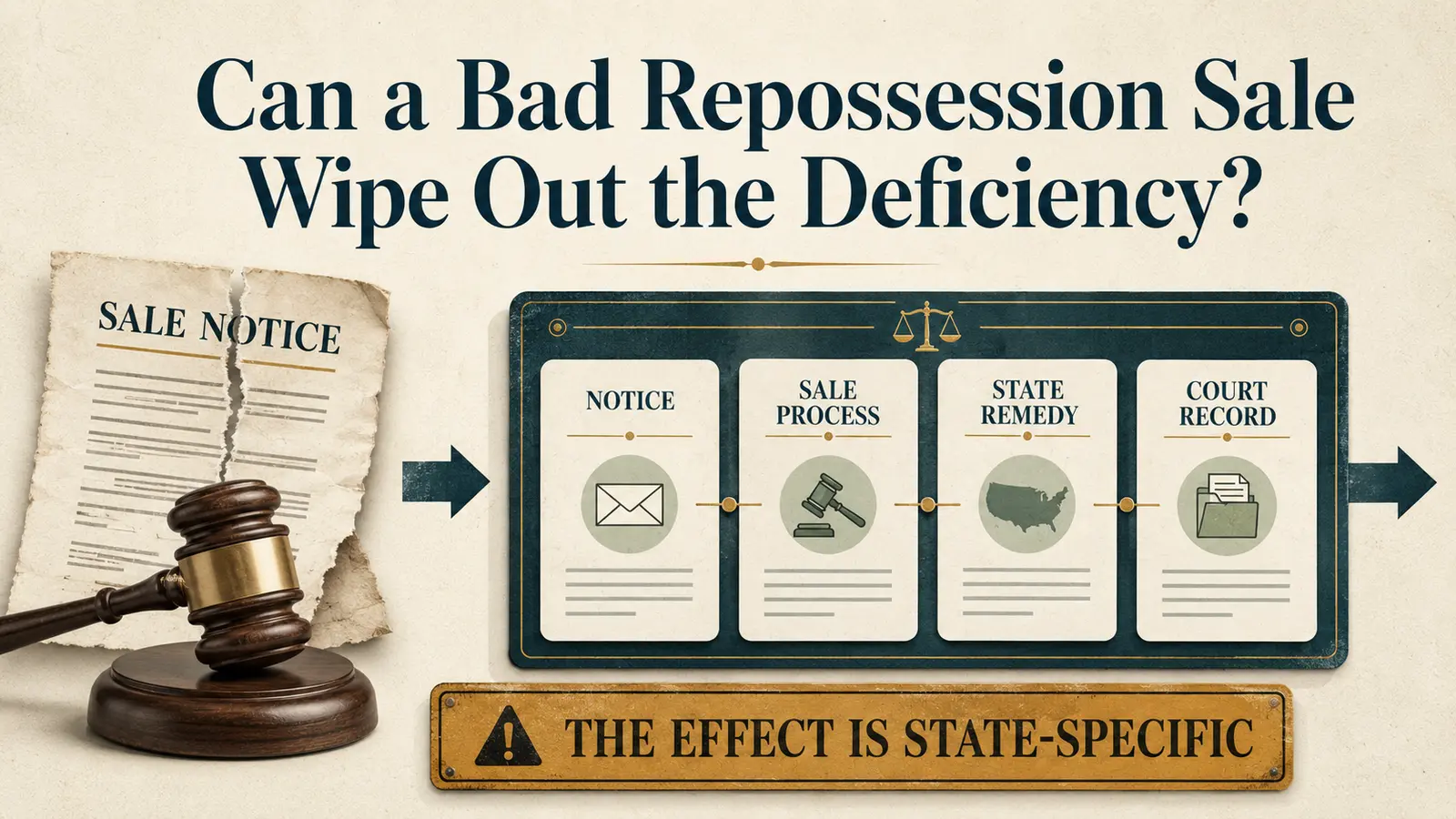
Can a bad repossession sale wipe out the deficiency? It depends on the state
Why consumer cases can follow absolute-bar, rebuttable-presumption, setoff, or damages approaches after Article 9 noncompliance.
Open guide →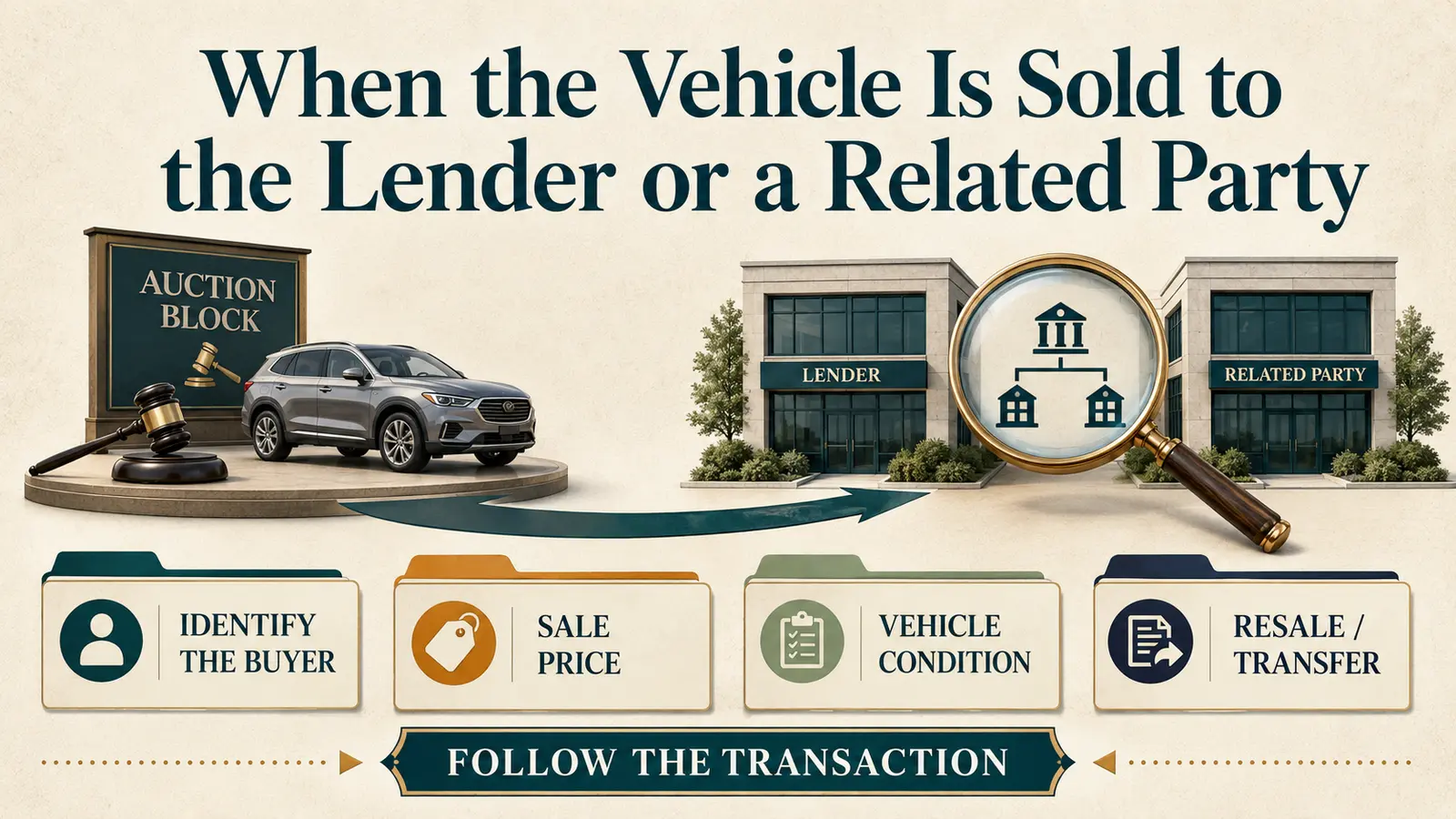
When the repossessed vehicle is sold to the lender or a related party
How buyer identity can affect the deficiency calculation and the commercial-reasonableness review.
Open guide →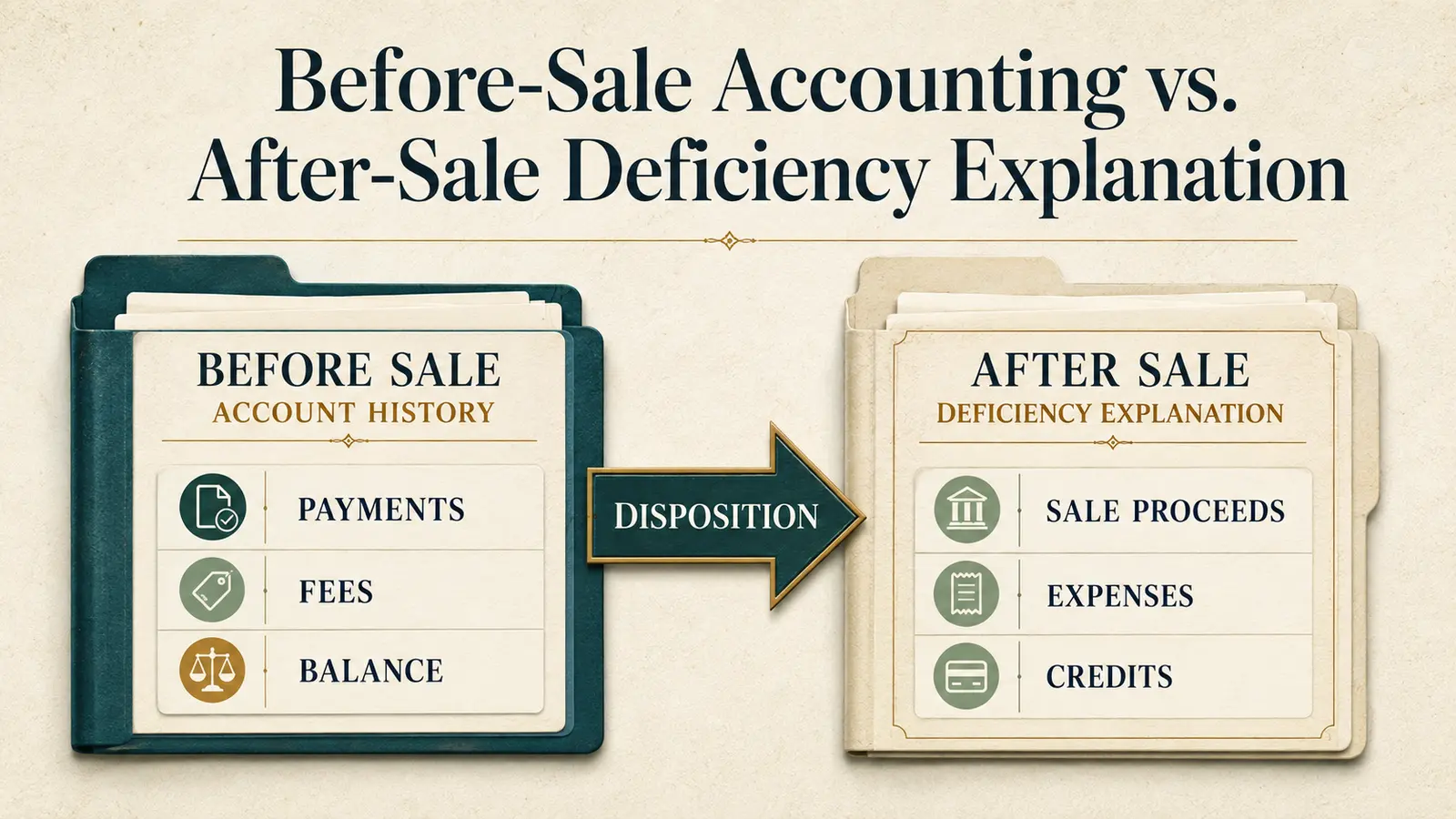
Account history before sale vs. deficiency explanation after sale
Which records answer the balance question before disposition and which records become available after the vehicle is sold.
Open guide →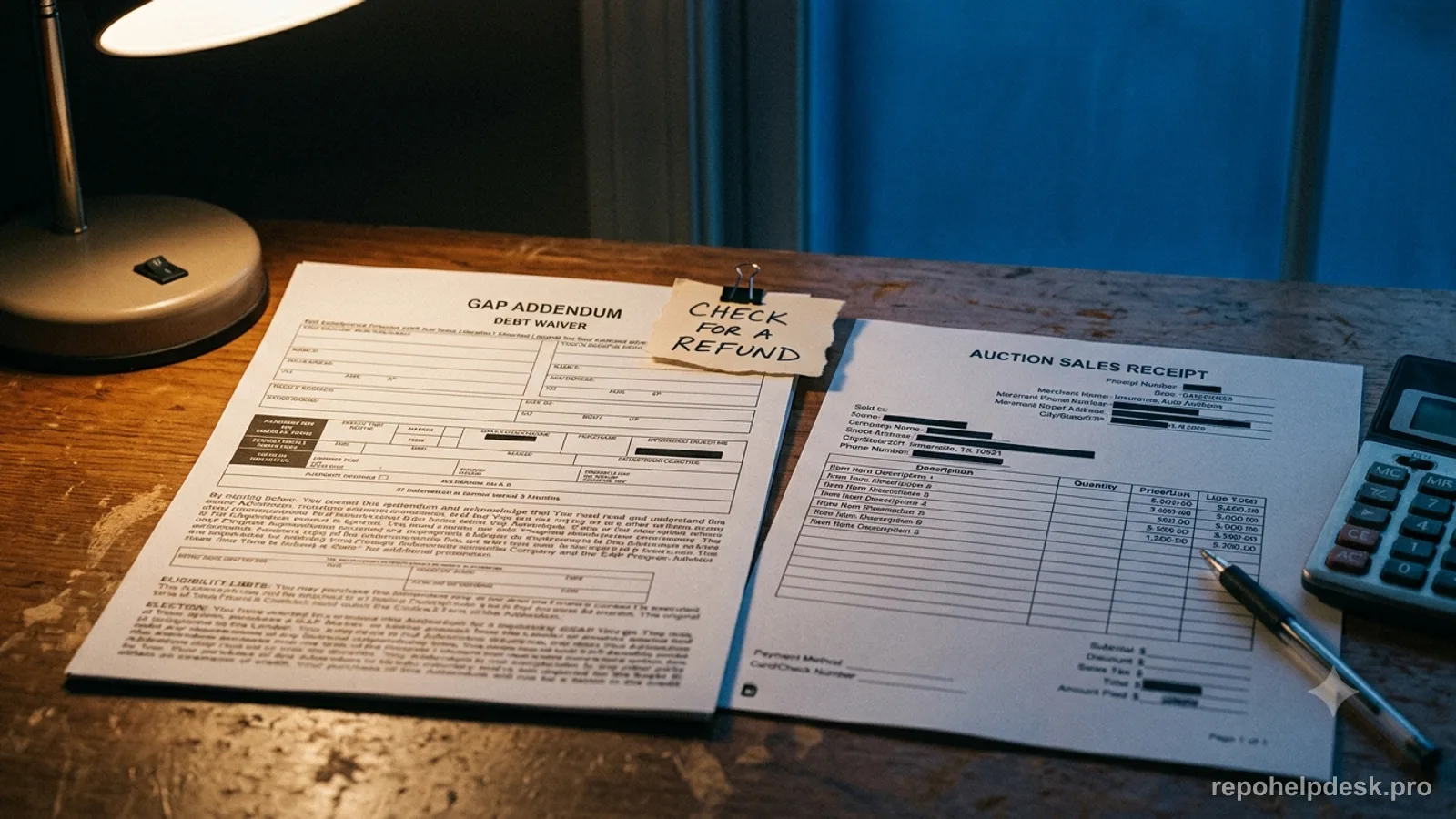
GAP coverage after a repossession sale: how it fits the deficiency
What GAP is designed to pay, why a repossession is not the same as a total loss, and how to check whether a refund or a claim applies.
Open guide →
The affidavit of repossession: the DMV document that moves the title after a repo
What a lienholder’s repossession affidavit or state-specific title record does, how to check the filing requirements, and what the document does and does not prove about the sale.
Open guide →
The creditor won the deficiency lawsuit — what wage garnishment and bank levy can and cannot take
What happens after a court enters a deficiency judgment: how wage garnishment limits work under federal law, and what a bank account levy can and cannot reach.
Open guide →When another rule changes the timeline.
23 focused guides in this section.
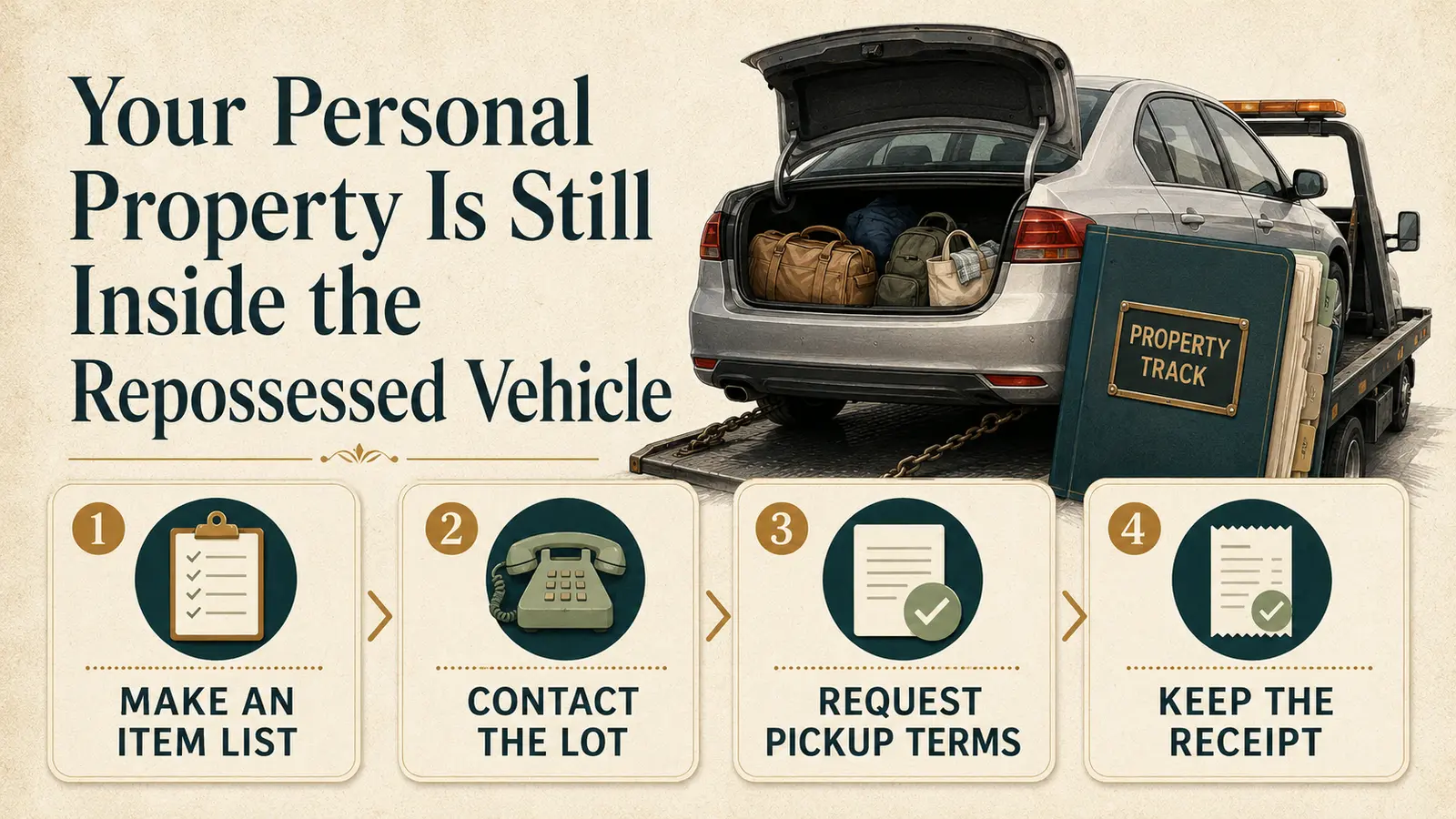
Your personal property is still inside the repossessed vehicle
A record-focused retrieval process that keeps personal belongings separate from the lender’s security interest in the car.
Open guide →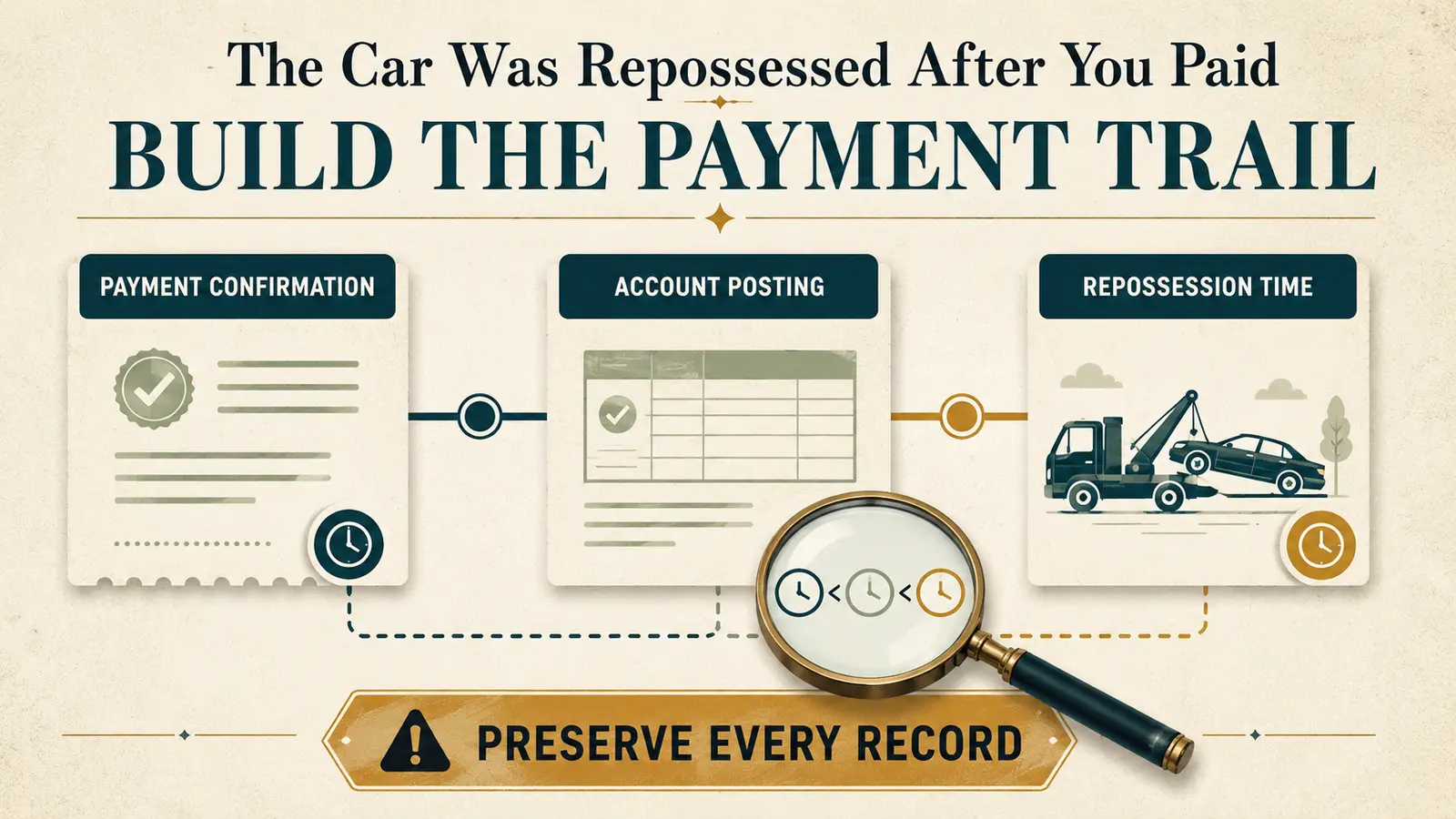
The car was repossessed after you paid: build the payment trail first
How to document a possible wrongful repossession caused by payment posting, extension, promise-to-pay, or servicing error.
Open guide →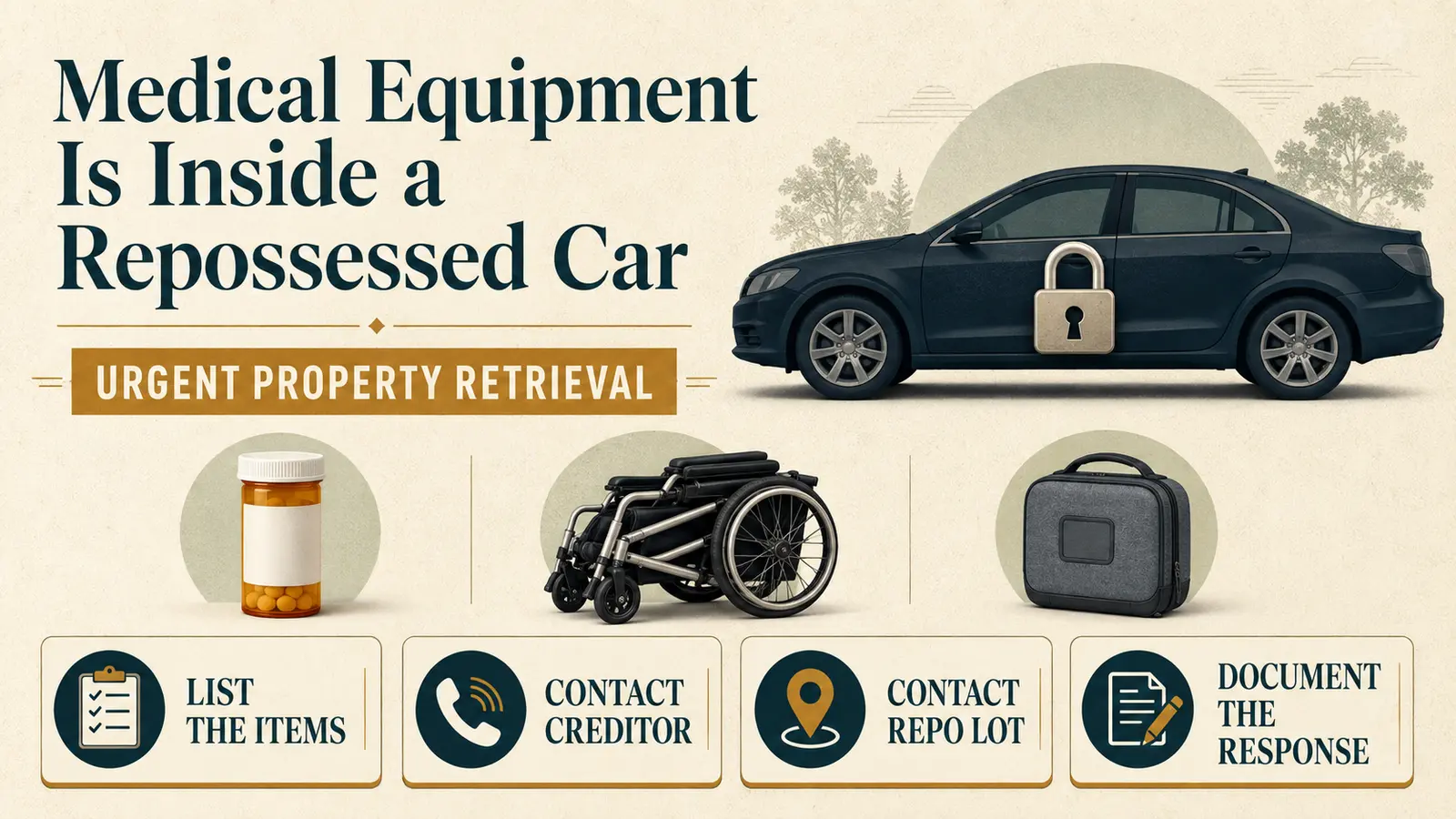
Medication, wheelchair equipment, or medical devices are inside a repossessed car
A fast documentation and retrieval sequence for health-related personal property without making individualized medical or legal claims.
Open guide →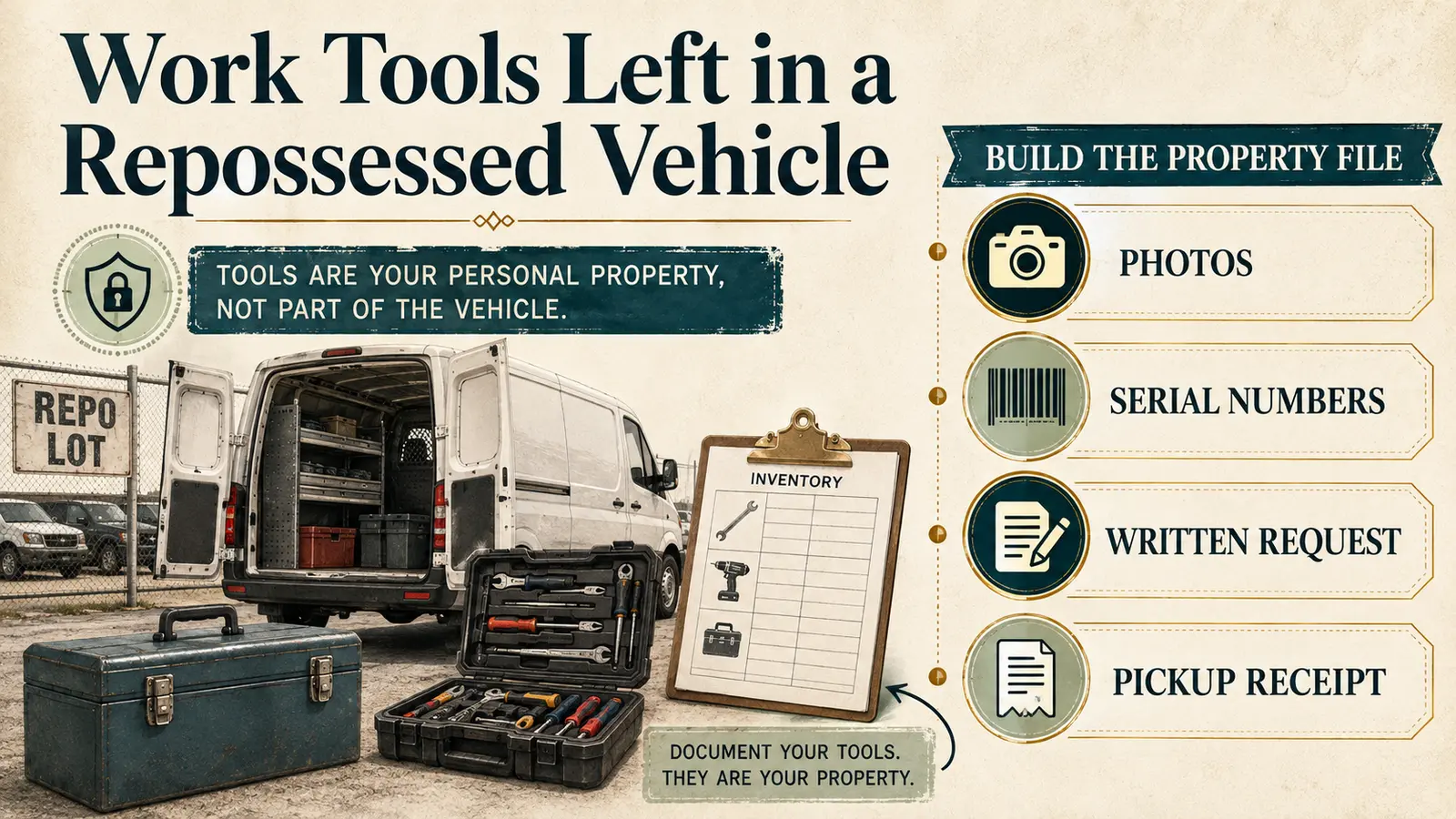
Work tools and job equipment left in a repossessed vehicle
How to document ownership, retrieve tools, and separate business property from the vehicle collateral.
Open guide →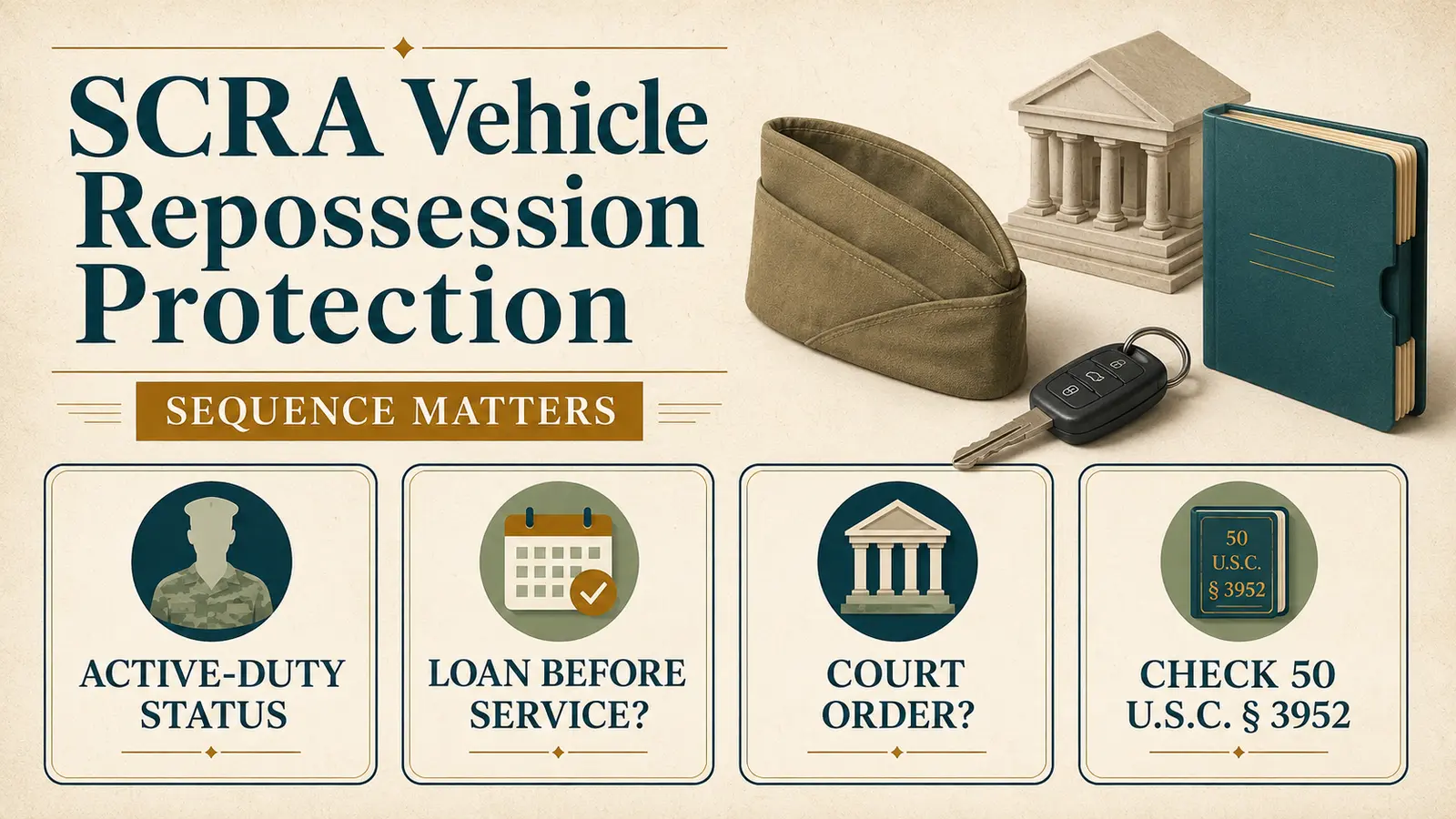
SCRA vehicle repossession protection for active-duty servicemembers
When 50 U.S.C. § 3952 can require a court order before repossession of property purchased or leased before military service.
Open guide →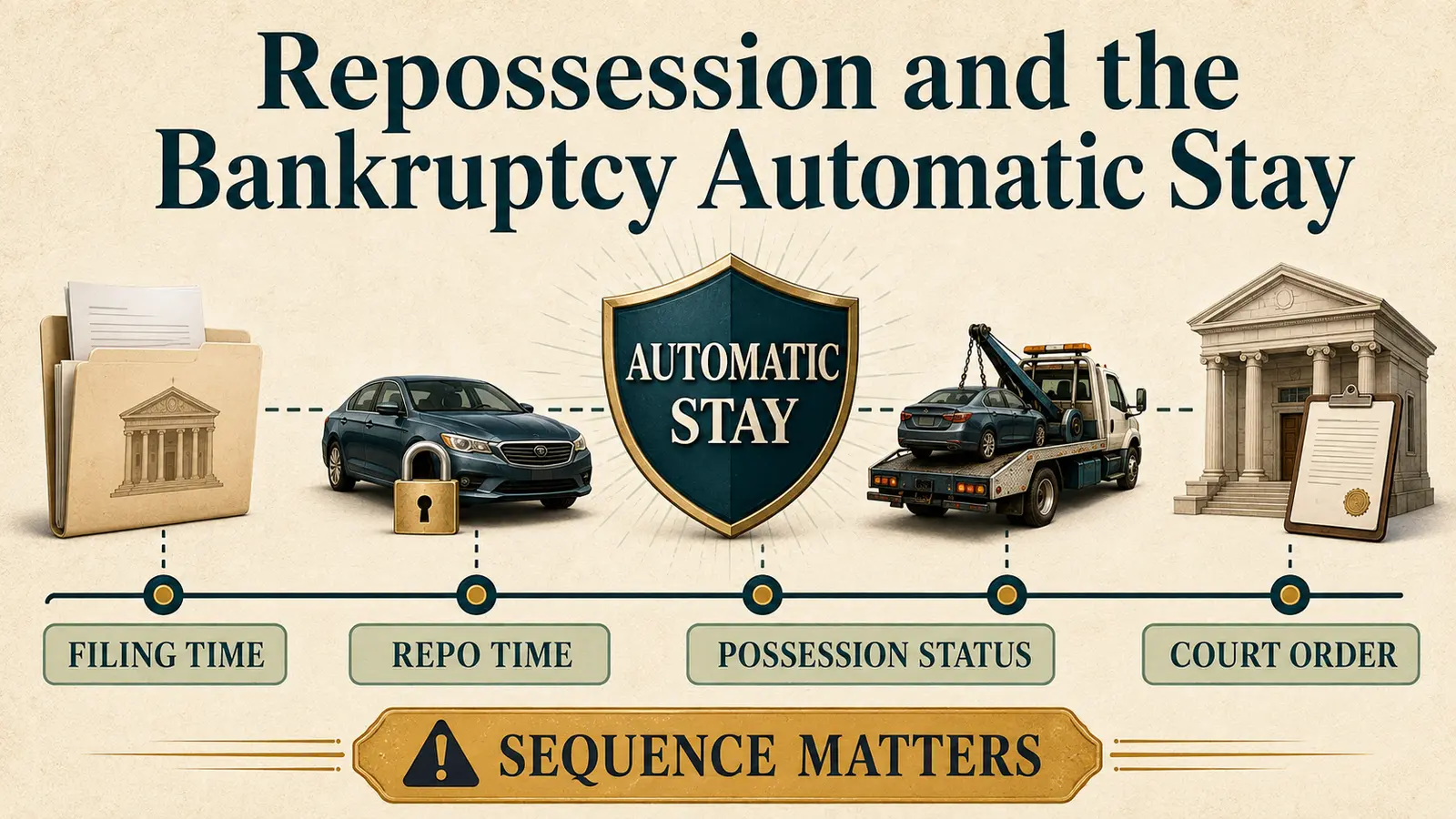
Repossession and the bankruptcy automatic stay: sequence matters
How 11 U.S.C. § 362 changes collection activity and why the timing of the repossession relative to the bankruptcy filing matters.
Open guide →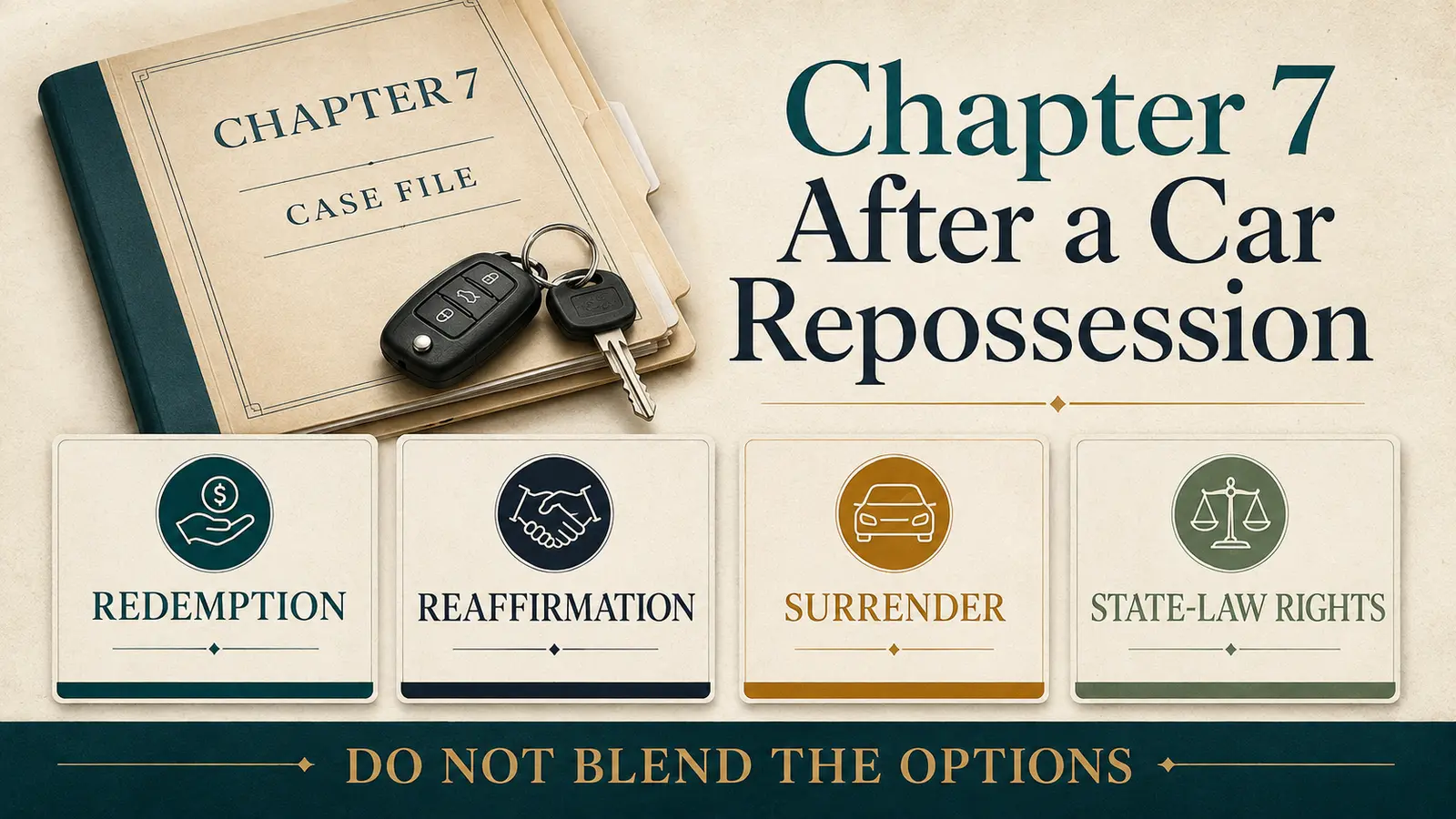
Chapter 7 after a car repossession: identify redemption, reaffirmation, and state-law issues separately
A procedural overview of the federal tools that can intersect with a repossessed vehicle in Chapter 7.
Open guide →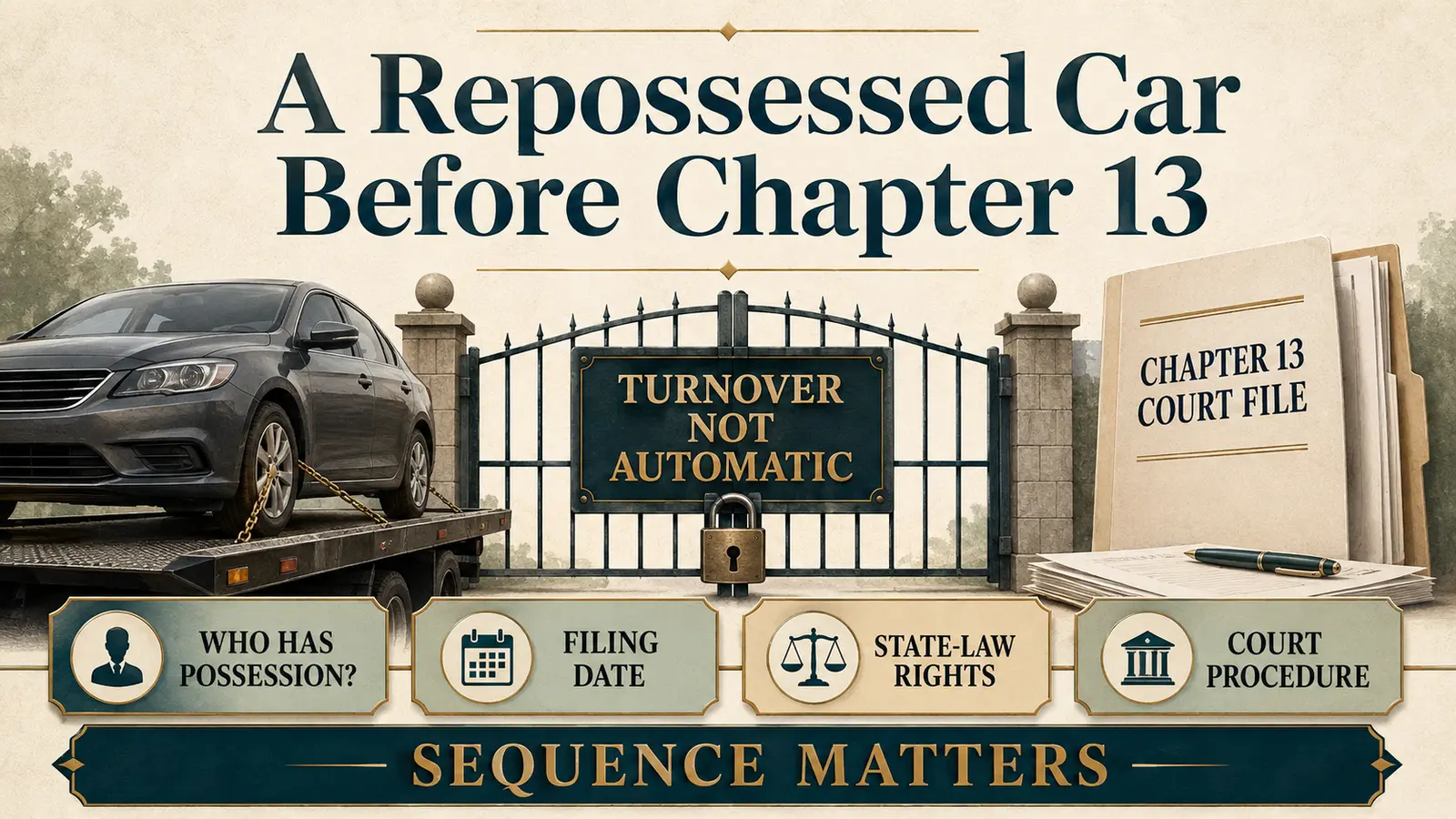
A repossessed car before Chapter 13: why turnover is not automatic
The federal stay, turnover statute, state property rights, and plan treatment can all matter when a vehicle was taken shortly before filing.
Open guide →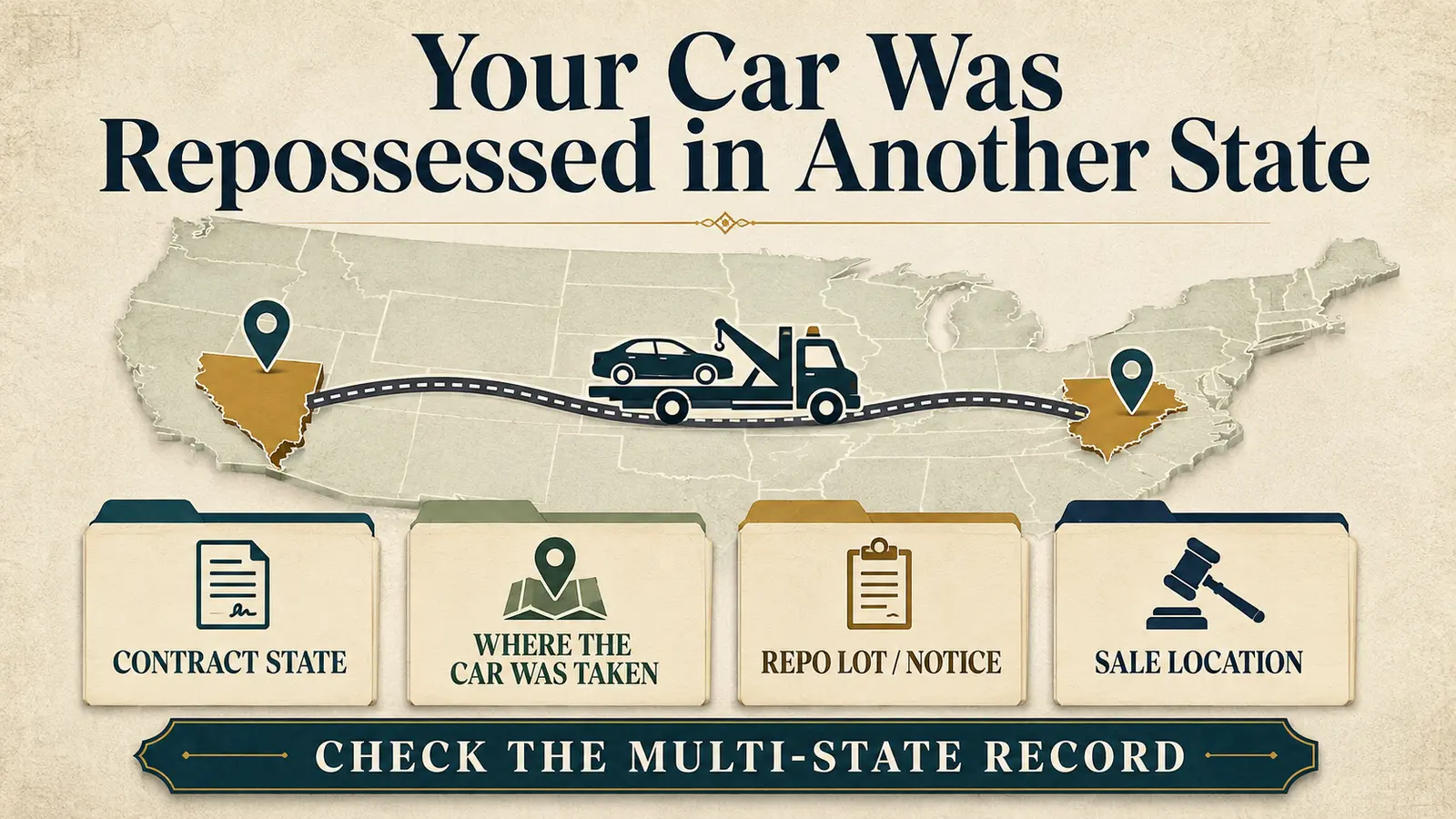
Your car was repossessed while you were in another state
How to organize the choice-of-law, repo-conduct, notice, and property questions when the contract state and repossession state differ.
Open guide →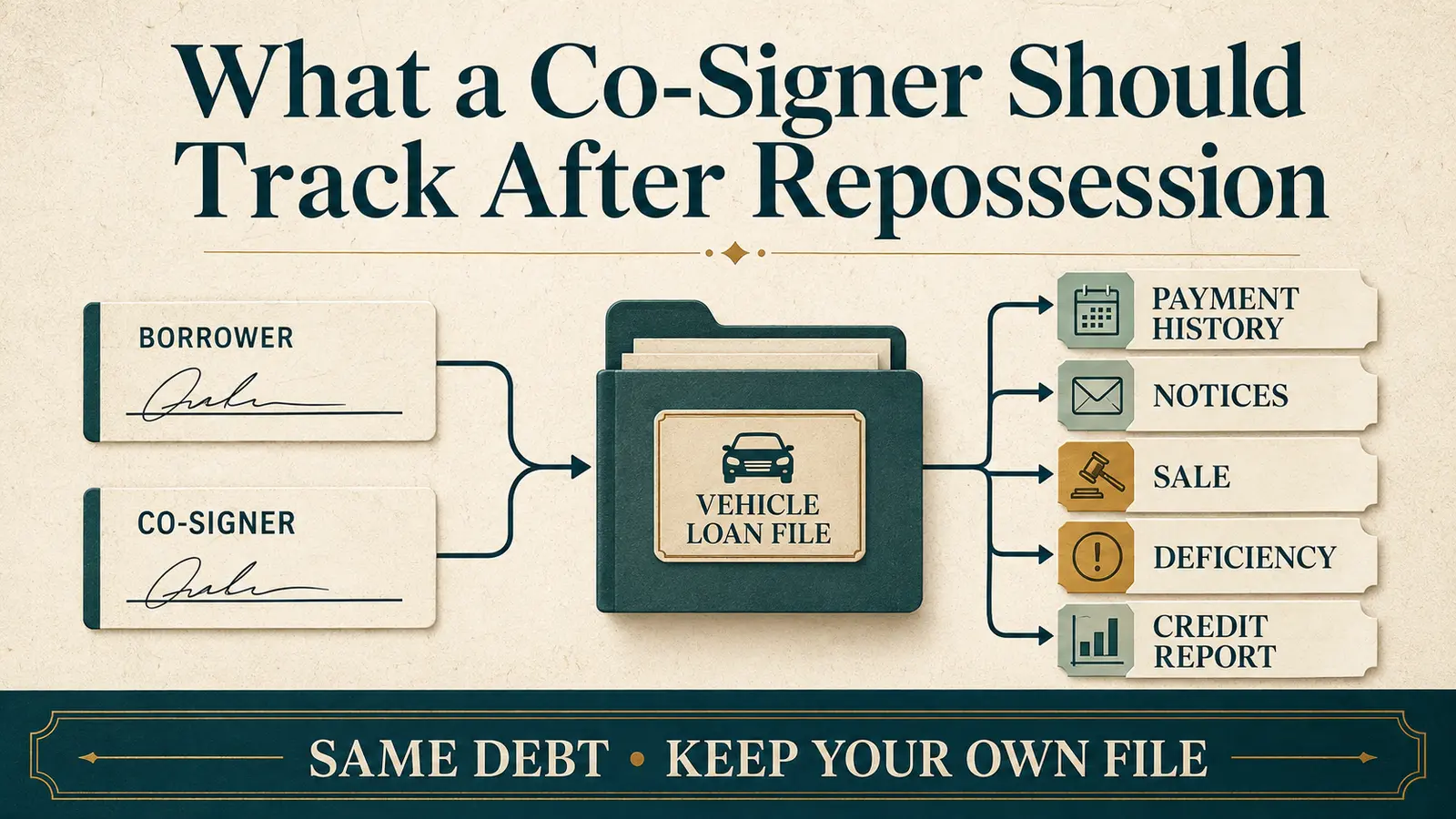
What a co-signer should track after the vehicle is repossessed
How secondary-obligor notice rights, sale accounting, and deficiency exposure can differ from possession of the car.
Open guide →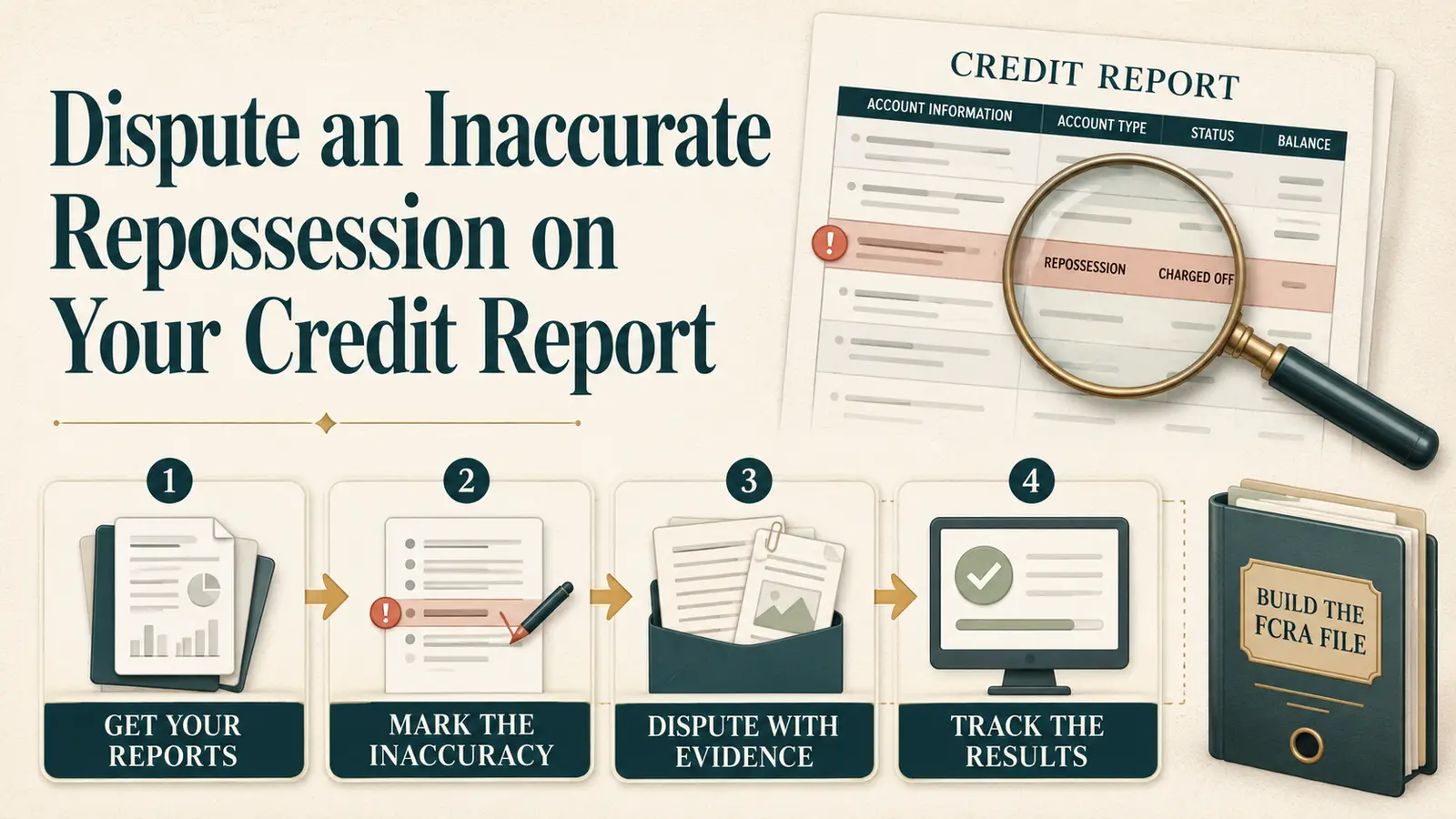
How to dispute an inaccurate repossession or deficiency on a credit report
A fact-specific FCRA workflow for wrong status, wrong balance, wrong delinquency date, or a repossession that the servicer later admitted was erroneous.
Open guide →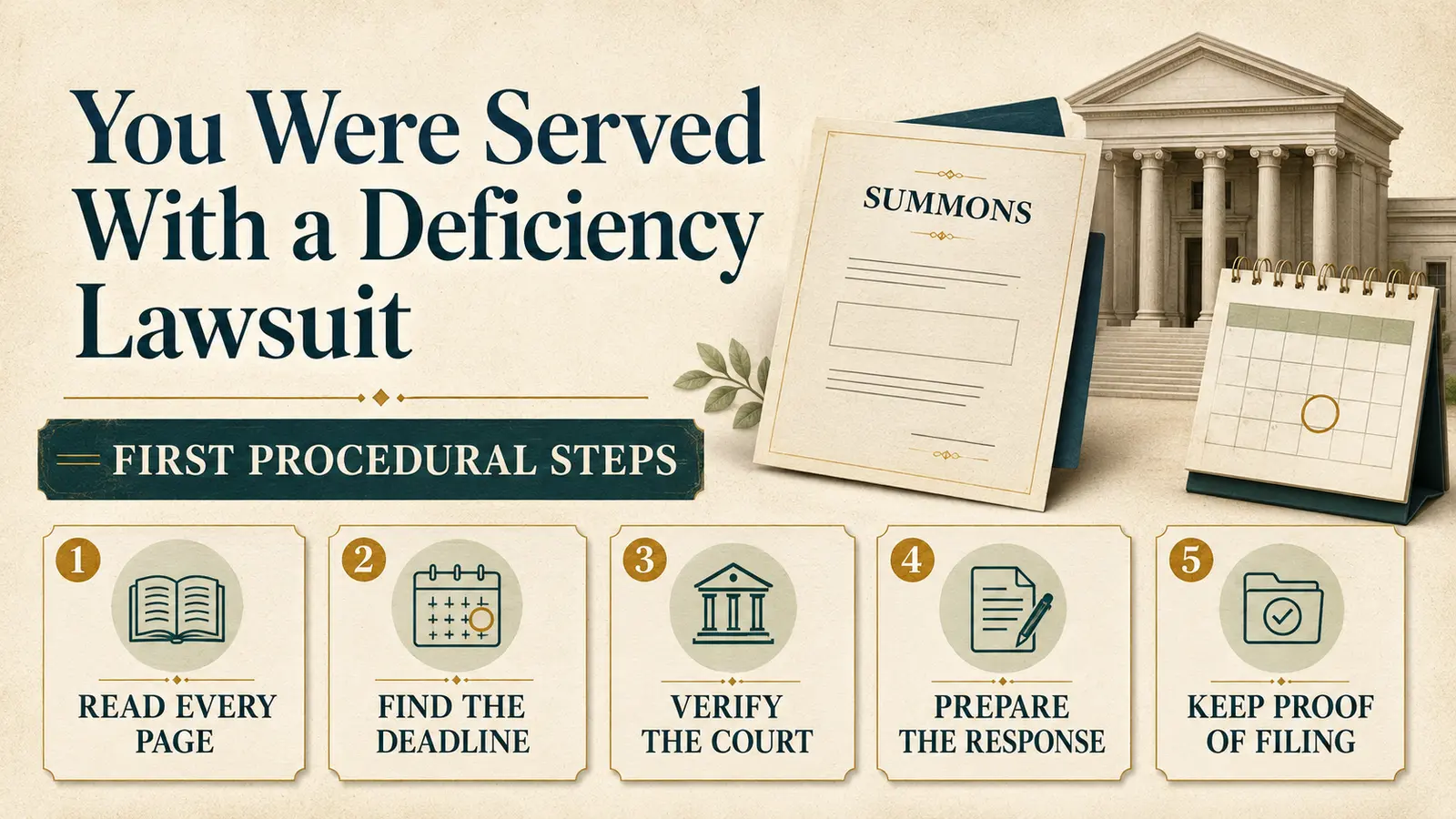
You were served with a deficiency lawsuit: the first procedural steps
A non-strategy checklist for preserving the response deadline, identifying the plaintiff, and organizing repossession evidence for a state-court debt case.
Open guide →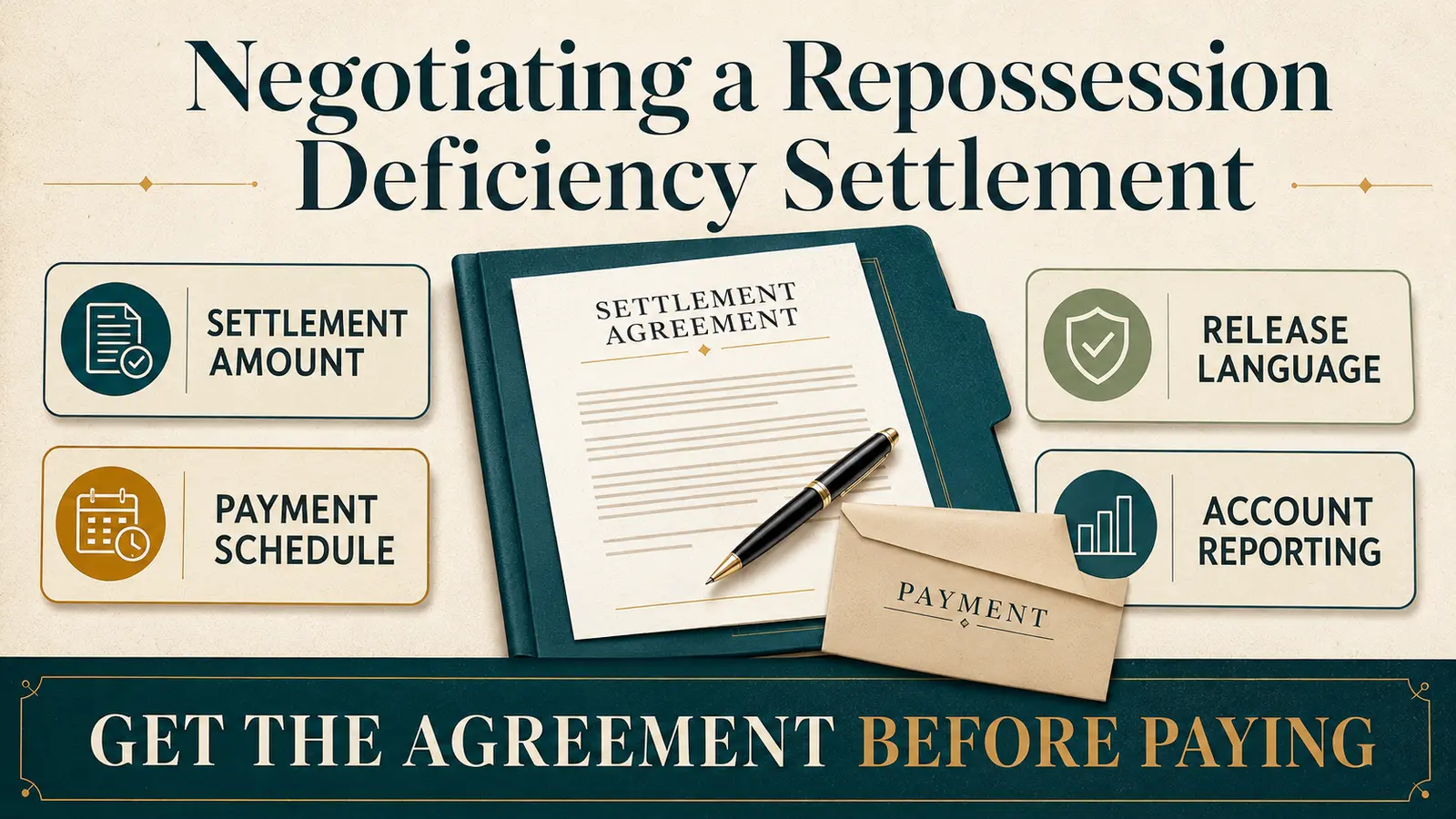
Negotiating a repossession deficiency: get the terms in writing before paying
A document checklist for evaluating a settlement offer without turning the guide into individualized debt advice.
Open guide →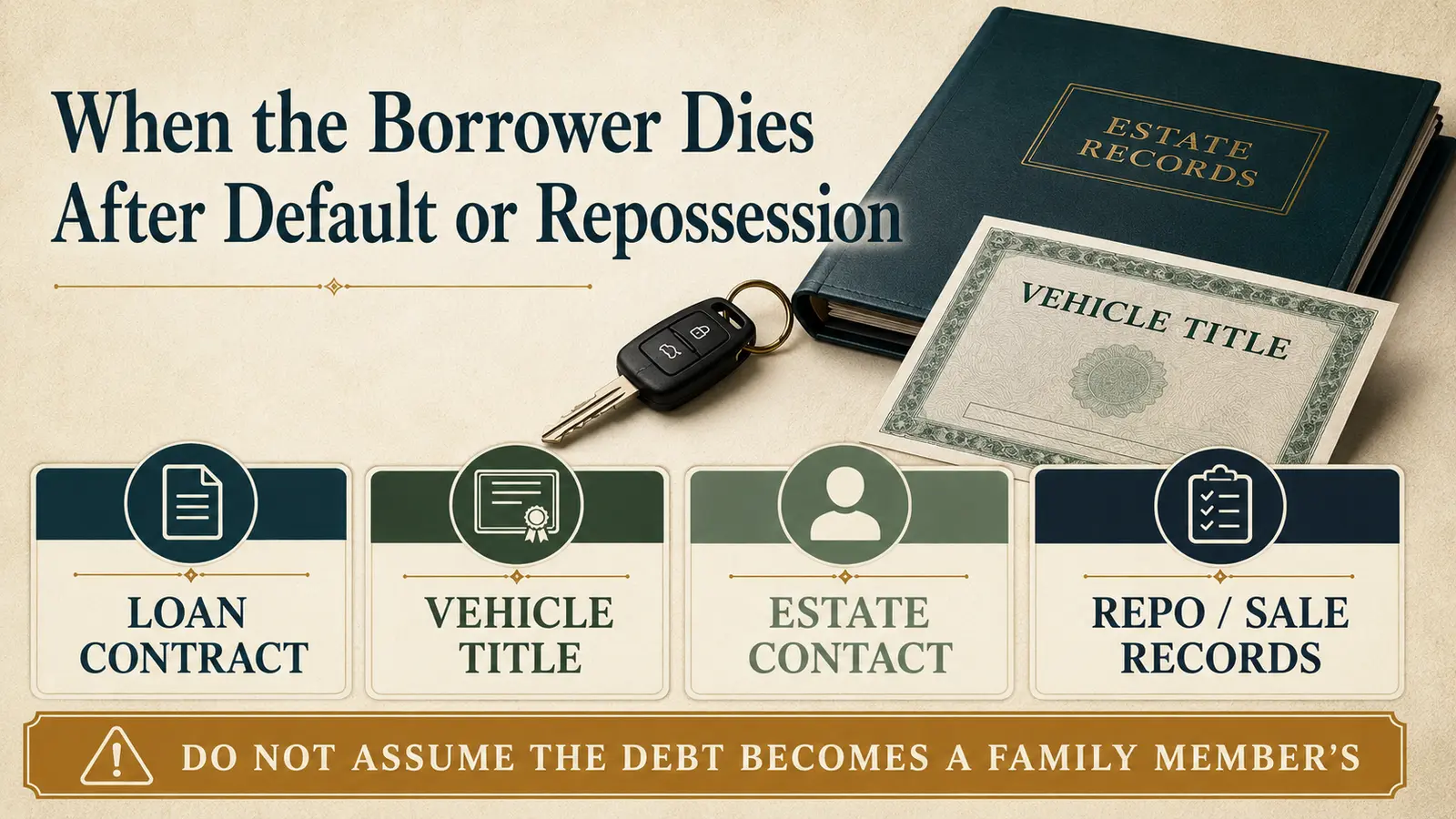
When the borrower dies after a vehicle loan default or repossession
A procedural map for separating the secured vehicle, co-borrower obligations, estate administration, and post-sale deficiency.
Open guide →
The repo agent damaged a gate, garage, or vehicle: preserve the physical evidence
A documentation workflow for property damage that may overlap with breach-of-peace or repossessor-licensing issues.
Open guide →
Getting a car loan after a repossession: what changes and what to check first
How lenders view a recent repossession, why the old deficiency follows you, and the documents to resolve before financing again.
Open guide →
The repo company will not tell you where your car is
A records-first path to locating the vehicle and your belongings when the lender or repossession agent is unresponsive.
Open guide →
How to remove a repossession from a credit report — when it is actually possible
The difference between deleting an inaccurate entry, waiting out an accurate one, and negotiating a reporting term in a settlement.
Open guide →
Central Portfolio Control is collecting a repossession deficiency — what to check first
How to tell whether a debt collector actually owns or is authorized to collect your deficiency balance, and the specific rights that apply when the collector is Central Portfolio Control.
Open guide →
§ 722 redemption: keeping a car in Chapter 7 by paying its value, not the loan balance
How Bankruptcy Code § 722 lets a Chapter 7 debtor keep a financed vehicle by paying its current value in one lump sum — and how that differs from UCC redemption or a reaffirmation agreement.
Open guide →
The car is titled to your spouse, but only you signed the loan — who actually controls it in a repossession
How title ownership, loan signature, and marital property law interact when only one spouse is on the financing agreement and a repossession dispute arises.
Open guide →
How to tell a real repo agent from someone impersonating one
Warning signs of repossession-impersonation scams, and the documents and steps a legitimate repossession agent should be able to produce.
Open guide →
Repossessed during an approved deferment or forbearance: this is a documented servicing failure, not just bad luck
CFPB supervisory findings on lenders repossessing vehicles despite an approved deferment, loan modification, or extension, and what to do if it happens to you.
Open guide →