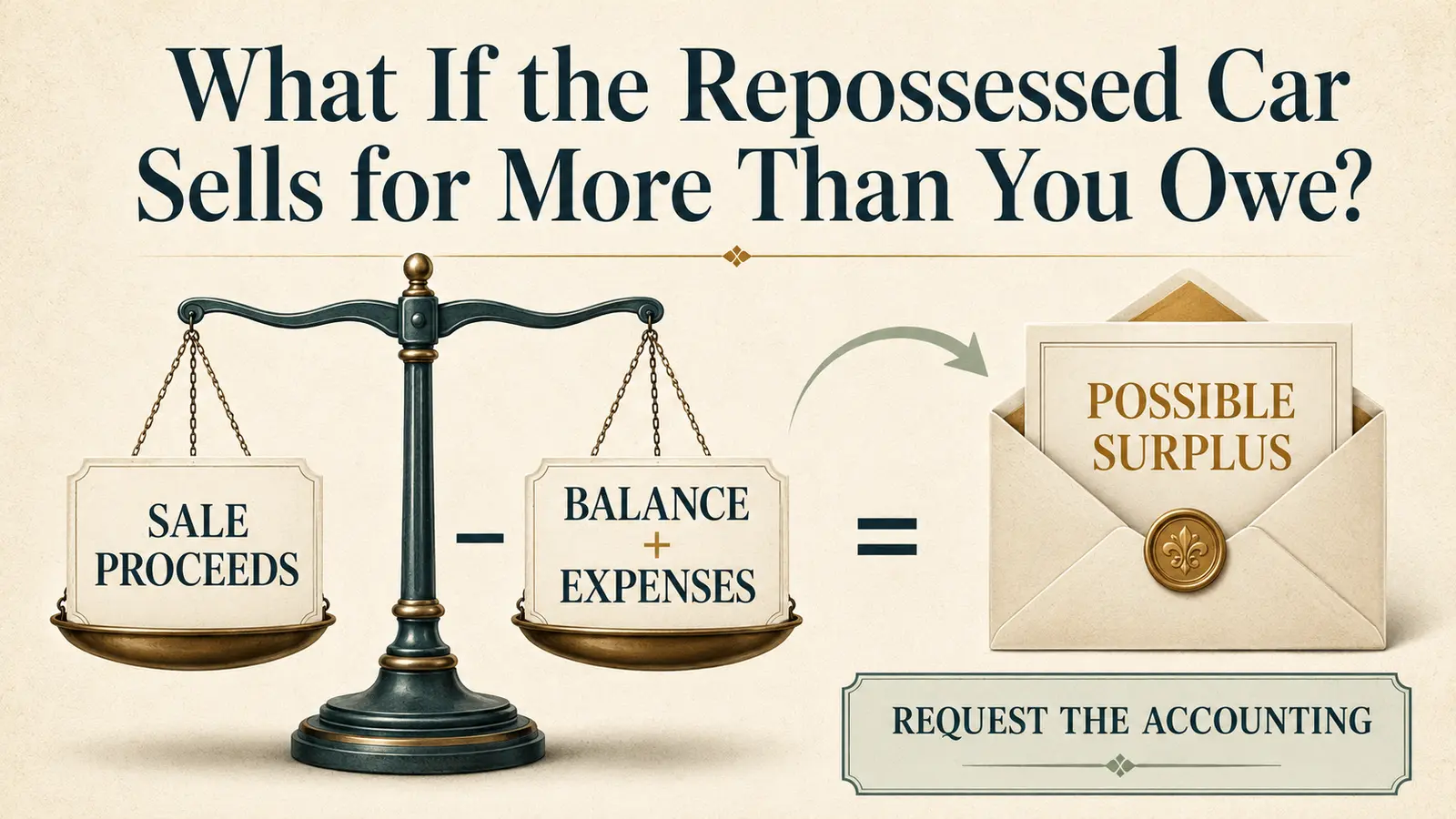
Use the same ledger as a deficiency audit
Model § 9-615 directs the order in which cash proceeds are applied and recognizes the debtor’s right to surplus in ordinary secured transactions. Start with allowed disposition expenses and secured obligations, then determine whether proceeds remain.
Do not compare sale price only with principal. Interest, allowable expenses, subordinate liens, and credits can affect the final result.
Request the post-sale explanation
Model § 9-616 applies to explanations of both surplus and deficiency in consumer-goods transactions. If the creditor’s statement shows a zero balance but the sale price appears much higher, ask for the complete calculation.
A surplus explanation should be just as traceable as a deficiency calculation. Identify the gross sale price, net proceeds, each deduction, and who received any subordinate-lien payment.
Check whether refunds or credits were posted before calculating surplus
Ancillary products, insurance, or other account credits can reduce the secured balance and therefore increase a surplus. Their treatment depends on the contract and product terms.
If a refund was issued to the creditor after the initial sale statement, ask whether a revised accounting or additional payment is due.
Do not assume the auction house sends the surplus
The secured party is generally the party applying proceeds under Article 9. The auction may simply remit net proceeds to the creditor.
Direct questions to the creditor or servicer identified on the account unless the sale documents state another process. Keep the auction receipt as supporting evidence.
A delayed surplus can create a separate records issue
If the calculation clearly shows money due back, request the expected payment method, mailing address on file, and date issued.
A returned check or outdated address can turn a simple surplus into an unclaimed-property issue. State unclaimed-property systems may become relevant if funds remain unclaimed for the statutory period.
State law can add rules
Motor-vehicle retail installment statutes may add timing, notice, or deficiency/surplus rules beyond Article 9.
Use the state article before assuming the model UCC text is the complete answer. The same source-checking discipline applies even when money is flowing back to the borrower.
Reconcile gross price, net proceeds, and priority of payments
Model § 9-615 applies cash proceeds first to reasonable expenses of retaking, holding, preparing, processing, and disposing of the collateral, then to the obligation secured by the interest under which the sale occurred, with additional rules for qualifying subordinate interests. A borrower comparing only the gross auction price with the loan balance can therefore get the wrong answer. Ask for both the gross sale result and the net amount actually applied to the account, plus an itemization of deductions.
Next, compare the secured balance used in the calculation with the account history. Payments posted after repossession, canceled-product refunds, insurance credits, or corrected fees can reduce the amount that must be satisfied from sale proceeds. A surplus audit should run through the same ledger as a deficiency audit; the only difference is where the arithmetic ends.
Track where a surplus payment was sent
If the final calculation shows a surplus, confirm the payee name, address, payment method, check or transaction date, and whether the payment was returned or went unclaimed. If another lienholder received part of the proceeds, request the basis and amount. Keep later correspondence because a “zero balance” statement does not prove that a surplus was actually delivered to the person entitled to it.
Do not stop at a zero-balance portal screen
A portal may close the account after repossession and show zero without displaying how proceeds were applied. Save the final transaction history before access disappears and request the surplus/deficiency explanation. The account status and the cash-flow question are different: a closed account can still require a surplus payment or support a disputed deficiency.
A surplus audit should end with a payment trail, not just a calculation
Once the arithmetic shows a surplus, the remaining question is operational: where did the creditor send it, on what date, and to whom? Keep the sale statement, the creditor’s explanation, the check stub or electronic-payment record, and any returned-mail notation together. If the creditor says a check was mailed to an old address, ask for the exact address used and whether the payment was returned or reissued. That turns a vague “we sent it” response into a traceable disbursement record.
Do not net unrelated collection claims against the surplus without identifying the legal basis. UCC § 9-615 establishes an order for applying disposition proceeds and requires the secured party to account to the debtor for a remaining surplus after the required applications. A state enactment, another lien, or a separate obligation can complicate the ledger, but the complication should appear as an identified line item rather than as a disappearing balance. The practical finish line is a ledger that reconciles to zero and a record showing where the surplus actually went.
Frequently asked questions
- What if my repossessed car sold for more than I owed?
- Article 9 requires the secured party to account for and pay the surplus — the amount left after the secured balance and allowed expenses. Use the same ledger you would use for a deficiency audit and request the post-sale explanation.
- Why has the surplus not arrived?
- Check whether refunds or credits were posted before the surplus was calculated, and note that the auction house usually does not send it — the secured party does. A delayed surplus can become a separate records issue; track where any payment was sent.
- A zero-balance screen — does that mean there is no surplus?
- Not necessarily. Do not stop at a portal screen. Reconcile the gross price, the net proceeds, and the priority of payments, and end the audit with an actual payment trail rather than just a calculation.
Sources checked for this page
- UCC § 9-615 — Application of disposition proceeds; deficiency and surplusModel rules for applying sale proceeds and calculating deficiency/surplus.
- UCC § 9-616 — Explanation of surplus or deficiencyModel consumer-goods rule for pre- or post-disposition explanation.
- CFPB — What happens if my car is repossessed?Federal consumer overview of repossession, belongings, sale, redemption, deficiency, and credit reporting.