Know what § 9-616 is for
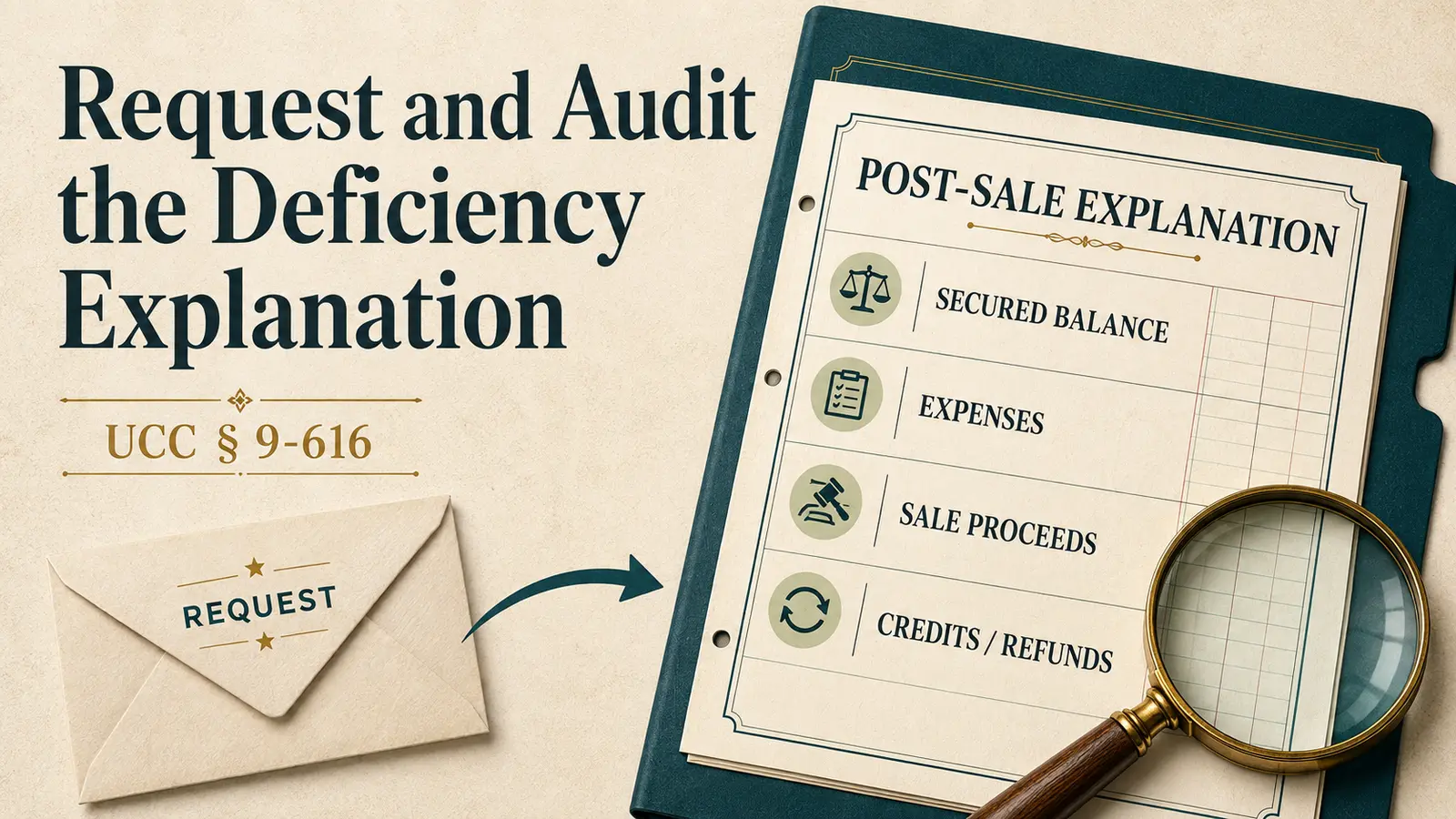
Model § 9-616 addresses an explanation of the calculation of a surplus or deficiency after disposition of consumer goods. It describes the information a complying explanation should contain, including the aggregate amount of the obligation, proceeds, credits, expenses, and the resulting surplus or deficiency.
The state’s enacted version controls. Some creditors send the explanation automatically; the model section also addresses a consumer request after disposition. Keep the request narrow and written so there is a clear record of what you asked for.
Ask for the statement and the supporting ledger
Request the deficiency explanation, sale date, gross and net proceeds, an itemization of repossession and disposition expenses, payments or credits posted after repossession, and any ancillary-product refunds.
If a line item says only “other charges,” ask for its description and supporting invoice. The goal is not to demand every internal record at once; it is to make each number in the final calculation traceable.
Reconcile from the account outward
Start with the secured obligation immediately before applying sale proceeds. Compare it with the payment history and any acceleration or payoff statement. Then add only identified expenses, subtract proceeds, subtract later credits, and calculate your own total.
A difference can arise from a simple posting date, duplicate fee, missing refund, or interest calculation. Isolating the transaction makes the dispute easier for both the consumer and the creditor to investigate.
Do not confuse gross sale price with net proceeds
Auction reports can show buyer fees, seller fees, transport, reconditioning, storage, or other deductions. The creditor’s accounting should make clear what amount was credited and what separate expenses were charged.
If the vehicle sold for $10,000 but the account receives a much smaller credit, the explanation should show why. Ask for the sale invoice and fee invoices rather than assuming the difference is improper or correct.
Use the explanation to test sale-related legal questions
Once the numbers are clear, turn to commercial reasonableness, notice compliance, and state-specific deficiency restrictions. A mathematically correct deficiency can still be legally disputed if the sale process did not comply with governing law.
Conversely, a notice issue does not excuse sloppy arithmetic analysis. Keep the accounting and procedure questions separate so each can be supported with its own evidence.
Preserve the first and every revised version
Creditors sometimes issue corrected statements after a refund, auction adjustment, or error investigation. Save each version with its date.
A revision history can show whether a disputed charge was removed, whether a credit was added, and what balance a later collector should have received. That is particularly useful when collection ownership changes.
Turn the explanation into a line-by-line audit
Model § 9-616 describes a consumer-goods explanation of surplus or deficiency rather than a generic collection summary. When it arrives, copy each component into a simple ledger: aggregate secured obligation, disposition proceeds, expenses and credits, resulting surplus or deficiency, and any other amount the enacted statute requires. Put a question mark next to every charge that cannot be tied to a contract provision, invoice, auction record, or account entry.
If the statement uses net sale proceeds, ask whether auction fees were already deducted before the creditor posted the proceeds. If it lists a repossession or storage charge, compare the dates and invoices. If financed add-on products were canceled, look for the refund entry. The goal is not to demand every conceivable document; it is to identify the exact line that prevents the numbers from reconciling.
Know when a pre-sale accounting request is a different tool
Article 9 also contains § 9-210, which addresses certain authenticated requests for an accounting or statement of account and uses a different timing framework from the post-disposition explanation in § 9-616. A borrower trying to understand the amount secured before a sale should not assume a § 9-616 deficiency explanation is already due. Keep the two requests labeled separately so the recipient can tell whether you are asking for the current secured balance or for the post-sale surplus/deficiency calculation.
Frequently asked questions
- What is a UCC § 9-616 explanation for?
- In a consumer-goods transaction it is designed to show how the deficiency or surplus was calculated — the sale proceeds, the expenses, and the credits. You can turn it into a reconciliation worksheet that tests the number.
- What should I ask for along with the statement?
- Ask for the supporting ledger, not just the summary. Reconcile from the account outward, and do not confuse the gross sale price with the net proceeds after auction and reconditioning charges.
- How is this different from a pre-sale accounting request?
- A § 9-210 accounting request addresses the secured balance before the sale; the § 9-616 explanation adds disposition data after the sale. They are different tools for different phases — keep the first and every revised version of the explanation.
Sources checked for this page
- UCC § 9-616 — Explanation of surplus or deficiencyModel consumer-goods rule for pre- or post-disposition explanation.
- UCC § 9-615 — Application of disposition proceeds; deficiency and surplusModel rules for applying sale proceeds and calculating deficiency/surplus.
- UCC § 9-627 — Commercial reasonablenessModel guideposts for commercially reasonable disposition.
- UCC § 9-210 — request for accounting or statement of accountModel Article 9 text; pre-sale/current-account tool, distinct from § 9-616.