Repossession and late-payment history are related but not identical entries
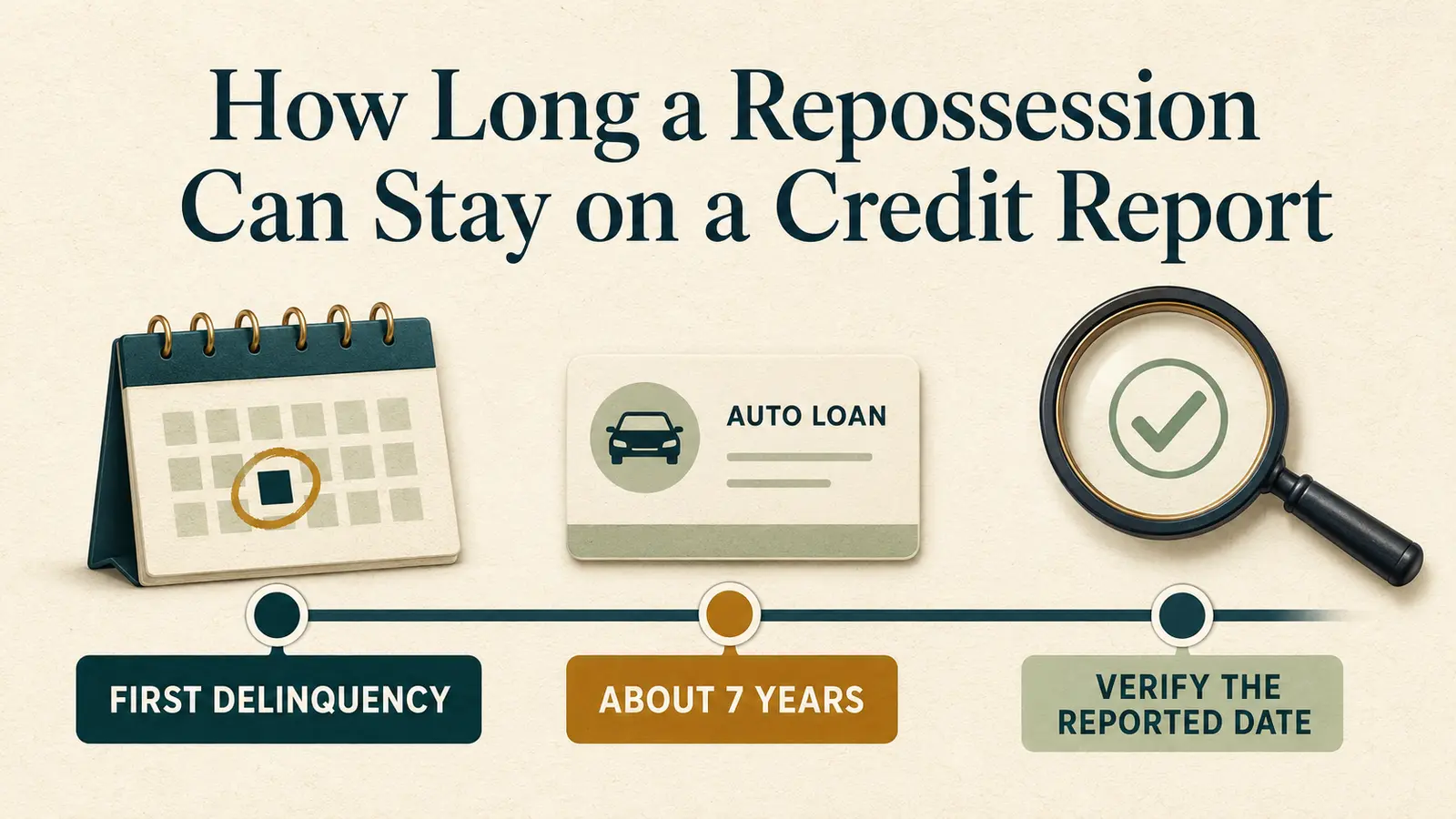
CFPB explains that a repossession can remain on a credit report for up to seven years. The underlying account can also show late-payment history, charge-off status, collection placement, or a deficiency balance. Different bureaus can format the same account differently, so compare the tradeline details rather than looking only for the word “repossession.”
Pull reports from the nationwide consumer reporting companies and save copies as evidence of what was actually reported on a specific date. Screenshots from a score app may omit the fields needed to investigate an error.
The date of delinquency is a federal reporting concept
FCRA § 623 requires a furnisher reporting a delinquent account that is placed for collection, charged off, or subjected to a similar action to provide the date of delinquency—the month and year when the delinquency that immediately preceded the adverse action began. That mechanism is designed to prevent a transferred or collected debt from getting a new reporting clock simply because it changed hands.
For a repossession file, locate the first missed payment in the uninterrupted delinquency that led to repossession and compare it with the date the furnisher reports. A later repossession date, sale date, charge-off date, or collection assignment is not automatically the same thing as the FCRA delinquency date.
Dispute concrete inaccuracies, not accurate negative history
An error dispute should identify the field that is wrong and provide evidence: payment date, account number, repossession status, deficiency amount, date of delinquency, ownership, or balance. Saying “this hurts my score” is not evidence that accurate information must be deleted.
FCRA § 1681s-2 sets duties for furnishers concerning accuracy and disputes. A dispute sent through a consumer reporting agency can trigger furnisher investigation duties under subsection (b). Direct-dispute rules also exist by regulation. Keep copies of the dispute, attachments, delivery confirmation, and the result.
A wrongful repossession creates a different reporting issue
If the vehicle was taken after the account had been cured, a payment was misapplied, or the servicer admitted a repossession error, the dispute should include that underlying correction evidence. CFPB supervisory materials have identified wrongful repossession practices, which is why account-level proof matters.
Ask the servicer not only to return or correct the vehicle status but also to explain what it will furnish to each consumer reporting agency. A corrected servicing event does not always propagate instantly to every report.
A deficiency can be separately disputed if the accounting is wrong
The sale and post-sale balance can create a new amount dispute even if the fact of repossession is accurate. Reconcile sale proceeds, fees, credits, and ancillary-product refunds before challenging the balance field.
If a collector is furnishing the deficiency, compare its opening balance and delinquency date with the original creditor’s records. Transfers should not create a later delinquency date or an unexplained increase.
Keep the reporting dispute separate from the state-law sale challenge
FCRA accuracy rules and Article 9 sale rules answer different questions. A sale can be challenged as commercially unreasonable even if a credit bureau accurately reports that the creditor claims a deficiency. Conversely, a reporting field can be wrong even when the sale itself complied with Article 9.
Organize the file into two subfolders: “sale/accounting” and “credit reporting.” Cross-reference shared documents, but write each dispute around the law and facts that apply to that system.
Audit the tradeline field by field instead of disputing the word repossession
Credit reports can display several dates and balances around one auto account: payment status, date of first delinquency, repossession or charge-off notation, current balance, past-due amount, account ownership, and date updated. A useful dispute identifies the particular field believed to be inaccurate and ties it to a document. “Remove the repo” is much weaker than “the reported balance does not reflect the post-sale credit shown on the creditor’s statement” or “the account is reporting a date inconsistent with the payment history.”
The seven-year concept is often discussed as though a repossession creates a brand-new clock. For adverse account information, the underlying delinquency history matters. Preserve the payment history that shows when the delinquency leading to the repossession began; later sale, transfer to a collector, or account update should not be casually treated as a reason to invent a new delinquency date. If the date field is the dispute, make that the center of the evidence packet.
Keep the debt-accounting dispute separate from the credit-report dispute
A balance can be disputed because the sale accounting appears wrong even when the reporting format itself matches what the furnisher currently claims. Conversely, a reporting field can be inaccurate even if the consumer is not contesting the entire underlying debt. Keep copies of the credit report version you reviewed, the dispute submitted, attachments, confirmation or tracking information, and the response. That record makes it possible to compare what changed instead of relying on screenshots taken months apart.
Frequently asked questions
- How long can a repossession stay on my credit report?
- A repossession, like other delinquencies, generally reports for about seven years measured from the date of first delinquency — a federal FCRA concept — not from the repossession date or the date you later paid. Late-payment history on the same account is a related but separate set of entries.
- Can I dispute a repossession just because I do not like it?
- Accurate negative history is not an error. Disputes work when you can point to a concrete inaccuracy — wrong status, wrong balance, wrong delinquency date — audited field by field, rather than disputing the word “repossession” in the abstract.
- What if the repossession itself was wrong?
- A wrongful repossession or an incorrect deficiency creates a different reporting issue. Keep the credit-report dispute separate from any state-law challenge to the sale or the accounting; they use different evidence and different channels.
Sources checked for this page
- CFPB — What happens if my car is repossessed?Federal consumer overview of repossession, belongings, sale, redemption, deficiency, and credit reporting.
- 15 U.S.C. § 1681s-2 — Responsibilities of furnishersFederal duties concerning accuracy, disputes, and the date of delinquency.
- CFPB Bulletin 2022-04 — Mitigating Harm from Repossession of AutomobilesCFPB supervisory and enforcement discussion of wrongful repossessions and servicing practices.