Use the consumer-goods rule, not only the general notice rule
Model § 9-613 covers general disposition notices, while § 9-614 adds consumer-goods requirements. Auto financing for personal use is commonly a consumer-goods transaction, so the additional content can matter.
Check the identity of debtor and secured party, description of collateral, method of intended disposition, timing information, deficiency explanation language, redemption-contact information, and a contact for additional sale information.
Distinguish missing information from confusing information
An item can be present but unclear—for example, two dates with no explanation of which controls, a phone number that routes to a general line, or a sale location described only by an auction name.
Write down what the notice actually says and what you could not determine from it. That is more useful than replacing the language with your interpretation.
Preserve the exact version you received
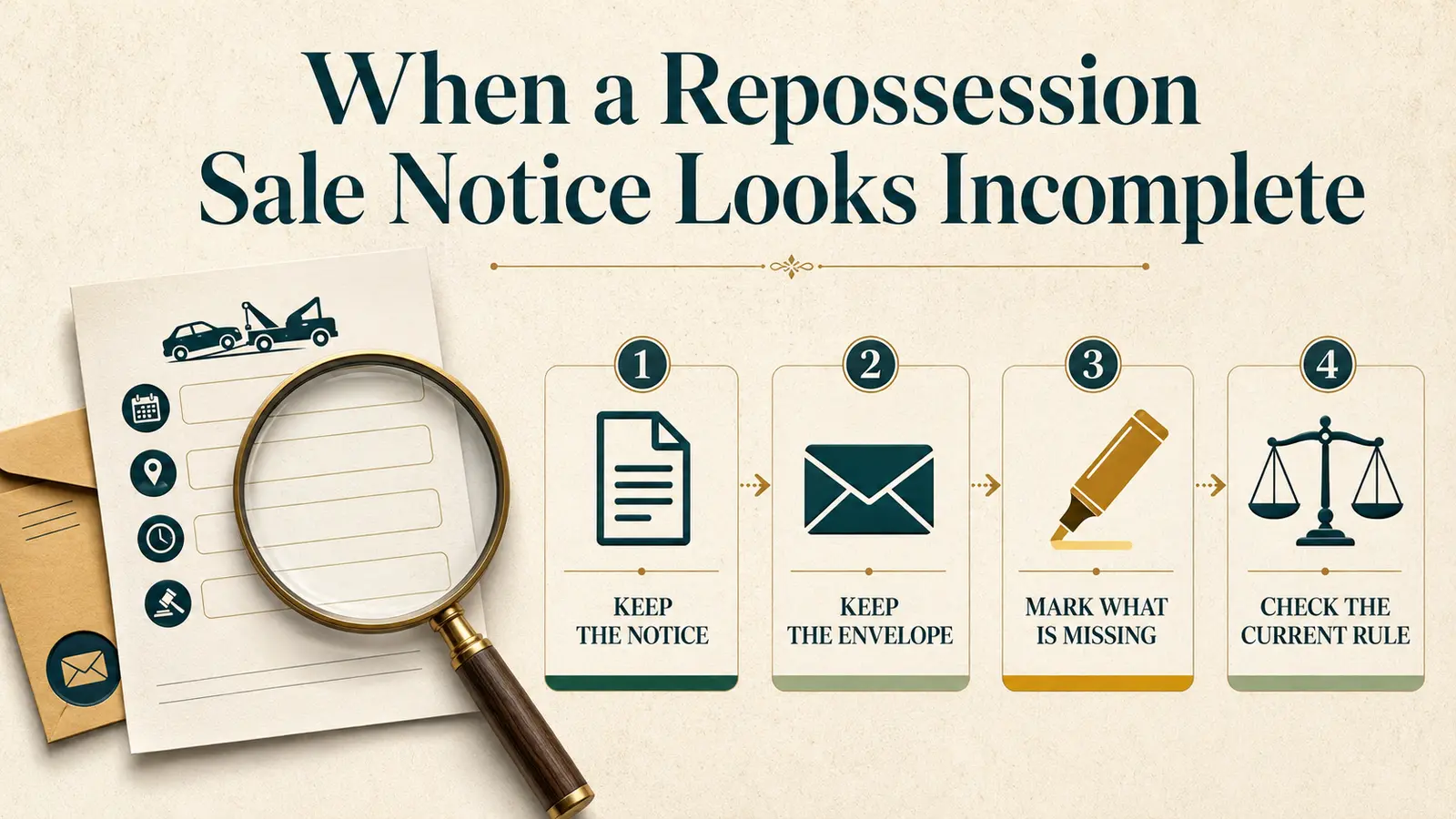
Do not rely on a lender portal that can update a document silently. Download the notice, save the email, photograph the envelope, and note the date of receipt.
If you later obtain a “sample” or reprinted notice from the creditor, keep it separately. The question is what was sent in your case, not what the system can generate now.
A defective notice can matter to redemption and sale preparation
Missing or ambiguous timing can interfere with the consumer’s ability to redeem, attend a public sale, or gather funds. Missing contact information can also make it harder to obtain the redemption amount.
Document attempts to get clarification. Save call logs, secure messages, emails, and any written response that supplied the missing information after the original notice.
Do not assume the remedy
Model § 9-625 provides remedies for Article 9 noncompliance, but the effect on a consumer deficiency varies by state. Some states use an absolute-bar approach in certain contexts; others use a rebuttable presumption, offset, statutory damages, or another rule.
The article for the relevant state should identify the controlling statute or appellate authority. A defect that matters in Georgia, for example, cannot simply be assigned the same consequence in Oregon.
If the sale is imminent, timing comes before theory
A consumer who still wants to redeem or attend the sale should not wait for a complete legal analysis before requesting the amount or sale details. Ask for clarification immediately while preserving the objection.
The practical sequence is: protect any time-sensitive right, preserve the defective notice, request the missing facts, and then evaluate the legal consequence with state-specific sources.
Classify the defect before deciding what it means
A notice problem can involve identity, collateral description, sale method, public-sale time/place, private-sale earliest date, consumer explanations, contact information, or delivery. Model §§ 9-613 and 9-614 distinguish general disposition-notice content from the additional consumer-goods form. Copy the exact notice into an audit table and mark which statutory item you believe is absent; do not rely on a generic checklist that may be for a commercial transaction or another state.
Also separate a missing item from a minor inaccuracy. The enacted state version of Article 9 and local case law can determine whether wording substantially complies, whether an error is misleading, and what consequence follows. A website should not convert “notice appears defective” into “the debt is erased.” Preserve the issue for state-specific review and connect it to the later sale and deficiency records.
Delivery evidence can matter as much as the face of the notice
Keep the envelope, certified-mail tracking, email headers, portal message timestamp, returned-mail record, and address used by the creditor. Compare that address with the contract, change-of-address notices, and any recent account statements. The legal question may be whether the secured party sent the required notification in the required manner, not whether the borrower remembers opening it. State law can add its own delivery rules, so the state page should identify the controlling source.
Compare the model form with the enacted state statute
Article 9’s model consumer-goods form is a useful orientation tool, but the controlling text for publication is the state enactment in force on the relevant date. Some states add motor-vehicle retail-installment provisions outside Article 9. On a state page, cite both when both matter and explain which document requirement comes from which statute.
Frequently asked questions
- My sale notice looks incomplete — what should I do?
- Compare it against your state’s enacted consumer-goods statute, not just the general notice rule, and preserve the exact version you received. Distinguish genuinely missing required information from information that is merely confusing.
- Does every notice defect wipe out the deficiency?
- No. The remedy for a defective notice is state-specific — do not assume it. A defect can still matter to redemption and sale preparation even where it does not bar the deficiency.
- The sale is about to happen — what comes first?
- Timing before theory. Act on redemption, an accounting request, and preserving evidence now; classify the notice defect and its legal consequence afterward. Delivery evidence can matter as much as the face of the notice.
Sources checked for this page
- UCC § 9-613 — Contents of notification: generalGeneral notice content; consumer-goods transactions use § 9-614.
- UCC § 9-614 — Contents of notification: consumer-goods transactionModel consumer-goods disposition notice rules and safe-harbor form.
- UCC § 9-625 — Remedies for secured party’s failure to complyModel remedies provision; consumer-goods consequences vary by state enactment and case law.
- UCC § 9-623 — Right to redeem collateralModel redemption right before disposition, collection, or acceptance.