
Start with the lender, in writing
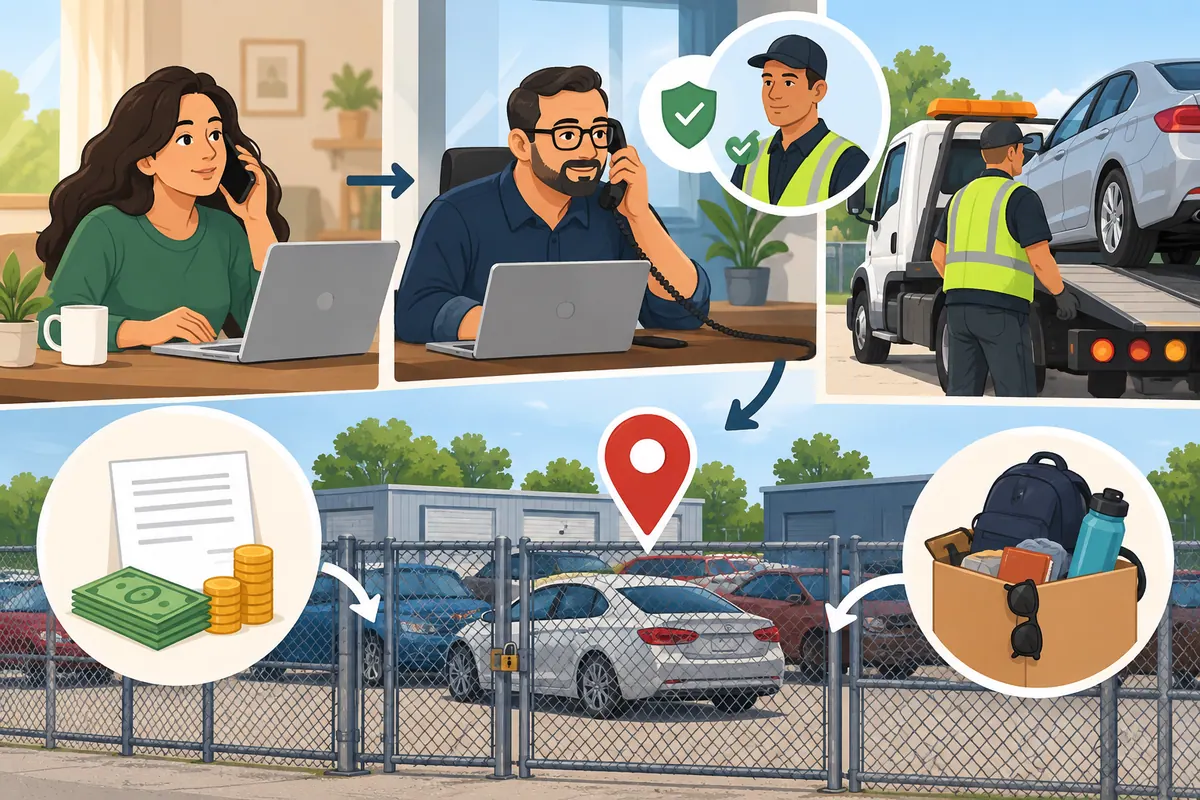
The finance company ordered the repossession and can identify the recovery agent and the storage lot. Send a written request that asks for three things: the name and contact information of the repossession company, the address where the vehicle is stored, and a time to retrieve personal property. Keep a copy and note the date sent.
A written request creates a record that the information was requested and, if a dispute follows, when. A phone call that goes nowhere does not.
Confirm it was a repossession, not a theft
If no one will confirm anything, contact local law enforcement to check whether the vehicle was reported as repossessed. Some states or local jurisdictions require a repossession report, so ask whether a report was filed and whether the department can search by VIN. Reporting rules and access to those records vary; no report by itself does not establish that the vehicle was stolen.
The belongings are a separate demand
Unattached personal belongings inside the vehicle are generally a separate issue from the car securing the loan, but an accessory or item specifically included in the security agreement may be treated differently. Make a written inventory of belongings and send a separate request for their return to the lender and, once known, the storage lot. Ask whether the repossessor created an inventory at pickup.
A fee demanded to release personal property is not automatically lawful. Whether any storage or handling charge for belongings is allowed depends on your state’s rule, so document the demand rather than simply paying it.
Use the disposition notice as a locator
Before disposition, the creditor generally must send a reasonable, authenticated notice under the applicable Article 9 rules; state law and the transaction can affect the details. The notice identifies a contact for redemption and accounting. If that notice arrives while you still do not know where the car is, the contact on it is another route to the storage location and the redemption figure.
Escalate through traceable channels
- A written complaint to the state agency that licenses repossession or towing companies, where your state licenses them.
- A complaint to the state attorney general’s consumer protection division and, for a financed vehicle, to the federal consumer complaint system.
- Legal aid or a consumer attorney if a sale date is approaching and you still cannot locate the vehicle or your property.
Keep a single timeline
Record every call and letter with dates, names, and what was said. If the lack of information later causes a missed redemption window, a lost item, or an unnecessary storage charge, that timeline is the evidence that you asked and were not answered.
Ask the lender for a confirmed location and release path
A recovery vendor may not update the lender’s system immediately after the tow, so begin with the lender’s repossession or recovery department and ask for the agent name, storage facility, street address, business hours, daily storage rate, personal-property process, redemption quote and sale date. Ask the representative to confirm each item in writing or through the lender’s secure portal. Record the date, time, name or ID and any reference number for the call.
If the first representative does not know the location, ask when the vendor is expected to report it and which department will call back. Follow up on the promised time and keep the escalation reference. Do not go to an unverified address or confront a recovery agent. If the car may instead have been stolen or the lender cannot confirm a repossession, contact local police through its non-emergency channel and ask how to document the uncertainty.
| Ask for | Why it matters | Write down |
|---|---|---|
| Verified lot name and address | Avoid a wrong or unsafe location | Who confirmed it and when |
| Redemption or reinstatement quote | Determine whether recovery is still possible | Amount, expiration and accepted payment method |
| Storage and release fees | Check the amount and timing | Daily rate, cutoff and itemized charges |
| Personal-property appointment | Recover belongings separately from the vehicle | Inventory, hours, ID needed and contact person |
Location duties depend on state law and the type of transaction
Do not assume every state requires the same immediate post-tow phone call. Article 9 generally requires a notification before disposition and sets specific information rules for consumer-goods sales; some states add an earlier notice identifying the exact storage location. Maryland, for example, has a post-repossession notice rule for covered credit transactions. California separately regulates repossession agencies and personal-property inventory. These examples do not create one national deadline.
If you live in a state with a specific location-notice rule, compare the statute’s covered agreement, delivery method and timing with the date on your letter. For other states, ask the lender promptly and keep a written record of the request and response. A missing location answer may be urgent because storage charges and sale deadlines continue, but its legal effect depends on the governing law and facts.
If the lot still cannot be identified
- Call the lender’s verified recovery department, not a number from an unsolicited text.
- Request a callback deadline and escalation reference from the vendor desk.
- Send a dated written request through the lender’s secure channel.
- Check the state regulator’s repo rules and act on any redemption or sale deadline.
Recover belongings without losing the vehicle deadline
Personal property inside the vehicle is usually handled separately from the secured vehicle. Ask for an inventory and an appointment to collect belongings; identify essential medication, work tools, child seats and documents so the request is specific. Bring identification and a copy of the appointment confirmation. Photograph the property you receive and note anything missing before signing a receipt, while keeping the tone factual.
Do not let a property appointment distract from the vehicle’s redemption or sale date. Ask the lender for both processes in the same call, then calendar them separately. If the company refuses access to belongings or charges an amount you do not recognize, ask for the written policy and itemized fee and preserve it. A state repossession regulator or consumer agency may explain the local inventory procedure.
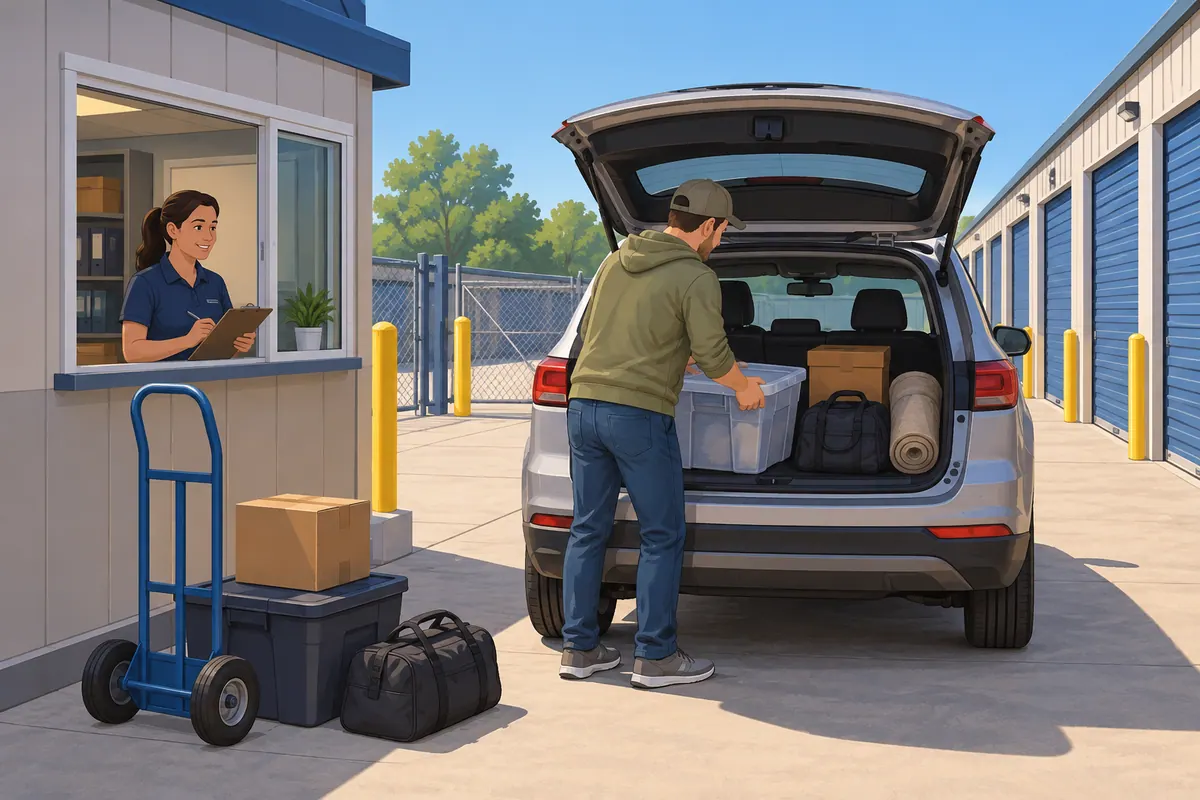
Use one call to establish both the vehicle and property deadlines
Before ending a call, repeat the storage address and ask the representative to confirm the sale date, redemption cutoff, amount due, payment method and personal-property appointment. Read the address back to avoid a wrong-lot trip. Ask whether a third-party lot requires identification, proof of ownership, an appointment or a separate property release form. Write down what the representative says and request it through a secure written channel.
If the lender cannot confirm the location, do not infer that the vehicle is safe from sale or that the repossession was canceled. Ask who owns the next callback and by what time, then escalate through the lender’s recovery department. A missing location and a missing sale notice are different problems; track each separately and preserve every message while contacting the appropriate state regulator if the sale date is near.
What to record once you receive a storage address
Before traveling to the lot, verify the facility’s hours, appointment rules, identification requirements and whether it has an inventory of personal property. Ask whether retrieving belongings requires a separate appointment and whether any fee is being demanded; request the fee basis in writing. Do not assume that paying a storage charge, collecting belongings or speaking with the lot reinstates the loan or stops a sale.
Send the lender a short follow-up confirming the address, contact name, vehicle access instructions, sale date and current redemption quote. This gives both sides one written record if the recovery vendor’s information changes. If the location is outside your state or the lender says the sale is already arranged, get local advice quickly and continue to preserve the dates from every notice.
Frequently asked questions
- How do I find out where my repossessed car is being stored?
- Send the lender a written request for the repossession company’s name and contact, the storage address, and a time to retrieve belongings. You can also ask local law enforcement, which often has a repossession notification on file.
- Can they refuse to give me my belongings?
- Ask for the property-release process and an inventory separately from the vehicle. The available access, timing and any allowed fee depend on state law; keep the written request and the company’s response.
- What if a sale date is coming and I still cannot locate the car?
- Use the lender’s verified recovery contact to request the confirmed lot, redemption amount and sale schedule. Preserve the pre-sale notice and delivery record, then check the state rule and escalate in writing if information is missing.
Sources checked for this page
- CFPB — What happens if my car is repossessed?Federal overview, including personal belongings and the pre-sale notice.
- FTC — Vehicle RepossessionConsumer guidance on retrieving belongings and dealing with the lender.
- UCC § 9-611 — Notification before disposition of collateralThe pre-sale notice that identifies redemption and accounting contacts.
- CFPB — Submit a complaintFederal complaint channel for a financed vehicle.
- Maryland Code § 12-1021 — Repossession notice and sale information
- California BSIS — Repossession Agency consumer FAQs