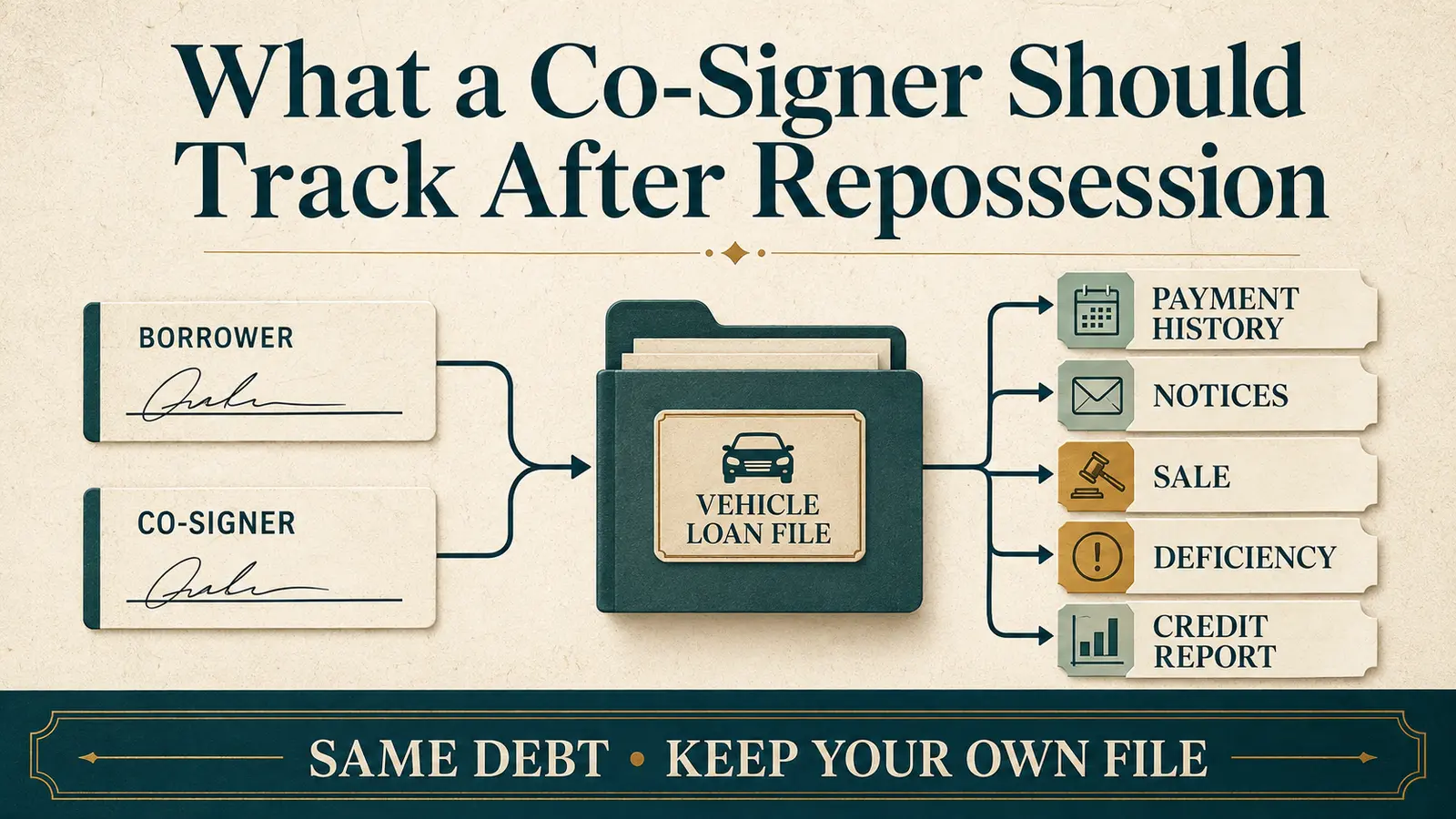
Start with the signed obligation
Read the retail installment contract to identify every buyer, co-buyer, guarantor, and other obligor. The labels used by the dealer are less important than the obligations actually signed.
Determine whether the co-signer is a “secondary obligor” under the enacted Article 9 for notice purposes.
Disposition notice may need to go to a secondary obligor
Model § 9-611 requires notification to the debtor and any secondary obligor in covered dispositions.
If a co-signer received no notice, preserve address records and the contract. The deficiency consequence of a notice failure is state-specific.
A co-signer may also have redemption rights
Model § 9-623 allows a debtor, secondary obligor, and certain secured parties or lienholders to redeem before the terminating event.
That does not mean redemption is financially sensible, but the right should not be overlooked merely because the co-signer did not possess the car.
Reconcile the same deficiency accounting
The creditor’s post-sale explanation and collector itemization should be traceable no matter which obligor receives the bill.
A co-signer can request the sale information and compare it with the contract balance, proceeds, and charges.
Internal agreements between borrowers do not necessarily bind the creditor
One borrower may have promised the other to make every payment or indemnify the co-signer. That arrangement can create rights between them but does not automatically alter the creditor’s contract rights.
Keep those agreements separate from the creditor file.
A lawsuit creates an independent deadline for each served defendant
If the creditor sues multiple obligors, each person should verify service and response deadlines.
One defendant’s negotiation does not necessarily protect another from default judgment.
A cosigner can be a secondary obligor with independent notice and redemption interests
Article 9 uses the term “secondary obligor” for certain parties whose obligation is secondary to another obligor or who have recourse rights. Model § 9-611 requires disposition notification to specified debtors and secondary obligors, and § 9-623 permits a debtor, secondary obligor, or other secured party/lienholder to redeem before the statutory cutoff. A cosigner should therefore keep their own copy of notices instead of assuming the primary borrower will forward everything.
After sale, compare the creditor’s deficiency explanation and collection demands sent to each signer. Payment by one obligor should be reflected in the account; a settlement or release may or may not release the other signer depending on its written terms and applicable law. Never infer “cosigner released” from the fact that the lender stopped calling one person.
If suit is filed, match every defendant to the docket
A complaint may name the borrower, cosigner, or both. Each named defendant should verify service, answer deadline, claims, and amount from the court record. Keep the retail installment contract’s signature pages and any guaranty language because liability can depend on the actual role documented, not the label family members used when the car was bought.
Keep separate payment records for each obligor
When either signer pays after repossession, save the receipt and confirm how the payment was applied to the shared account. If one signer negotiates, obtain the agreement before assuming it changes the other signer’s liability. A collector’s account note may not contain the release language that the parties actually agreed to.
A co-signer should preserve notices addressed to everyone on the obligation
Article 9 uses the concept of a secondary obligor, and § 9-611 includes secondary obligors among the people who generally receive a reasonable authenticated notification before disposition. Do not assume that a notice sent to the primary borrower automatically answers what was sent to the co-signer. Save the envelope, email header, and address used for each recipient. If one signer moved, note when the creditor was told of the new address.
The same separation helps after sale. A co-signer can request or use the deficiency explanation to test the sale proceeds, expenses, credits, and remaining balance rather than relying on a collector’s total. If litigation begins, each named defendant should track service and response deadlines independently. An agreement between the borrowers about who was “supposed to pay” may matter between them, but it does not by itself rewrite the creditor’s contract. Start with the signed obligation and the creditor’s actual notices before analyzing contribution or reimbursement between co-obligors.
Frequently asked questions
- Is a co-signer liable for the deficiency after repossession?
- A co-signer is typically a secondary obligor and can be pursued for the deficiency independently of who had the car. Start with the signed obligation to confirm the role.
- Does the co-signer get the sale notice?
- Often yes. A disposition notice may need to go to a secondary obligor, and a co-signer may also have redemption rights. Preserve notices addressed to everyone on the obligation.
- Do private agreements between the borrowers protect the co-signer?
- Not against the creditor. Internal agreements about who pays do not necessarily bind the lender. If a lawsuit is filed, each served defendant has an independent response deadline — match every defendant to the docket.
Sources checked for this page
- UCC § 9-611 — Notification before dispositionModel UCC text; state enactments can add requirements.
- UCC § 9-623 — Right to redeem collateralModel redemption right before disposition, collection, or acceptance.
- UCC § 9-616 — Explanation of surplus or deficiencyModel consumer-goods rule for pre- or post-disposition explanation.
- CFPB — What should I do if I’m sued by a debt collector or creditor?Federal consumer guidance to read the papers and respond by the court deadline.