What surrender changes
- You avoid a repossession fee and storage charges the lender would otherwise add, and you avoid the risk of a confrontation or property damage during a tow.
- You control the handoff — you can document condition and mileage, and remove your belongings first.
- It can shorten the timeline, because the lender does not have to locate and recover the vehicle.
What surrender does not change
- The lender still sells the vehicle and still applies Article 9’s disposition-notice and commercial-reasonableness rules.
- A deficiency — the payoff plus allowed expenses minus net sale proceeds — can still be pursued unless the lender expressly waives it in writing.
- The credit report generally shows the account as a repossession either way; "voluntary" is a label on the same status, not a separate, softer entry.
The credit-reporting question, specifically
Many borrowers surrender because they believe it reports better. In practice the tradeline usually still reflects a repossession, and the late-payment history that came before it is already on the report. If the lender is willing to report the account differently as part of the surrender, that is a term to negotiate and document, not an automatic result.
Where the decision can genuinely matter
Surrender is more attractive when repossession fees and storage would be significant, when there is a real risk of a breach-of-the-peace incident, or when you need a clean, documented handoff of the vehicle and your belongings. It is less useful if you are close to being able to cure the default, because surrender ends that option.
If a sale is likely to leave a large deficiency no matter what, the surrender-versus-tow choice mostly affects the fees added to that deficiency, not whether the deficiency exists.
Ask three questions before delivering the vehicle
- Is the lender agreeing to waive the deficiency, or only to take the car back? Get the answer in writing.
- How will the account be reported after surrender?
- Where and when do I hand it over, and how do I get a signed receipt for the vehicle and its condition?
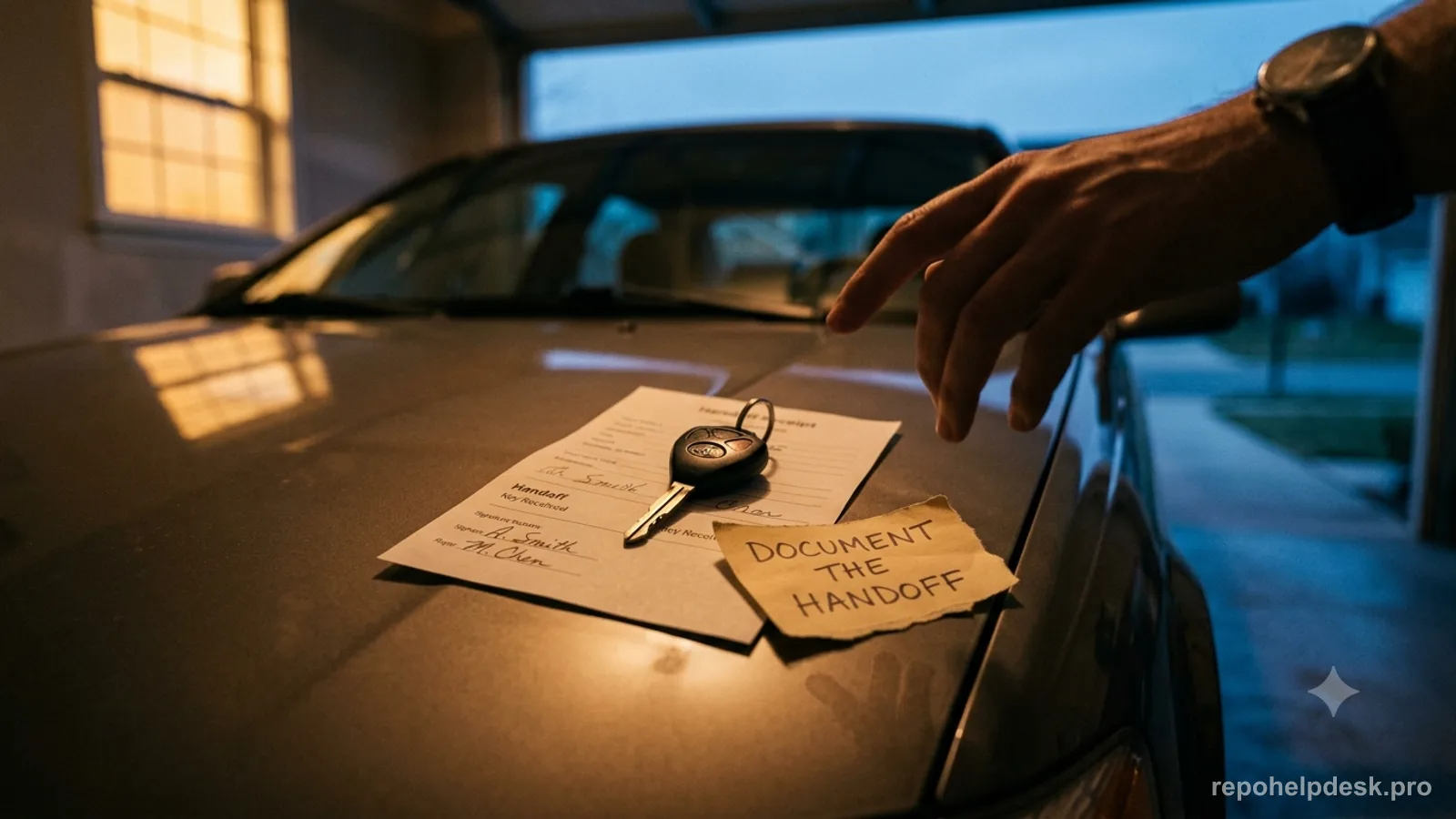
Document the handoff like a repossession you controlled
Photograph the exterior and interior, record the odometer, list and remove personal property, and get something in writing acknowledging the date and the vehicle’s condition. Then treat the later sale notice and post-sale accounting with the same scrutiny you would apply after an involuntary tow.
Frequently asked questions
- Is voluntary surrender better for my credit than a repossession?
- Usually not by itself. The tradeline generally still reflects a repossession, and the earlier late payments are already reported. Any better reporting is something to negotiate and get in writing, not an automatic result of surrendering.
- Do I still owe money if I voluntarily give the car back?
- Often yes. The lender still sells the vehicle and can pursue a deficiency — the payoff plus allowed expenses minus the net sale proceeds — unless it expressly waives it in writing.
- What is the actual advantage of surrendering?
- You avoid repossession and storage fees, avoid the risk of a confrontation or property damage during a tow, and control a documented handoff of the vehicle and your belongings.
Sources checked for this page
- CFPB — What happens if my car is repossessed?Covers voluntary and involuntary repossession and the resulting balance.
- FTC — Vehicle RepossessionConsumer guidance; voluntary surrender does not eliminate a deficiency.
- UCC § 9-610 — Disposition of collateral after defaultThe sale rules apply whether possession was voluntary or involuntary.
- UCC § 9-616 — Explanation of calculation of surplus or deficiencyConsumer-goods post-sale accounting the borrower can request.