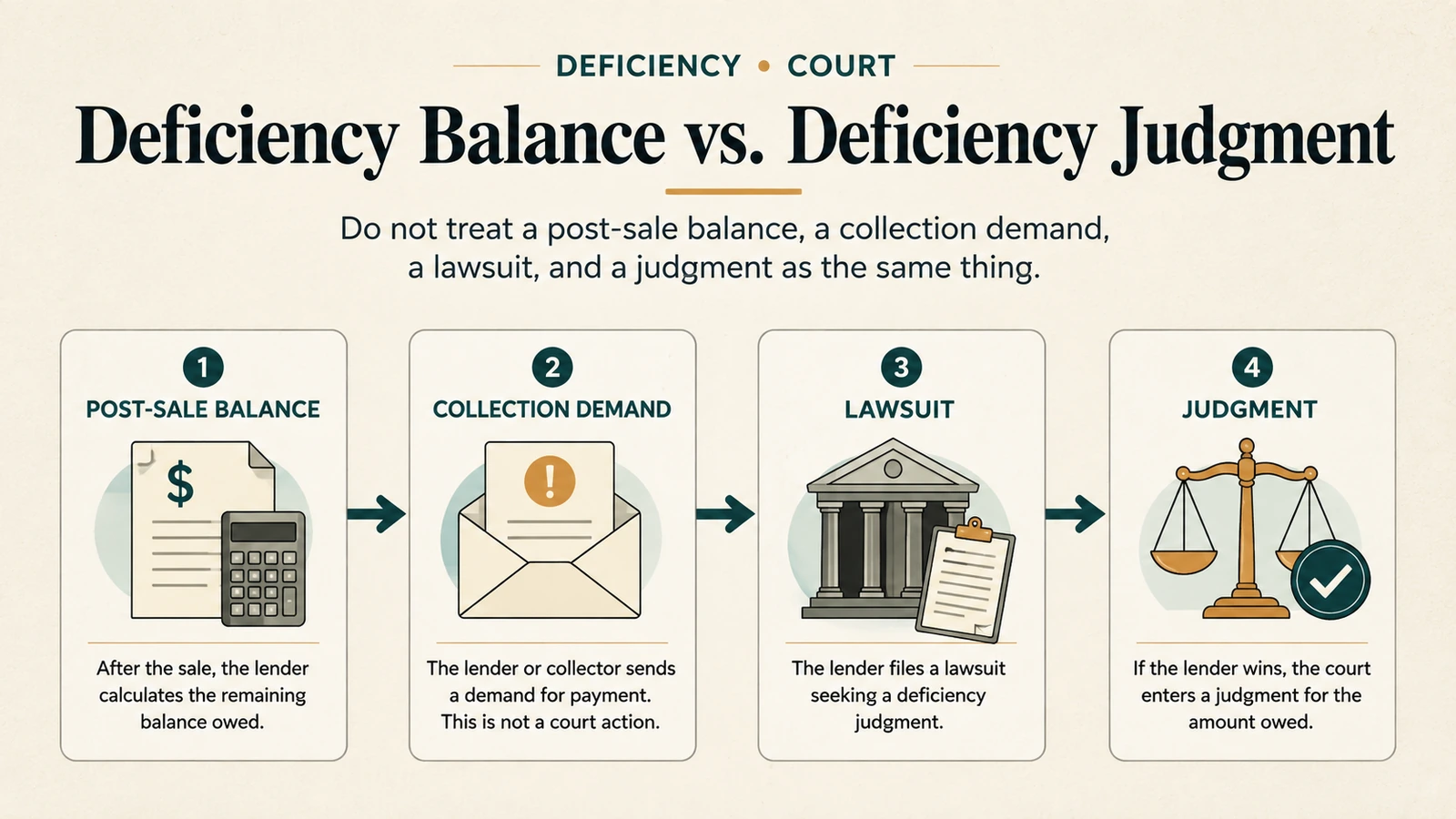
Stage one is the creditor’s post-sale accounting
After disposition, the creditor may calculate a remaining balance after applying sale proceeds and permitted expenses. In consumer-goods transactions, Article 9 includes an explanation mechanism under § 9-616. This is the place to check the math and the sale-related inputs.
A statement that says “deficiency balance” is not, by itself, a court order. It tells you what the creditor asserts remains due. Preserve it with the disposition notice, sale results, and payment history.
Stage two may be collection without a lawsuit
The creditor may collect directly or place or sell the account to a debt collector or debt buyer. If the FDCPA and Regulation F apply to the collector, validation information can help identify the current creditor, account number, itemization date, and current amount.
Use that information to bridge the records. The collector’s starting balance should be traceable to the original creditor’s deficiency. If the account was sold, keep assignment or ownership information that identifies who now claims the right to collect.
Stage three begins when court papers are filed and served
A complaint changes the task. The key date becomes the response deadline under the forum’s rules, not the next voluntary-payment date in a collection letter. CFPB consumer guidance is explicit that a person sued over a debt should read the papers carefully and respond by the stated deadline.
Do not assume that calling the plaintiff’s lawyer, requesting validation, or negotiating a payment automatically extends the court deadline. Those activities may happen in parallel, but the docket follows court rules.
A judgment is the result of a court process
A judgment can be entered after litigation, settlement, consent, or default if the defendant does not respond. It can enable post-judgment remedies that are distinct from ordinary collection contacts. The details—garnishment, liens, exemptions, renewal—are state-law issues and are outside the pre-judgment deficiency calculation.
If a letter uses the word “judgment,” verify the court, case number, parties, and docket rather than relying on the collector’s label. A genuine judgment should correspond to an actual court record.
The defenses can come from events that happened before the lawsuit
Notice defects, commercially unreasonable disposition, payment errors, incorrect credits, and state-specific limits on deficiency recovery can all arise from the repossession sequence. That is why the original notices remain relevant even months or years later.
Model UCC § 9-626 supplies a rebuttable-presumption structure for nonconsumer transactions but expressly leaves the consumer-transaction rule to the courts. A state may use a rebuttable presumption, an absolute bar, setoff, or another rule through statute or case law. The state page should identify the governing approach rather than pretending there is a single national consequence.
Use different labels in your own file
Call the creditor’s figure “post-sale deficiency,” the collector’s communication “collection demand,” the filed case “deficiency lawsuit,” and the final court order “judgment.” That vocabulary makes it easier to track what has and has not happened.
It also helps when requesting records: you can ask for the § 9-616 explanation from the creditor, validation information from a covered debt collector, and pleadings or docket documents from the court without mixing the sources.
Identify which document you actually received
A deficiency statement, a collector letter, a civil complaint, and a judgment are four different documents. A post-sale statement is an accounting position taken by the creditor. A collection letter may add validation information and identify the current collector. A complaint opens a lawsuit and comes with court-specific response rules. A judgment is entered by a court after the litigation process or default. Treating all four as “a judgment” can cause a borrower to miss the step that actually needs attention.
When a lawsuit exists, build a separate litigation folder containing the summons, complaint, proof or details of service, docket number, filing court, plaintiff name, and every deadline printed by the court. Keep the sale notice, § 9-616 explanation, auction paperwork, and payment history in a second evidence set. The first set tells you what the court requires procedurally; the second helps test the amount and sale process the plaintiff is relying on.
A judgment can change the collection stage without proving the old accounting was flawless
Once a creditor has a judgment, collection remedies are controlled by state judgment law and court procedure, not simply by the original lender’s internal statement. That does not mean every earlier issue automatically disappears, but the available procedural vehicle and deadline for raising an issue may be very different after judgment. A consumer who discovers a default judgment should therefore verify the court record and local set-aside or appeal procedure rather than sending only a billing dispute to the collector.
Frequently asked questions
- What are the four stages of a deficiency?
- One, the creditor’s post-sale accounting. Two, collection activity without a lawsuit. Three, a lawsuit once court papers are filed and served. Four, a court judgment. Each stage has different consequences and deadlines.
- Why does the distinction matter?
- A collection letter is not a lawsuit, and a lawsuit is not a judgment. Identifying which document you actually received tells you whether there is a response deadline to protect and whether the accounting can still be challenged.
- Does a judgment prove the original balance was correct?
- Not necessarily. A judgment can change the collection stage without ever testing whether the post-sale accounting was accurate, especially if it was entered by default. The defenses often come from events — notice, sale conduct — that happened before the lawsuit.
Sources checked for this page
- UCC § 9-616 — Explanation of surplus or deficiencyModel consumer-goods rule for pre- or post-disposition explanation.
- UCC § 9-626 — Deficiency or surplus in issueModel burden/presumption rule; subsection (b) expressly leaves consumer-transaction rules to courts.
- CFPB — Debt validation informationRegulation F validation-information overview.
- CFPB — What should I do if I’m sued by a debt collector or creditor?Federal consumer guidance to read the papers and respond by the court deadline.