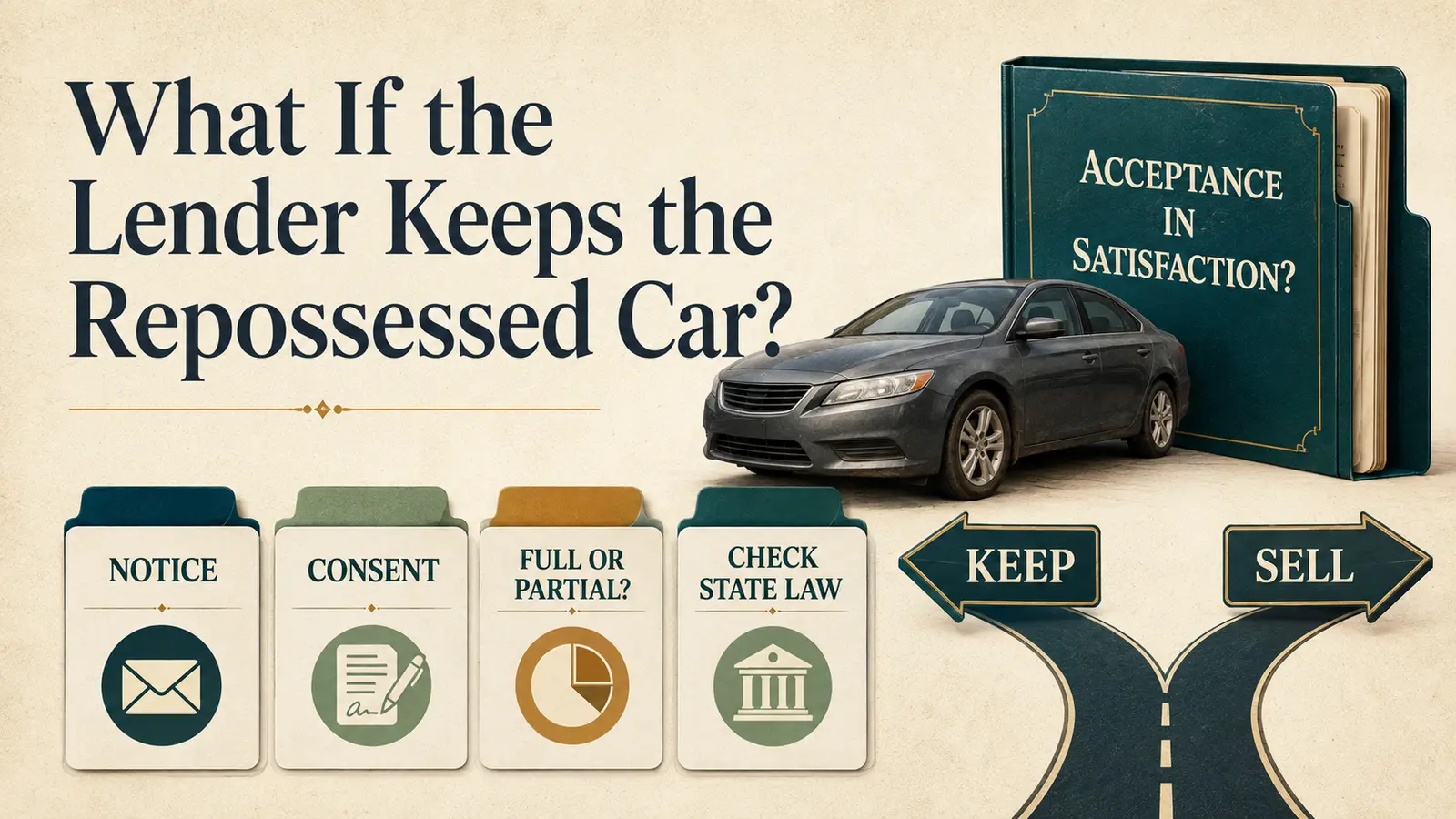
Keeping the car is legally different from selling it
Disposition under § 9-610 applies sale proceeds to the debt. Acceptance under § 9-620 allows collateral to be accepted in full or partial satisfaction under specified conditions. The legal effect is then addressed by § 9-622.
The paperwork should tell you which path the creditor claims to be using. A long storage period is not automatically a valid acceptance in satisfaction.
Consumer-goods transactions have extra restrictions
Model § 9-620 contains special consumer provisions, including limits on partial satisfaction and a compulsory-disposition rule in certain circumstances when the debtor has paid a specified percentage of the cash price or secured obligation.
Because those thresholds and details can be technical, verify the state enactment before drawing a conclusion from the payment history.
Consent and notice matter
Acceptance generally requires the debtor’s consent in the manner the statute recognizes and may require notice to other parties. Silence can have specified effects only under the statutory process.
If you receive a proposal to accept the vehicle in satisfaction, do not read it as an ordinary sale notice. Identify whether it says full satisfaction or partial satisfaction and what objection period applies under state law.
Full satisfaction and voluntary surrender are not synonyms
Returning a vehicle voluntarily does not by itself prove that the creditor accepted it as full payment of the debt. A routine surrender can still be followed by sale and deficiency.
If the creditor promises that surrender will satisfy the account, ask for the agreement in writing and compare it with the Article 9 acceptance requirements.
The effect on deficiency depends on the accepted terms
Valid full satisfaction discharges the obligation to the extent described by § 9-622. Partial satisfaction is restricted in consumer transactions under the model statute.
Do not pay a later deficiency demand without first checking whether a prior acceptance agreement already resolved the secured obligation.
State-specific overlays still apply
Some vehicle finance statutes add protections or use terminology that differs from the UCC.
The state page should identify those provisions before this article is used for a live dispute.
The 60-percent rule can force a sale under the model code
Under model § 9-620(e), a secured party that has taken consumer goods must dispose of them under § 9-610 when 60 percent of the cash price has been paid on a purchase-money security interest, or 60 percent of the principal amount has been paid on a non-purchase-money security interest. Section 9-620(f) sets a 90-day disposition period unless the debtor and all secondary obligors make the post-default agreement the statute describes. State enactments must be checked before those model numbers are treated as the rule in a particular state.
This provision is one reason to calculate how the contract is classified and how much of the relevant base has actually been paid. Do not substitute “60 percent of today’s payoff” for the statutory text. Preserve the retail installment contract, original cash price or principal, payment history, and any post-default agreement about retaining the vehicle.
Acceptance requires a record, not merely possession
Model § 9-620 makes a purported acceptance ineffective unless the secured party consents in an authenticated record or sends the required proposal and the statutory conditions are met. In a consumer transaction, partial satisfaction is barred by the model rule. If the creditor says it is “keeping the car,” ask for the proposal or agreement that explains whether the collateral is being accepted in full satisfaction and what happens to the remaining obligation.
Watch for a proposal deadline in the actual record
If the secured party sends a proposal to accept the collateral, note when it was sent and what response method it specifies. Model § 9-620 uses a 20-day objection framework in several acceptance contexts, but publication for a particular state should confirm the enacted text and any consumer overlay. Keep the proposal itself; a phone summary cannot show whether it was full satisfaction, whether conditions were added, or who received notice.
Frequently asked questions
- Can the lender just keep the car instead of selling it?
- Article 9 allows acceptance of collateral in full or partial satisfaction of the debt — often called strict foreclosure — but it requires consent and notice, and consumer-goods transactions carry extra restrictions. Keeping the car is legally different from selling it.
- Does keeping the car cancel the deficiency?
- It depends on the accepted terms. Acceptance in full satisfaction ends the debt; a partial-satisfaction arrangement does not. Acceptance requires a record, not merely continued possession, and there may be a proposal deadline in the paperwork.
- Is there a point where the lender must sell instead?
- Under the model code, the 60-percent rule can force a disposition for certain consumer-goods collateral where a large share of the debt has been paid, rather than letting the secured party keep the vehicle.
Sources checked for this page
- UCC § 9-620 — Acceptance of collateral in satisfactionModel strict-foreclosure rules and consumer-goods limits.
- UCC § 9-622 — Effect of acceptance of collateralModel effect when collateral is accepted in full or partial satisfaction.
- UCC § 9-615 — Application of disposition proceeds; deficiency and surplusModel rules for applying sale proceeds and calculating deficiency/surplus.