
What the device does
A starter interrupt device (SID) lets the lender remotely prevent the vehicle from starting, typically after a missed payment, and is commonly paired with a GPS unit that reports the car’s location. These are most common in subprime and buy-here-pay-here financing, where the device functions as both a payment-compliance tool and a repossession aid.
Federal Trade Commission consumer guidance notes that some lenders install GPS and starter-interrupt devices to locate a vehicle and disable its ignition. That general description does not determine whether a particular device, disclosure or use complies with the borrower’s contract and state law. The legal questions depend on how and when the device is used, what was disclosed, and whether its use creates a safety or consumer-protection issue.
One state’s specific rules show what real regulation looks like
Nevada’s SB 350 (effective July 2017) is one of the more detailed state laws on this technology and is useful as a concrete illustration, not a nationwide rule: it bars activating a starter-interrupt device until a payment is more than 30 days late, requires written disclosure before the technology is used, mandates at least 48 hours’ actual notice before disabling a vehicle, provides two separate 24-hour emergency-start overrides, bars charging the borrower for the device, and requires any GPS location data to be purged on a rolling 180-day basis. Activating the interrupt device counts as constructive repossession under the law and must be reported to a credit bureau even though the lender never physically took the car.
Most states do not regulate this as specifically as Nevada does — which is exactly why checking your own state’s statute (or the absence of one) matters before assuming any particular notice period or override right applies to your loan.
Disclosure is the first thing to check
If the financing contract does not disclose that a starter-interrupt or tracking device is installed, or misrepresents what it does, that can be a separate contract or consumer-protection issue independent of any later repossession dispute. Review the retail installment contract and any add-on disclosure forms specifically for language about vehicle disabling technology, location tracking, or "payment assurance" devices — lenders vary in how directly they name the feature.
Disabling the car before physical repossession raises its own issues
- Remotely disabling a vehicle while someone is driving it, or in circumstances that put the driver at risk (an unsafe location, at night, in traffic), is a documented safety and legal concern that consumer advocates and some regulators have specifically flagged — shutting off a moving vehicle is treated differently from disabling a parked one.
- Using the device to strand a vehicle and then physically take it from a location the lender otherwise could not lawfully enter without breaching the peace does not necessarily cure the breach-of-peace problem — the device changes how the car became immobile, not the rules governing how it is subsequently taken into possession.
- A car disabled without clear notice, then "recovered" this way, is a fact pattern worth documenting closely: when the device was triggered, where the car was, who was in or near it, and what communication (if any) preceded it.
Location data has its own separate limits
GPS location data collected through a financing-related tracking device is generally understood to be for locating collateral in connection with the loan, not for open-ended monitoring of the borrower’s movements. If a lender or its agent appears to be using location data beyond what disclosure and the loan’s purpose support, that is a distinct privacy question from the repossession itself, and worth raising with the same regulator you would contact about the device’s disclosure.
What to do if you believe a device was used improperly
- Document the specific circumstances: date, time, location, whether the vehicle was moving, and any communication from the lender before or after the disabling event.
- Request the contract’s disclosure language about the device in writing if you do not have a copy on hand.
- File a complaint with the CFPB and your state attorney general’s consumer protection office — both track patterns in this specific practice across lenders.
A locator, a starter interrupt and a repo order are different things
A GPS or telematics unit may report a vehicle’s location; a starter-interrupt feature may prevent a later restart; and a repossession order authorizes a recovery agent to seek possession under the lender’s process. One installed device can combine functions, but the terms and legal consequences are not interchangeable. Ask for the signed disclosure and contract language that describes which functions are enabled, what event triggers them, and who receives location data.
A starter interrupt generally affects restarting after the engine is switched off, not a moving vehicle. If your vehicle shuts down or refuses to start unexpectedly, prioritize physical safety: move away from traffic, contact roadside help, and call the lender using a verified number. Do not try to bypass wiring or handle electrical components yourself; a dealer or qualified technician can identify whether a device is involved without creating a safety or contract dispute.
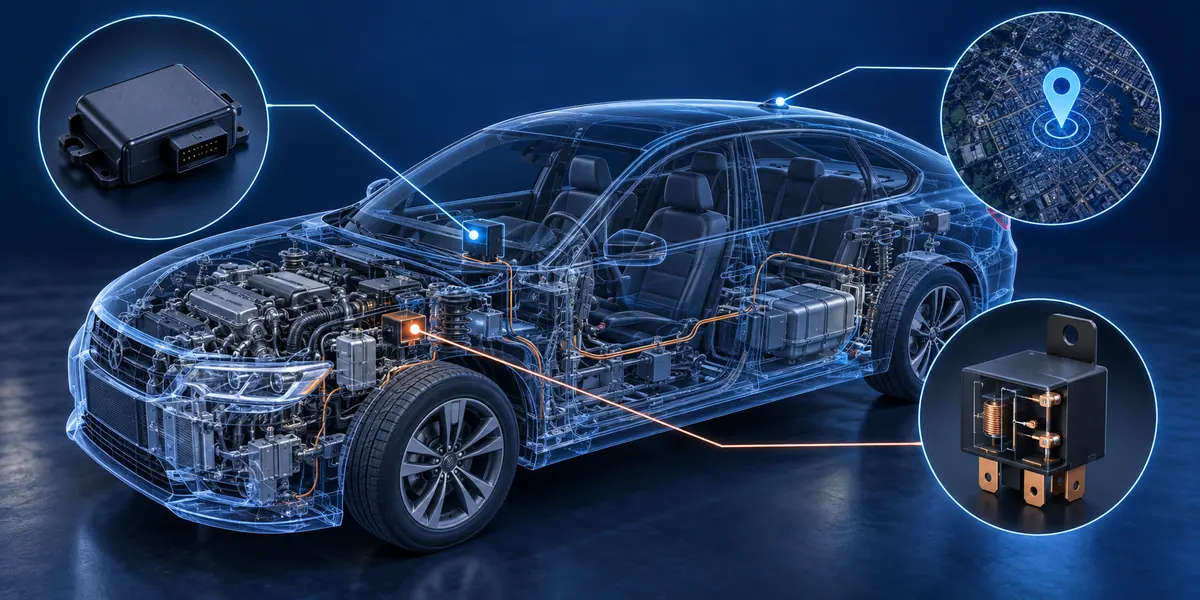
| Observed issue | What it may indicate | What to verify |
|---|---|---|
| Location appears in lender records | A tracking feature may be active | Signed disclosure, purpose, recipients and retention terms |
| Car will not restart after parking | A starter interrupt may have been triggered | Account status, device notice, lender instructions, safe transport |
| Vehicle is being recovered | A repossession process may be underway | Default basis, agent identity, peaceable conduct and notices |
| Device remains after payoff | Removal or deactivation may be outstanding | Written payoff confirmation and installer appointment |
Check the contract and local rules before drawing conclusions
There is no single nationwide rule that makes every GPS or starter-interrupt device lawful or unlawful in every circumstance. The relevant questions can include disclosure and consent, state consumer-credit statutes, privacy rules, how the device was used, and whether the lender’s conduct complied with repossession law. Nevada enacted specific requirements for certain devices; that statute is an example of a state-specific rule, not a nationwide standard.
The CFPB’s auto-finance materials describe starter-interrupt and GPS devices as tools that may facilitate repossession. They do not mean every lender uses them or that a device itself proves a valid default. Compare the signed contract, payment ledger, notices and device behavior. If a lender says the car cannot be restarted until payment, ask it to identify the account status and the exact process for restoring operation or arranging safe transport.
If a device appears to disable the vehicle
- Get to a safe location and do not work on the wiring.
- Use a verified lender number to check the account and ask whether the device was activated.
- Request the signed disclosure and written instructions to restore operation.
- Document any safety hazard or disputed activation and seek state-specific consumer help.
Protect location and account records
Save the purchase contract, device disclosure, privacy notice, payment receipts, warning texts, call logs and any shutdown message. Write down when the issue happened, whether the vehicle was parked or moving, and the exact words on the screen. If location data is involved, ask what data is collected, how long it is kept and who receives it; the answers may be governed by contract and state law.
If the account is current, provide proof of payment and request a written hold or correction while the lender investigates. If you are behind, ask about a payment arrangement and whether a recovery order is active, but do not assume a phone promise changes the written agreement. A safety emergency, a disputed payment or a wrongful recovery should be recorded separately so the device issue does not obscure the underlying repossession question.
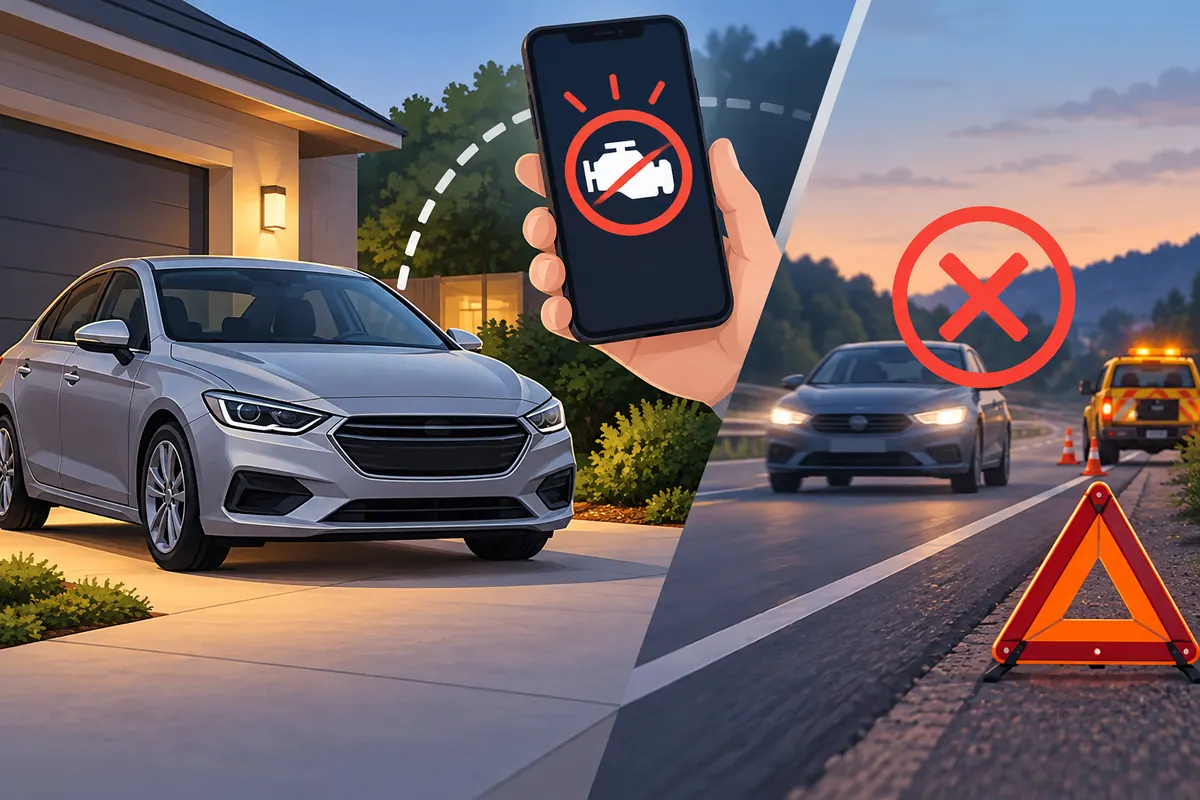
Record the device behavior without disturbing the vehicle wiring
Write down the date, time, location, dashboard message, whether the engine was running or parked, and whether any warning text or call arrived before the vehicle would not restart. Photograph the message and keep the phone number that contacted you, but verify the lender through a number on the signed statement or official account portal before sharing personal information. These details help a technician distinguish a starter-interrupt event from a weak battery, key, immobilizer or unrelated electrical fault.
Do not cut wires or try to bypass the unit. Ask the lender to state in writing whether it sent an activation command, what account status triggered it, how to restore operation, and what emergency process applies if the car is stopped somewhere unsafe. If the lender denies activation, have a qualified mechanic inspect the vehicle and preserve the diagnostic report. Safety steps and technical diagnosis are separate from any later dispute about contract disclosure or repossession rights.
Frequently asked questions
- Is it legal for my lender to remotely disable my car?
- There is no single nationwide answer. Check the signed contract and your state’s rules, and consider how the device was disclosed and used. Disclosure alone does not establish that every activation was lawful; prioritize safety and document any disputed or unsafe activation.
- Does disabling my car count as the repossession?
- It depends on your state. Most statutes were not written with remote disabling in mind, so the answer is genuinely unsettled in many places — Nevada is a rare exception that expressly counts activating the interrupt device as "constructive repossession" by statute. Treat the disabling event and any physical taking of the vehicle as two events to document separately unless your state says otherwise.
- Can I have the device removed?
- Removing a device your contract requires can itself be a default under some financing agreements. Review your specific contract language before removing anything, and raise disclosure concerns with the lender in writing instead.
Sources checked for this page
- FTC — Vehicle RepossessionFederal consumer guidance on repossession practices, including disabling technology as a feature of some financing.
- CFPB Bulletin 2022-04 — Mitigating Harm from Repossession of AutomobilesSupervisory guidance on repossession-related harms, including servicer practices around disabling and locating vehicles.
- UCC § 9-609 — Secured Party’s Right to Take Possession After DefaultThe breach-of-peace limit on self-help repossession, which the method of immobilizing a vehicle does not bypass.
- Nevada SB 350 (2017) — GPS and starter-interrupt device regulationOne state’s specific statute on disclosure, notice, emergency override, and credit-bureau reporting for this technology — an illustration, not a nationwide rule.
- CFPB — Repossession in Auto Finance (2025 report)
- Nevada SB 350 (2017) — GPS and starter-interrupt device regulation